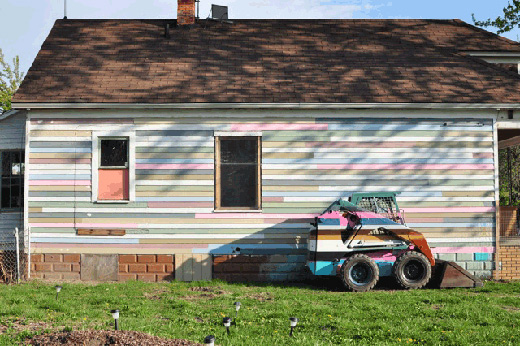
Power House Detroit: Artists as Community Leaders

I’ve written about Power House over in Detroit before. Mitch Cope and Gina Reichert of Design99 started this Hamtramck-based neighbourhood project a couple of years ago now. Able to take advantage of the radically declining real estate market, they bought up a house for $100 and have since been working in the neighbourhood on small and large scale projects that tackle the potential of art affecting change.

They’ve since been featured in exhibitions at the DIA‘s project space and at MOCAD, but the really interesting stuff is, of course, happening on the ground. Juxtapoz assisted Cope and Reichert in buying more foreclosed homes to be used as project spaces, Power House is now Power House Productions and a formal 501(c)(3) Non-Profit, and they’re thinking about doing things like creating a Neighborhood Bike Shop and Skate Parks and Bike Courses.

Model D‘s latest article on Power House Productions frames the work well:

They’ve been organizing block clubs with their neighbors where they’re tackling everyday concerns like garbage pickup and snow removal — not ruminating on notions of gentrification and art theory. They are knee deep in the notion and practice that art can fuel community development — and not necessarily just the community that typically “consumes” art.

So, art as social practice? Certainly, yes. This work will undoubtedly become a touchstone for writing around social practice, publicly-engaged practices, and contemporary art at the end of first decade of the 2000s. However, even framing the discussion around art is perhaps doing the project (and neighbourhood) an injustice. These artists are taking on the role (or is it responsibility) of being community leaders in the neighbourhood — artists as community leaders. Not artists performing the role of a community leader, not artists creating an exhibition on community leaders, not merely facilitating workshops on what it means to be a community leader, but really stepping into a role that raises a lot of questions and maybe, just maybe, does some real good.

And there are questions, of course. One has to wonder about what’s at stake when a real neighbourhood becomes an art project (and we have to look no further than the Heidelberg Project to see some of these implications), and one also has to keep a suspicious eye open around issues of gentrification, or the parachute effect of public art practices,  or even just the moral and ethical dilemma of spurring a kind of development in a place that didn’t necessarily ask for it.

For the moment though, I think we need to step outside of those issues and look at the project with some fresh curiosity. Perhaps aside from the 17-year-long Project Row Houses, there isn’t a readily available model to understand this kind of art practice, and I’m ready to start wondering about what a model of artists as community leaders/activators/instigators with a long-term investment can do to change a place. And of course I’m curious — that’s pretty much what I hope we’re doing here.

via Model D Media
Urban Camouflage And The Potentials of Commissioned ‘Street Art’

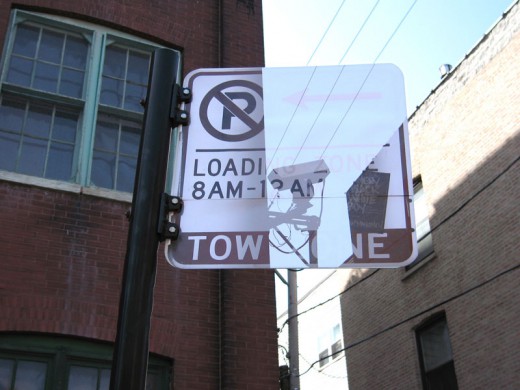
Ceyetano Ferrer, City of Chicago (Iowa #2), 2006

Street artist Ceyetano Ferrer specializes in blending urban objects into their environments by painting layers over them in a way that makes them seem transparent. Ferrer uses photo stickers on public objects like street signs, boxes and billboards and camouflages them to create an illusion of the objects fading into the landscape. -via PSFK.com

The public art works of Ceyetano Ferrer are quite stunning on first glance. The optical illusion he creates seems at first impossible and mysterious, though the process is as “simple” as placing a well-planned sticker on to a surface. As far as “street art” goes, this very much falls in line with the guerilla style shock and awe that makes the genre so exciting and valuable in a certain sense of subversiveness.

Continue reading “Urban Camouflage And The Potentials of Commissioned ‘Street Art’”

OPENED/UP: a Walk on November 30th

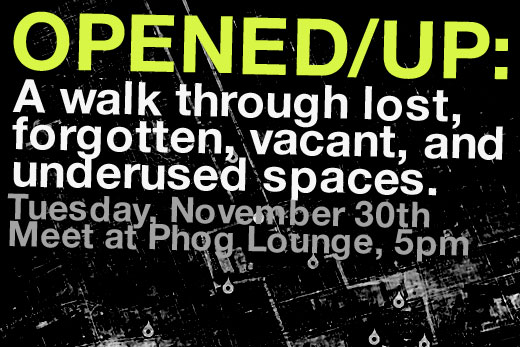
OPENED UP: A walk through lost, forgotten, vacant, and underused spaces.

For an hour and a half after work on Tuesday, November 30, we’ll be walking around downtown Windsor and getting access to a variety of closed / vacant / underused spaces. Justin Langlois will be guiding it with Tom Lucier and we’re hoping to have a lot of ambitious and excited people out with us. City-owned buildings, privately held storefronts, and cavernous bingo halls are all a part of our route, and you’re invited to join us in imagining a different downtown for our city — one with ample, affordable, and exciting spaces for artists, performers, musicians, and other creative-minded folks. We want to start a real conversation about what it would take to get these spaces filled with people who need them. We want to help give people a reason to be excited about being a practicing artist in this city again. We know that finding space needs to be at the top of that list, and we want to help.

This walk has been organized as part of the Artscape Creative Placemaking workshop being held on December 1st. Artscape, if you’re not already familiar with their work, has brought together and led numerous partners and stakeholders to realize massive studio and live/work retrofits of a variety of underused spaces in Toronto and figured out ways to make spaces for artists not only affordable, but integral to the surrounding neighbourhoods and economies. This walk has been something on our to-do list for a while and Artscape’s workshop just gave us the perfect excuse to do it.

Meet us at Phog Lounge at 5pm sharp. We’ll wind our way through the downtown core and head back to Phog for some food, drinks, and lots of conversation. We really want you to be there, let us know if you have any questions.

Between Social Networks and Real Space

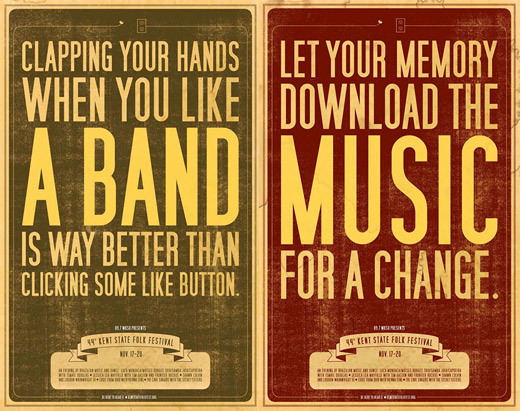
During this past week, the 44th Kent State Folk Festival was held. The festival is the second oldest continuously produced folk festival on a college campus, preserving folk and heritage music through concerts, workshops and educational programs. There’s an authenticity here.

What’s really interesting about this particular event though, is how I found out about it. The popular marketing, trends, and culture website PSFK.com featured the campaign used for the festival. The design and marketing group Marcus Thomas created this campaign that enacts an interesting dialogue around the prevalence of social media and its role in and effects on contemporary music culture.

The overt criticism of social media networks is an inspiring gesture. It seems to have become so easy to click a “Like” button or click “I’m Attending” (without the social obligation to do so), when local music (and cultural) scenes are in greater need than ever to have “real” attendees to live shows and events.

The campaign is, however, also a bit hypocritical since the festival makes use of extensive social networking and internet based advertising — making this ironic gesture only fuels the “buy in” to social networking.

These points can go for other social groups or events, like Broken City Lab. Sometimes a lot of the networking is done in a digital context. This barrier of separation is sometimes difficult to surpass, in order to make that connection in person. It’s often worth the “trouble” of leaving the virtual sphere and venturing out into the city, it’s just a matter of figuring out what exactly the barrier is to seeing that happen more often. How communities are shaped online and translated into real space is going to become an increasingly important question.

It’s a conversation that’s been had many times before, but still worth bringing up — how does one translate online networks into real action?

All posters from Marcus Thomas Marketing Agency via PSFK.com

Serendipitor & the Sentient City Survival Kit

Mark Shepard in collaboration with V2_ Institute for the Unstable Media and as part of a joint artist residency withEyebeam Art+Technology Center developed Serendipitor — an alternative navigation app for the iPhone that helps you find something by looking for something else. The app combines directions generated by a routing service (in this case, the Google Maps API) with instructions for action and movement inspired by FluxusVito Acconci, and Yoko Ono, among others.

From the project description:

Enter an origin and a destination, and the app maps a route between the two. You can increase or decrease the complexity of this route, depending how much time you have to play with. As you navigate your route, suggestions for possible actions to take at a given location appear within step-by-step directions designed to introduce small slippages and minor displacements within an otherwise optimized and efficient route. You can take photos along the way and, upon reaching your destination, send an email sharing with friends your route and the steps you took.

And, Serendipitor has also been nominated for the 2011 Transmediale Award.

This is all part of the Sentient City Survival Kit, a design research project that explores the social, cultural and political implications of ubiquitous computing for urban environments. It takes as its method the design, fabrication and presentation of a collection of artifacts, spaces and media for survival in the near-future sentient city.

While more paranoid than my own concerns, Shepard’s larger Sentient City Survival Kit certainly provides some contextualizing reference points for the iPhone apps I’m working on. It’s funny how this language around survival is somehow being tethered to mobile computing in both projects. We saw Shepard give a presentation last year when we were at Conflux, and it’s very cool to see some of his ideas being finally realized. I’m hoping for some time to download the Serendipitor this weekend.

I showed this in my Ways of Knowing class this morning — lots of fun!!

[via Pop-Up City]

You’re Invited: Artist Talks, Conferences, and other upcoming events

There’s a lot of BCL-related events coming up…

First off, I’ll be giving an artist talk at the University of Windsor’s School of Visual Arts tomorrow, November 16 at 12noon. I’ll be discussing Broken City Lab and how I think about collaborative social practice in general. The talk along with follow up questions should run for about an hour — it’s the perfect way to spend your lunch hour. You’re invited!

Details for other events are below, but here are the important parts:

  • November 18th – Windsor + Philosophy
  • November 30th – OPENED UP: A walk through lost, forgotten, vacant, and underused spaces.
  • December 1st – Artscape Placemaking Workshop

Continue reading “You’re Invited: Artist Talks, Conferences, and other upcoming events”

Red Paint & Testing Glass Beads

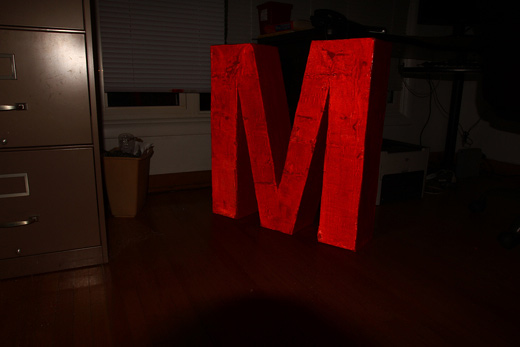
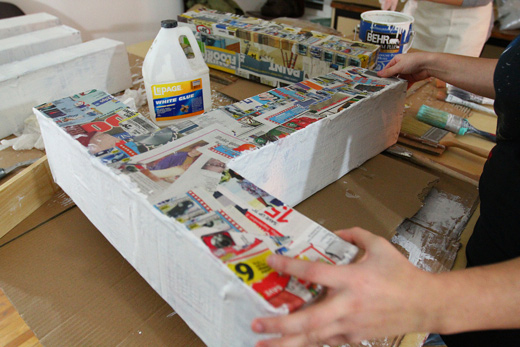
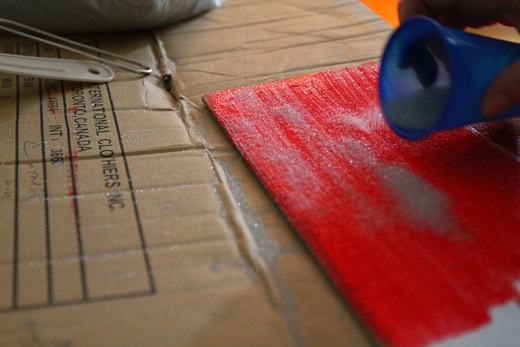
We made a lot of progress tonight, not only getting a considerable way through the first coat of red paint, but also testing a variety of techniques for applying the retroreflective glass beads!

We also got to spend some time talking through how we’ll be temporarily installing the letters in a variety of spaces. We figure that there’s still at least a few more weeks of preparation and tests, but we’re really getting excited to get these out into the world.

Continue reading “Red Paint & Testing Glass Beads”

Trespass: A History of Uncommissioned Urban Art

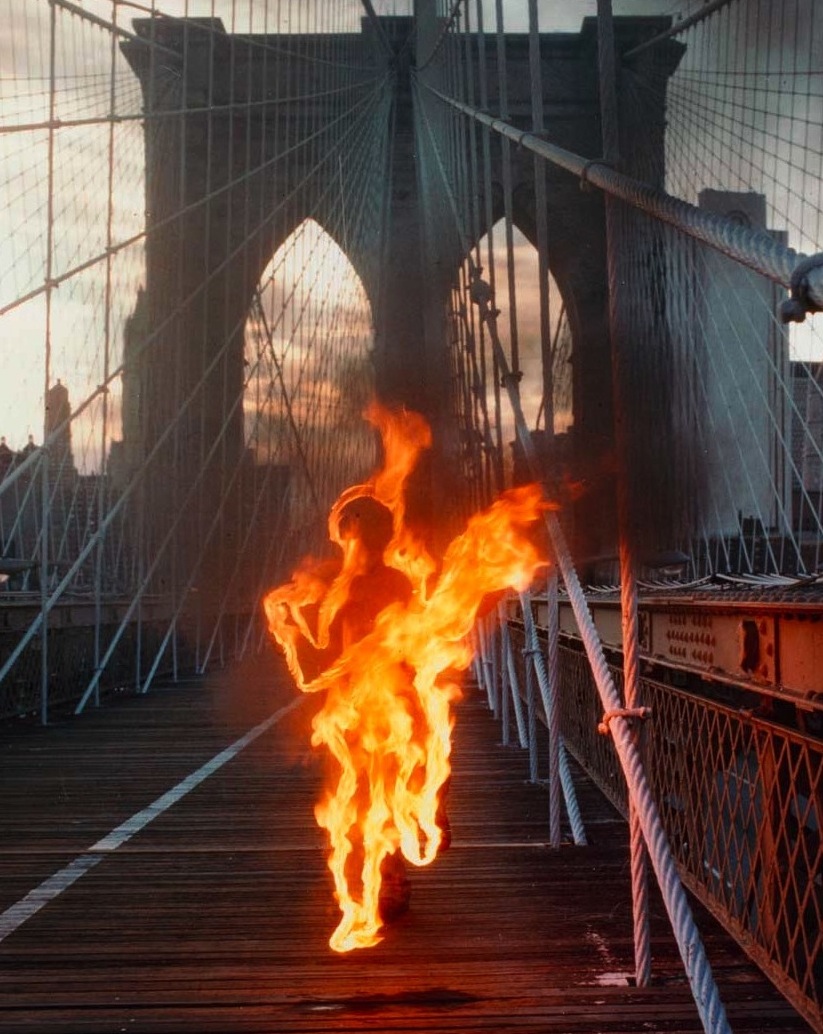
Anyone who has an interest in the world of guerilla street art probably already knows about the recently published Trespass: A History of Uncommissioned Urban Art. The book, published by Taschen of course, contains photographs of many ephemeral works that might have been easily lost forever. The street art movement is more than deserving of a dedicated book, especially one that encompasses more than four decades of temporary work.

According to Taschen, “Trespass examines the rise and global reach of graffiti and urban art, tracing key figures, events and movements of self-expression in the city’s social space, and the history of urban reclamation, protest, and illicit performance. The first book to present the full historical sweep, global reach and technical developments of the street art movement, Trespass features key works by 150 artists, and connects four generations of visionary outlaws.”

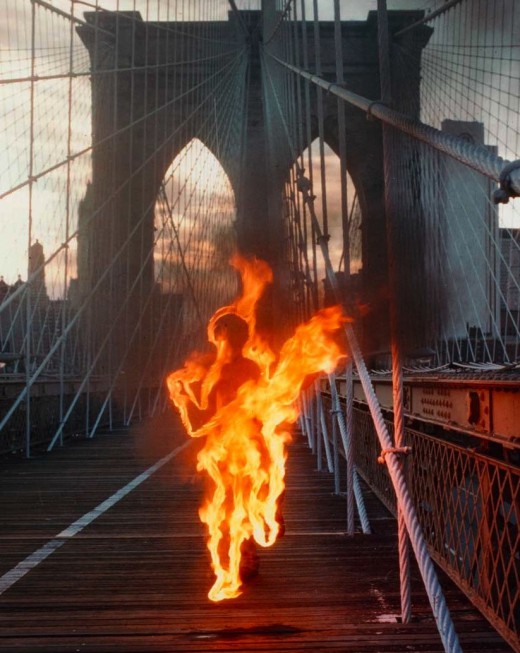
Image Above: Paolo Buggiani, Minotaur, Brooklyn Bridge, New York City, 1980

New City Reader And The Return Of Print Media

Read All About It“, “Hot Off The Presses“, these are not the stereotypical calls of a long-gone era of children calling on street corners, they are headlines about the recent rise in popularity of print media.

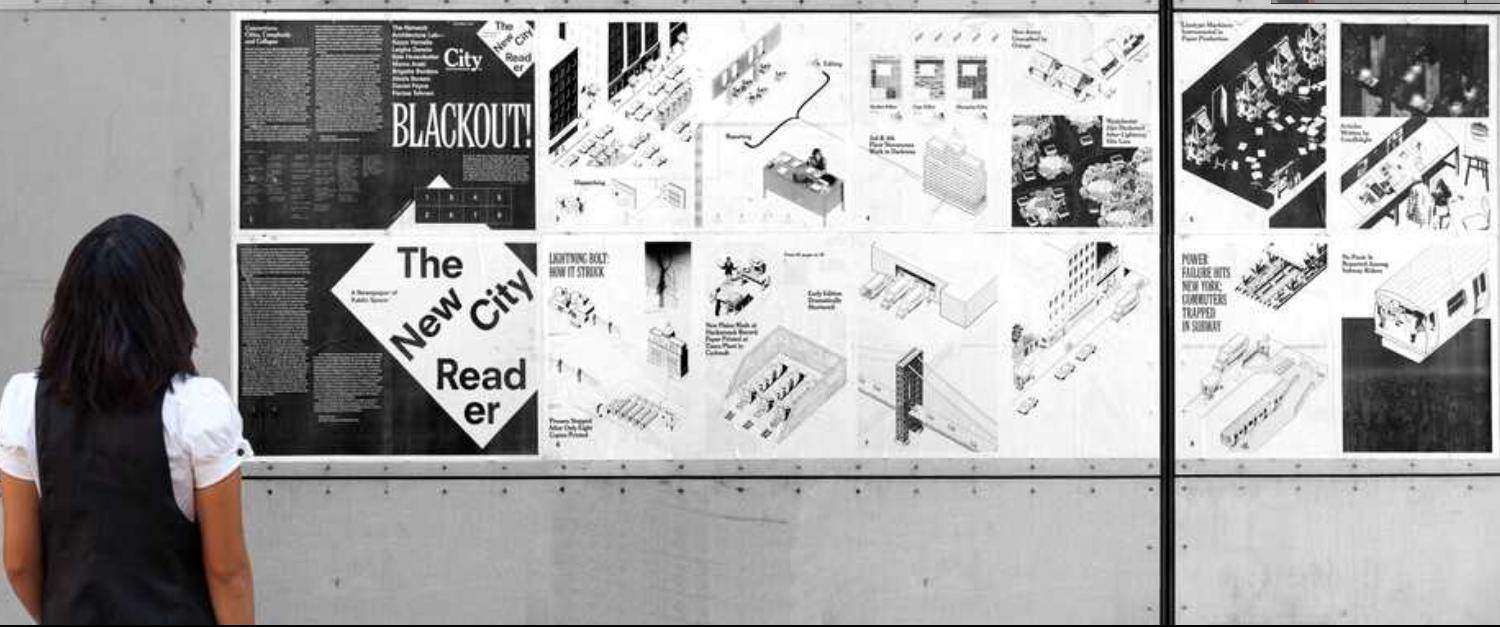
In an article by Alissa Walker for Good.is, entitled There’s a Newspaper Being Made, Right Now, in a Museum, she discusses the publication that’s creating this particular buzz — New City Reader, which is also a part of the exhibit The Last Newspaper, held at the New Museum.

Continue reading “New City Reader And The Return Of Print Media”