BCL Report: February 24, 2011 (back to Lebel)

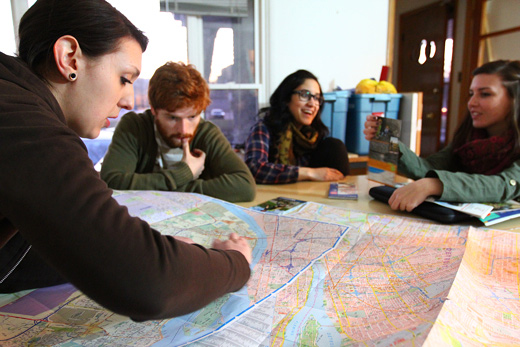
We spent Friday back at Lebel, reminding us of the meetings we used to have a couple years ago when all this was just starting up. Given the size of the school and the resources readily available (like tools, multiple desks, ample light), we split up into smaller groups to tackle some “next steps” for each project on the table.

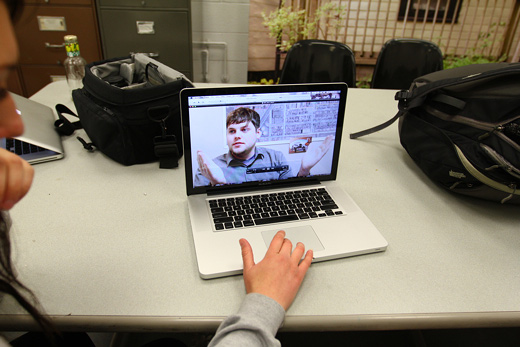
First though, we watch parts of the interview that Michelle and Rosina did with Stephen Lynn for How to Forget the Border Completely.

Continue reading “BCL Report: February 24, 2011 (back to Lebel)”

Building a Wooden Test-Letter

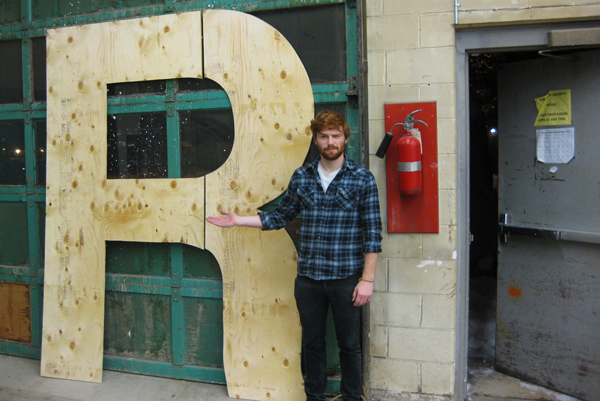
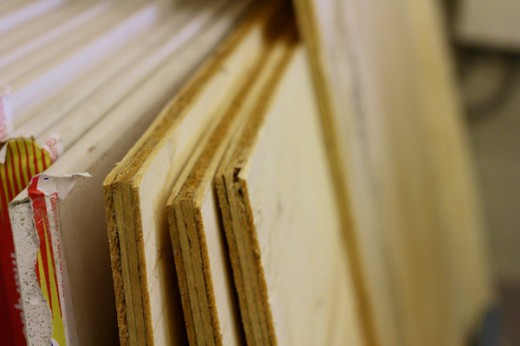
Back in 2010 we conceptualized numerous iterations of Kitchener-Waterloo border installations for Contemporary Art Forum Kitchener + Area (CAFKA). We decided on an ambitious wooden installation which will sit in a shallow pond at the city hall nearby. Our text installation, which will read REFLECT ON HERE, will need some thorough planning. For this reason, we spent most of yesterday evening constructing the faces of a test-letter (R) from plywood sheets measuring 8’x4′ each.

Continue reading “Building a Wooden Test-Letter”

BCL Report: Feb 18, 2011 (Maps & Portals)

Around the maps, we’re beginning to imagine two cities collapsing into one.

As part of How to Forget the Border Completely, we’re doing and planning all sorts of things — border portals, border etiquette classes, new maps, new tourism guides, interviews, stories, and imaginary architecture.

Michelle and our dear friend, Lee Rodney, spoke about HFBC and the Border Bookmobile on Friday on CJAM‘s The Shakeup. You can listen to it here. It’s a lot of fun so far, and we’re just getting started!!!

Continue reading “BCL Report: Feb 18, 2011 (Maps & Portals)”

Touch Sanitation & Maintenance Art: the Work of Mierle Laderman Ukeles

The incredible weather has me getting excited for the summer, and in the process, thinking back to our past couple of summers, and imaging the summer ahead. I recalled the city workers strike back in 2009 and it reminded me of the work of Mierle Laderman Ukeles, and I thought it was long past due that I post about her work.

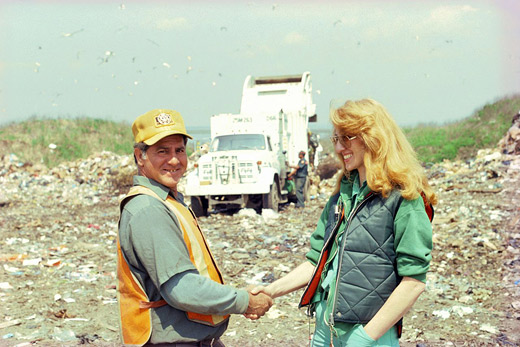
From the description at the Ronald Feldman Gallery, Ukeles spent eleven months from mid-1979 to 1980 creating Touch Sanitation, a public performance art work. She crisscrossed New York City ten times to reach all fifty-nine sanitation districts to face, shake hands with and thank every sanitation worker for “keeping New York City alive.”

And as noted over at the Green MuseumTouch Sanitation was Ukeles’ first project as the city’s new artist-in-residence […] Ukeles traveled sections of New York City to shake the hands of over 8500 sanitation employees or “sanmen” during a year-long performance. She documented her activities on a map, meticulously recording her conversations with the workers.

At the conclusion of the performance she was made Honorary Deputy Commissioner of Sanitation and also Honorary Teamster Member of Local 831, United Sanitationmen’s Association, and I believe she’s been an artist in residence there ever since.

Also worth checking out — her Manifesto for Maintenance Art 1969. After child-birth in 1968, Ukeles became a mother/maintenance worker and fell out of the picture of the avant-garde. In a rage, she wrote the Manifesto for Maintenance Art 1969, applied equally to the home, all kinds of service work, the urban environment, and the sustenance of the earth itself. She viewed the Manifesto as “a world vision and a call for revolution for the workers of survival who could, if organized, reshape the world.”

This is the kind of work that makes me want to make more art.

Happy Friday.

Border Interviews: Kero

To get a jump start on laying the groundwork for our upcoming How to Forget the Border Completely project, we have decided to interview a small group of individuals who may be considered “experts” of the Windsor-Detroit border in some way.

Kero, a musician/graphic designer/video artist, was our first candidate for a video interview. He has had the frustrating experience of having to cross the border into Detroit quite frequently, many times spending up to an hour being screened upon entry.

Kero shared some border crossing stories–some of which truly highlight the absurdity of current border protocol–and shared ideas for how to improve the border-crossing experience, if even slightly.

Continue reading “Border Interviews: Kero”

Lessons on Microfunding and Community Development from Robocop

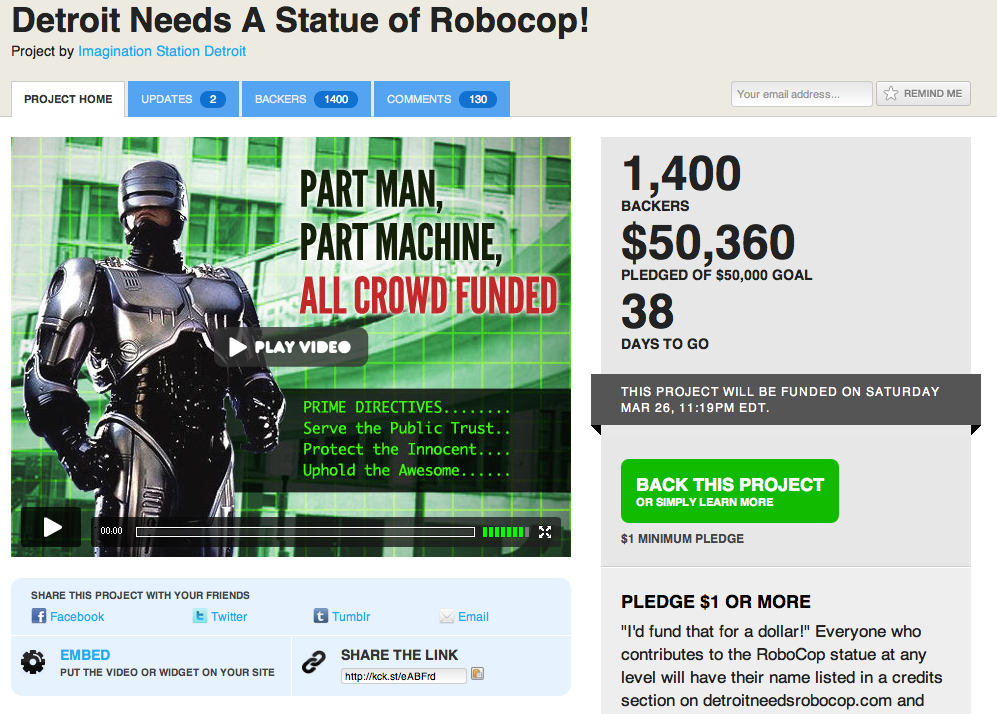
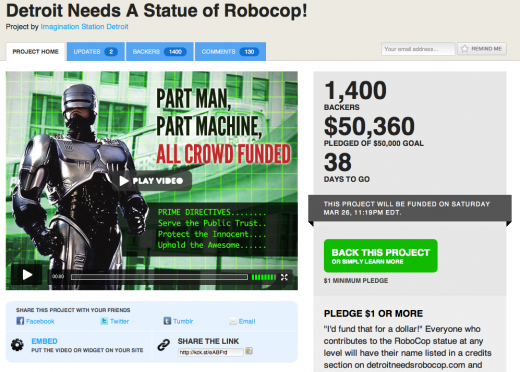
The pitch was great, obviously; the rapped overview of the entire movie, an actual response from the mayor noting the city had no plans to create a Robocop statue, and eventually, an endorsement from the folks behind the Robocop movie.

They reached their $50,000 goal, so the statue is being built. And that’s incredible.

But, in all of this online commotion, which Loveland and Imagination Station are great at pulling together, there’s a lesson in how to approach big ideas. From the Kickstarter page for the Robocop Statue project:

When something like a RoboCop statue comes along and gets people psyched about collectively crowd funding something in Detroit, that energy needs to be encouraged, and ultimately it can be channeled into other efforts and a general awareness that things like this are possible (and in fact happen) here.

And, this, arguably, is going to be the foundation for something much larger. If someone had suggested five or six years ago that Detroit was going to become a haven for artists buying up property and thinking about things like community building, it might have sounded kind of absurd. This is, of course, not to suggest that Detroit wasn’t home to an incredible number of artists at that time, but rather, that it may not have made sense to draw all the dots between those projects and the things actually happening on the ground now.

There’s something about the small, the incremental, the gradual that really seems to be an appropriate response to the situations we face in our communities. There are no overnight solutions, and even if the Robocop statue was arguable an overnight success, I’m inclined to agree with the folks behind the project when they suggest that this statue can actually be the start of some much larger money and ideas being put into Detroit. If a city get puts on a national or even international map because of a strange, small initiative, one certainly has to pause about all the money dumped into larger and seemingly less effective multi-million dollar marketing regional campaigns, etc.

The lesson for anyone in a position of authority out there: just listen and allow creative people with great ideas do great things.

(originally via @phogtom & @djkero)
Double Happiness

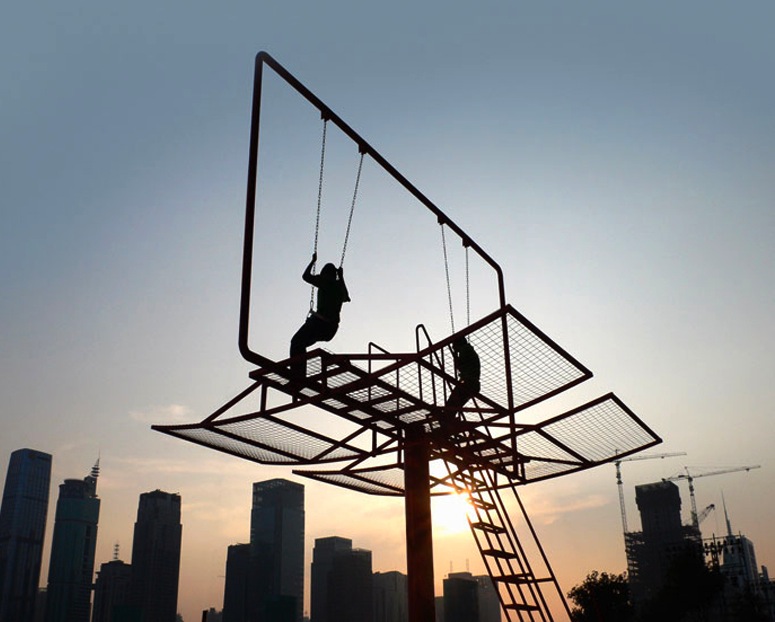
Here is a magnificent use of billboard space created by architect Didier Faustino. He has titled the work/installation/swing-set Double Happiness for pretty obvious reasons. Clever ideas like this usually don’t come from passivity towards the city, but an engaged, analytical, and curious attitude. I found this summary of the conceptual framework behind the project:

“Double Happiness responds to the society of materialism where individual desires seem to be prevailing over all. This nomad piece of urban furniture allows the reactivation of different public spaces and enables inhabitants to reappropriate fragments of their city. They will both escape and dominate public space through a game of equilibrium and desequilibrium. By playing this “risky” game, and testing their own limits, two persons can experience together a new perception of space and recover an awareness of the physical world.”

Via: Eyeteeth: A Journal of Incisive Ideas

Power House Walking Tour: Understanding the Incremental

On Saturday, Eric, Danielle, and her sister, Jessica, and I headed over to the Power House neighbourhood walk in Detroit.

I’d been hoping to finally see this project in person, as it’s been a little over two years since I first wrote about it here. I’d missed their residency at the DIA (saw the installation, but didn’t get to see Mitch or Gina) and also missed them at MOCAD (but seeing their Neighborhood Machine on exhibition was very cool). So, to be able to get a tour and talk to Mitch about their project was really, really great.

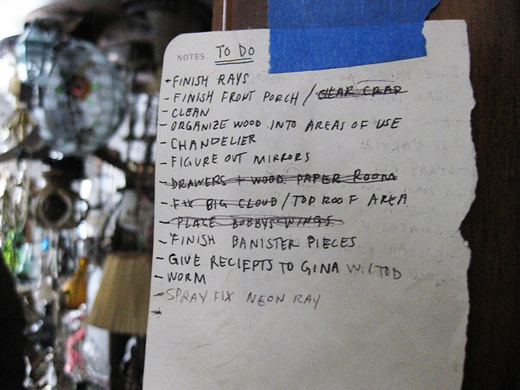
Above, a to-do list from artist-in-residence, Monica Canilao, who plan to return to purchase the upper-half of this duplex.

Continue reading “Power House Walking Tour: Understanding the Incremental”

Constructing a City of Boxes

Box City in the Gallery

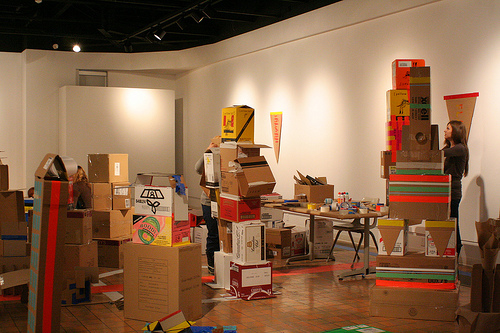
After a long day of classes and studying, a few friends of mine wandered into the Lebel gallery to let loose and make ridiculous things out of heaps of cardboard boxes. The creating of the ‘box city’ was open to anyone curious enough to take part. Of course the essentials (boxes, scissors, coloured tape, paint and brushes) were supplied and all that was required was a bit of imagination!

Continue reading “Constructing a City of Boxes”