Steve Lambert: It’s Time to Fight

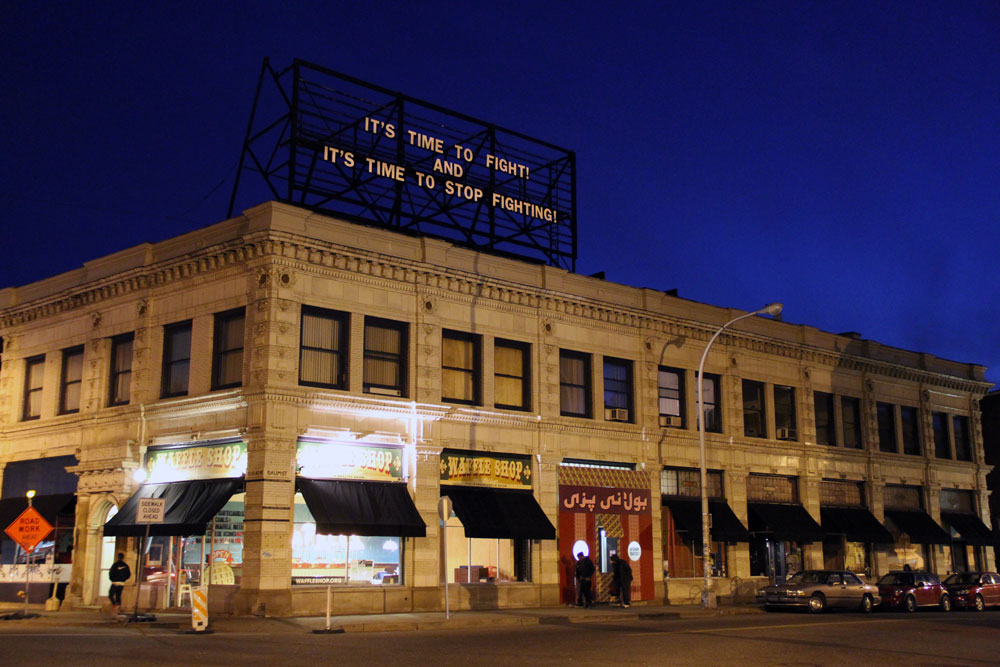
Two things I can’t get enough of — Steve Lambert and huge text signs.

Lambert’s latest work, It’s Time to Fight was installed recently in Pittsburgh, PA over a waffle shop.

Text-based work continues to inspire me; it’s accesible, layered, timely, and tactical. It can be hidden in plain sight. If you catch it, it can disrupt your experience of a landscape, and if you don’t, it patiently and quietly stands in waiting, alongside its capitalistic brethren. Text can steal our attention and interrupt our experience of space, particularly urban space, and that’s why we like working with it, I suppose.

To take a page from Josh’s book: thank you for existing, Steve Lambert.

Borderlands Symposium: University of Maine

Next week, I’ll be headed to the University of Maine at Farmington to present at the Borderlands Symposium, assembled by our friends, TUG Collective. Here’s the brief on the symposium:

A series of talks, workshops, performances, and films that will illuminate some of the social, economic, political and ecological nuances along North America’s borders, and catalyze our attention to how various individuals, either acting alone or collaboratively, are actively creating transnational communities in which “our destinies and aspirations are in one another’s hands.”

Along with Lee Rodney, curator of the Border Bookmobile and border research extraordinaire, I’ll also be initiating a new project idea based on the legends of Paul Bunyan. It sounds absurd, yes, but so are the border realities that we face. The legends around Bunyan are such that there’s plenty of room to initiate a new conversation around the histories of the North American border – -Bunyan becomes a tool, a lens for exploring a series of histories and geographies.

We are proposing to read between the lines of these histories to see the changing representations of Mr. Bunyan and to propose other stories of how we might re-view him in the 21st century: could he be considered among the early architects of NAFTA ? A subversive border crosser, roaming freely through the Northern territories between Canada and the US ?

Those questions are tied to a number of workshops and group discussions we’ll be giving along with a panel discussion with the always incredible Riccardo Dominguez and Dan Millis.

I’m anxious to share some of our ongoing How to Forget the Border Completely research, it’s going to be a fun three days.
BCL Report: March 25, 2011 (Imaginary Portals & Ongoing Construction)

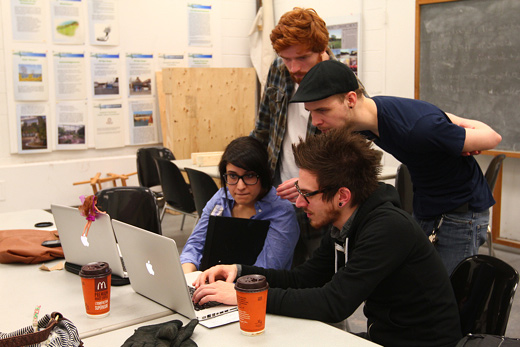
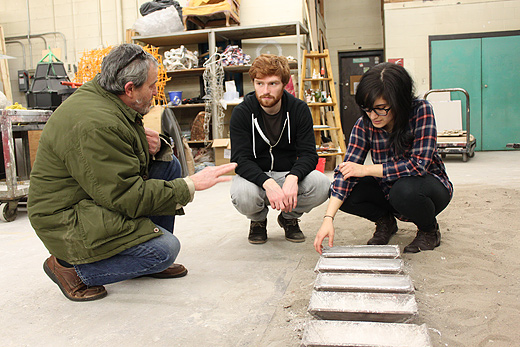
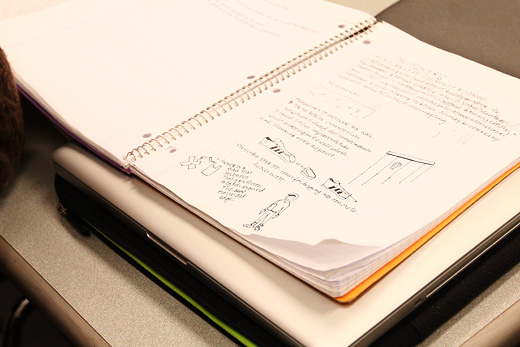
With almost a full crew we spent this Friday night testing finishes, planning ways to cross the border unnoticed, and building supports for the letter ‘R’, all while being filmed by a documentary crew from the Department of Communications, Media & Film.

Above, some notes from Danielle’s sprawling research on inventions for tactically crossing a border.

Continue reading “BCL Report: March 25, 2011 (Imaginary Portals & Ongoing Construction)”

REPOhistory: Lower Manhattan Sign Project

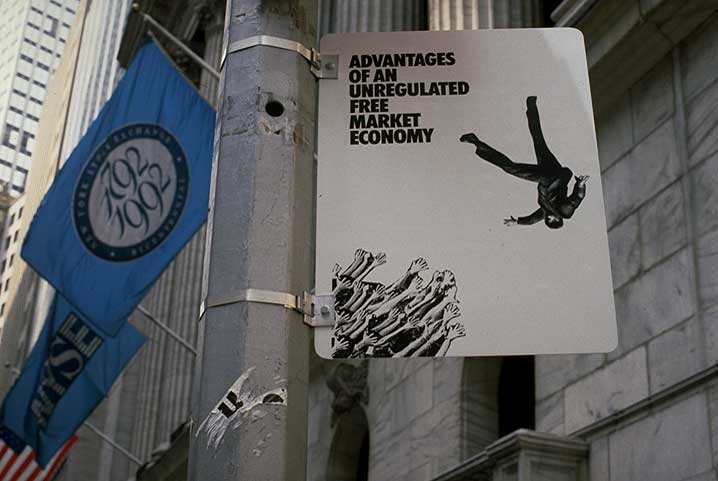
Stock Market Crashes by Jim Costanzo as part of REPOhistory’s Lower Manhattan Sign Project

I’m making my way through Gregory Sholette‘s epic Dark Matter: Art and Politics in the Age of Enterprise Culture. Writing as a participating artist and now dark matter art archivist / dare I say historian of sorts, Sholette writes on an incredible number of projects that work at the edges of the art institution in every sense.

Many of the projects explicitly connect art + everyday life + politics and Sholette offers a generous overview of the practices that build the foundation of dark matter in the art world that art institutions and art superstars rely on for their continued existence.

One of the (many) projects that caught my eye (and on which I’ll be posting) is REPOhistory’s Lower Manhattan Sign Project, which curated these alternative history/information signs into a number of public spaces across New York City.

From the project description: “Placed in front of the New York Stock Exchange, this sign challenges the myths of the free market economy and that stockbrokers jumped out of windows along Wall Street after the 1929 stock market crash. The sign documents that government deregulation and fraud led to market crashes and depressions at the turn of the 20th century, the 1920 and the 1980s.”

In thinking about the projects we’ve done and have considered before, these alternative public demarcation projects continue to feel not only relevant, but necessary. REPOhistory’s project was installed in the early 90s — it’s strange that that is now a long time ago and that urgency seems like a form of nostalgia.

Glass Microbiology by Luke Jerram

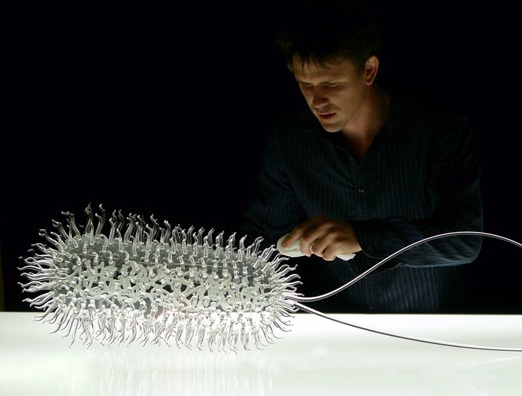
Anyone who has taken a look through a modern scientific textbook probably noticed how vividly coloured most of the diagrams are. While scientific illustrations can be extremely helpful in understanding the inner workings of things like pathogens and plant/animal cells, they can also be a little misleading. Luke Jerram has highlighted this notion with a sculptural series called Glass Microbiology.

“These transparent glass sculptures were created to contemplate the global impact of each disease and to consider how the artificial colouring of scientific imagery affects our understanding of phenomena. Jerram is exploring the tension between the artworks’ beauty, what they represent and their impact on humanity.”

Via: We Make Money, Not Art

Continue reading “Glass Microbiology by Luke Jerram”

BCL Report: March 18, 2011 (the math)

We were a few people short of a full crew (Michelle was sick, Danielle was away, Rosina was on the line, and it was Cristina’s birthday), but Josh, Kevin, Hiba, Karlyn and I still made the most of our Friday night studio collaboration spectacular by putting some focus on our large-scale letters project for CAFKA.

With the semester wrapping up in just a few more weeks, we’re really looking forward to having a bit more time and brain space to work on all of these projects.

Continue reading “BCL Report: March 18, 2011 (the math)”

Pablo Valbuena’s Quadratura

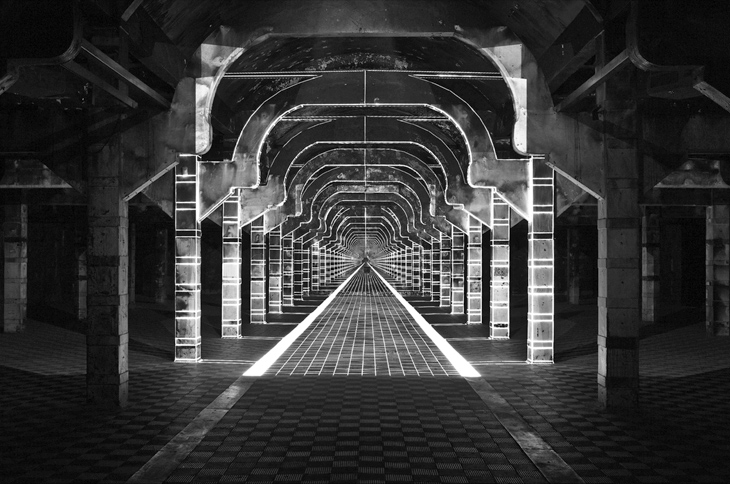
Quadratura is a new site-specific light installation by Spanish artist Pablo Valbuena. He projected a perspective grid between two rows of columns and onto the wall behind them, thus creating the illusion of an infinite pathway. Pablo reminds us that “Quadratura was the technique used in the baroque to extended architecture through trompe l’oeil and perspective constructions generated with paint or sculpture.” I suggest watching the short video of the installation setup included on his project page as it highlights the degree to which light transforms this space.

BCL Report: March 11, 2011 (Maps & Letters)

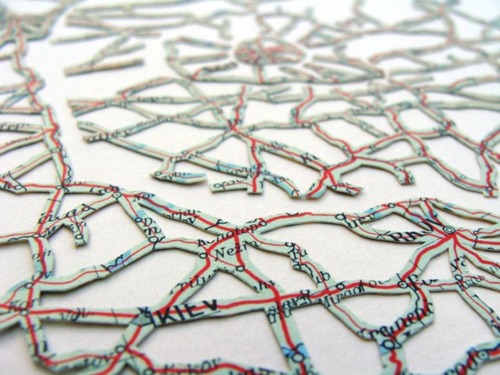
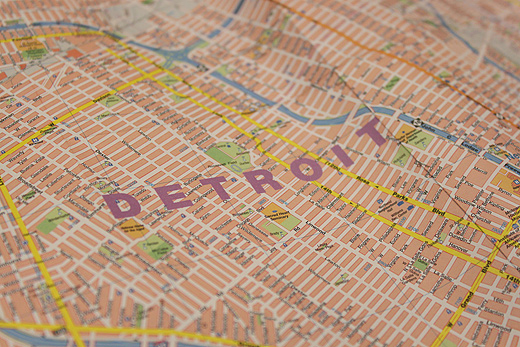
Once again, we gathered at Lebel for another fun Friday full of brainstorming and map making. This particular Friday we met with Mel, a jewelry designer with his BFA from Yugoslavia, to discuss the best design for the CAFKA letters.

We are currently deciding whether it would be best to stick with our original plan to build the letters out of plywood, or try a new approach with Styrofoam and stucco.

Continue reading “BCL Report: March 11, 2011 (Maps & Letters)”

Book Sprinting

The act of authoring a book has traditionally been a long and arduous task consisting of many revisions and often years of work. Book Sprinting, on the other hand, is a sort of reaction to the traditional method of book production. In this case, a small group of writers collaboratively co-author, edit, and revise a book in a week or so. The end result is a finished publication that probably has a cohesiveness not present in some books.

I wonder if attempting a one-off publication project like this would be a good idea for us (Broken City Lab). We usually have a half-dozen research fellows around the table at most meetings. I bet we could pull off a nice mini-publication over a weekend.

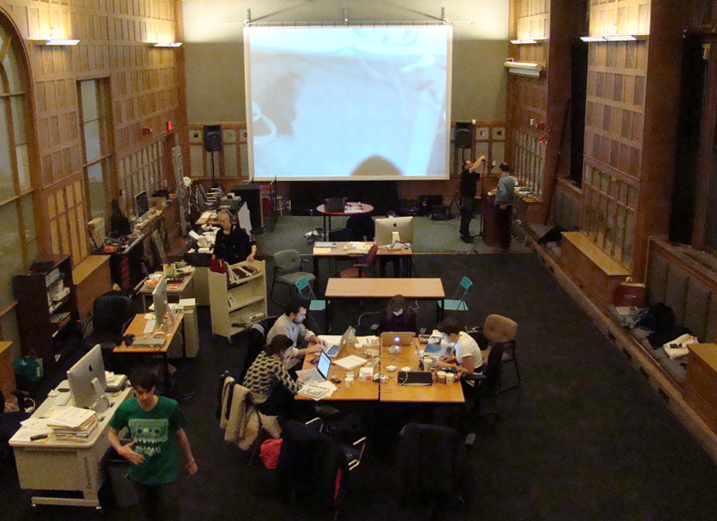
Via: We Make Money, Not Art (Image from another similar Book Sprinting event.)