Reviewing 212 Pages of Homework Submissions

We’re in the middle of reviewing the submissions for Homework: Infrastructures & Collaboration in Social Practices!

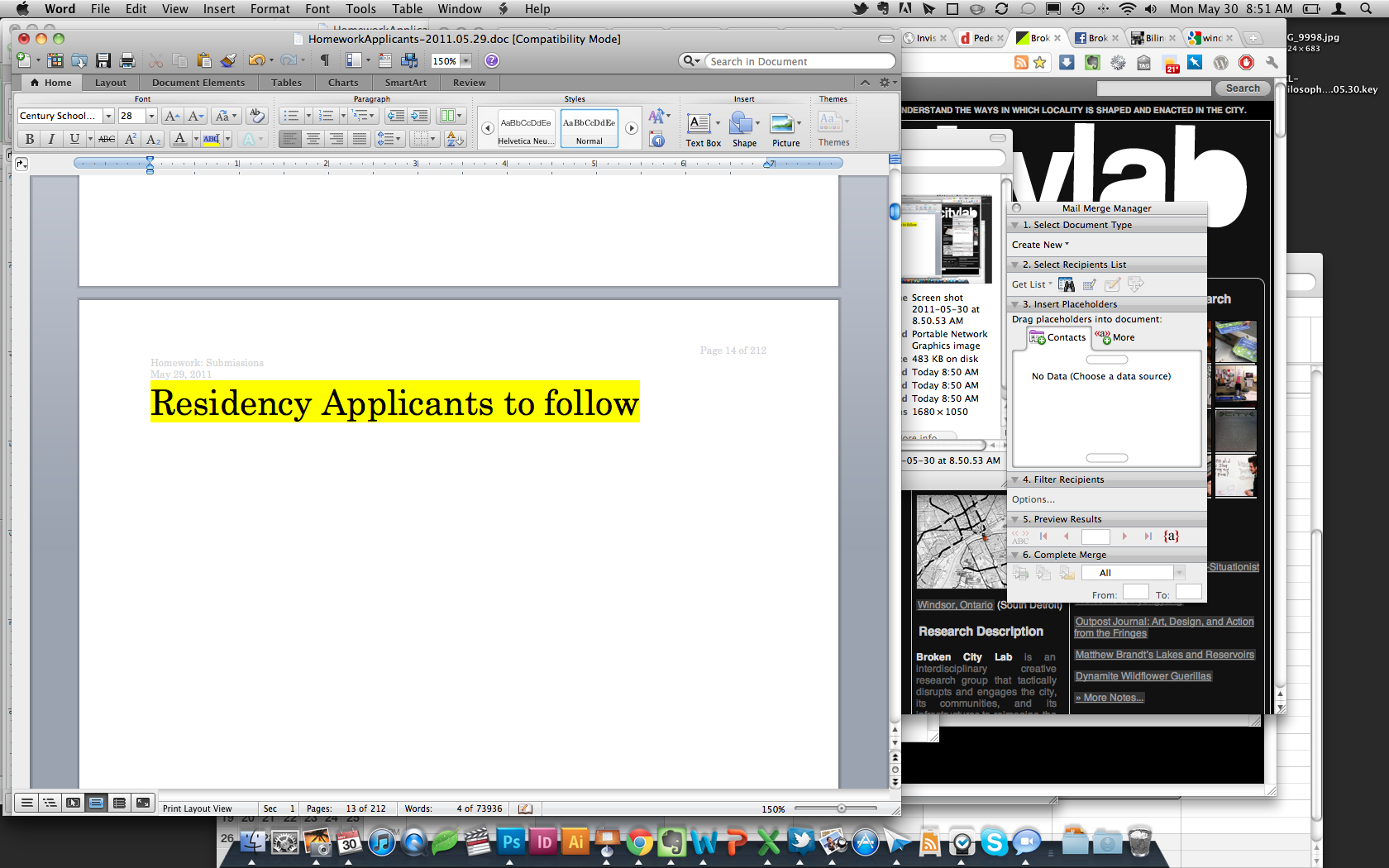
Using the mail-merge function built into Word, we’re taking the csv file that our form builder wordpress plugin generated from all the Homework submissions and putting them into a readable document.

It’s 212 pages long.

We’re working through this as quickly as we can, but there’s so many incredible applications. Hopefully we’ll have word out about the selected participants in the next couple of weeks. Again, thank you to everyone who submitted!!

HOMEWORK: Infrastructures & Collaboration in Social Practices is generously supported by the Ontario Arts Council.

Sergio Albiac’s ‘Content is Queen’

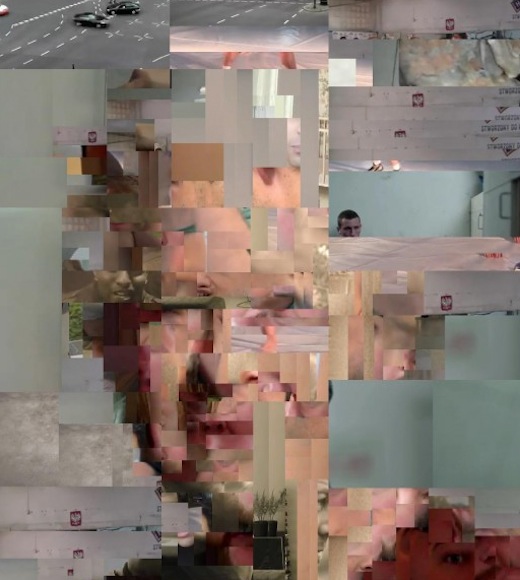
Content is Queen is a new generative video painting by Sergio Albiac. Using computer programming language, he modifies the tools a painter would normally use and creates dynamic “paintings” from found video. If you’re having a hard time discerning what the image is, take a few steps back. Now the title makes sense!

Sergio states, “My technique uses regions of video content to effectively represent or “paint” heterogeneous regions of the image. Both the partial content of the videos and the whole image are fully visible at the same time, widening the possibilities to deliver meaning in a contemporary aesthetic language.”

Via: Today and Tomorrow

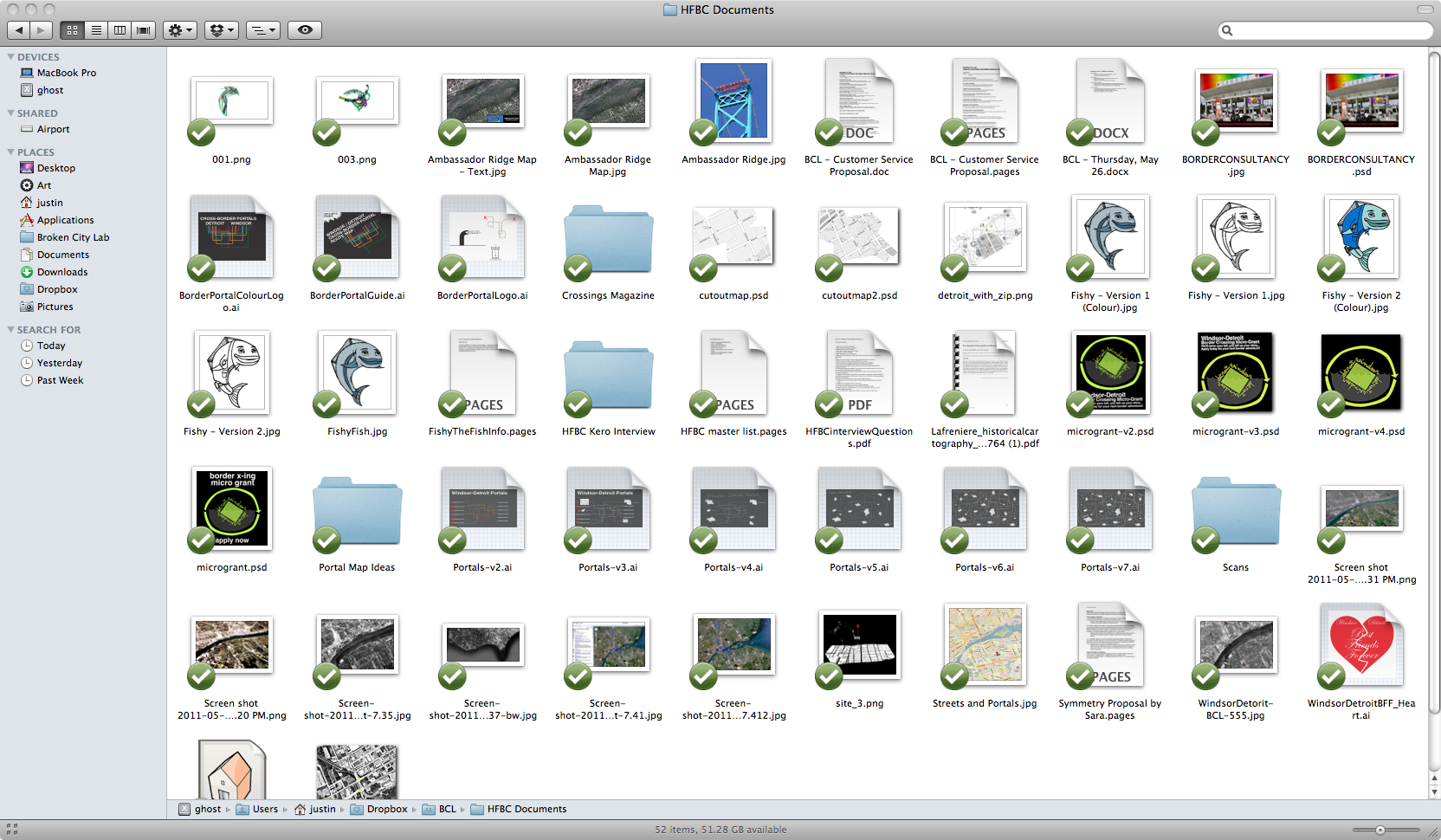
Re: Collaborating on a big publication, Dropbox ftw

We met yesterday, but too much going on for any photos.

I figure that our shared Dropbox folder says most of the important stuff anyways.

We’re working towards completing our HFBC publication, which includes things like:

  • posters of inventions on crossing an imagined border wall
  • maps and 3D renderings of a cross-border portal system
  • a Canada Border Services consultancy
  • a tunnel token micro-grant
  • proposed public art projects that bring a level of symmetry to Windsor and Detroit
  • sketches of 1000 pedestrian crossings
  • transcriptions from interviews with frequent border crossers
  • new geographies
  • small-scale messaging options across international borders
  • technological imaginings for helping people otherwise unable to experience crossing a border
  • scavenger hunts / geocaching projects
  • renderings of border impediments that don’t exist, but might as well exist
  • some writing to help frame all of this

Excited to continue. Looks like next Wednesday / Friday evening are open…

How to Forget the Border Completely is generously supported by the Ontario Arts Council.
 

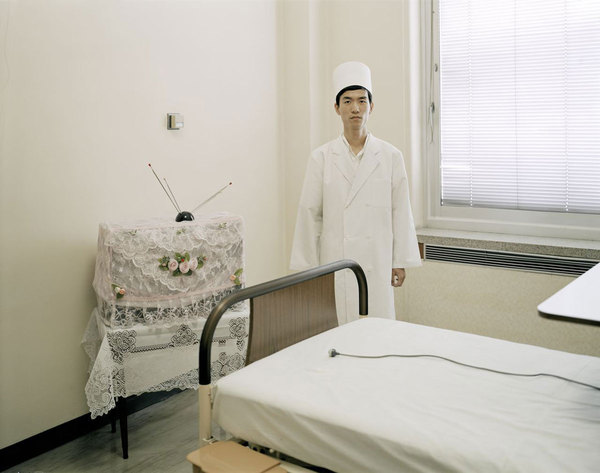
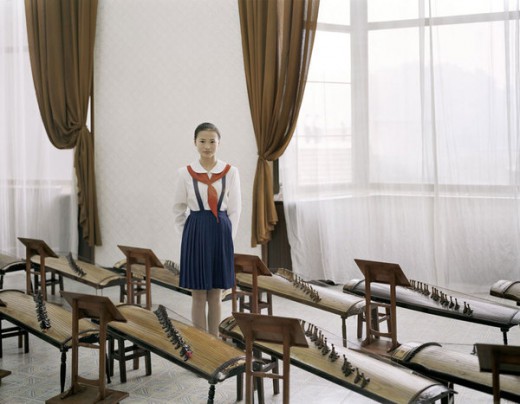
Welcome to Pyongyang

Charlie Crane was faced with the task of photographing one of the most secretive and perhaps the most censored countries in the world. It took a year of trying to obtain permission to bring his camera to North Korea, and even as he got there, he was faced with incredibly tight restrictions. As digging deeper would be nearly impossible, Crane chose to go another route, and photographed exactly what he was permitted to see. As a result, this work is of the strongest I’ve seen.

The following images are from tourist sites around the city of Pyongyang, North Korea.

Continue reading “Welcome to Pyongyang”

Working at & on (forgetting) the Border, Next Week is Show & Tell

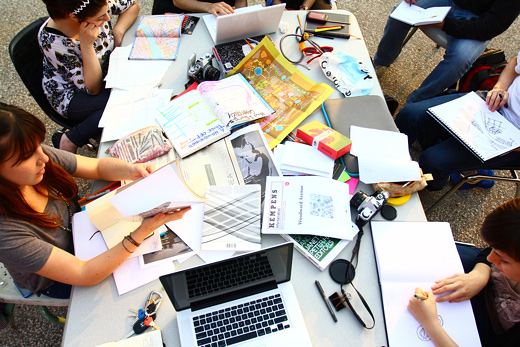
Meeting outside is the greatest. There’s talk of building some kind of mobile table / bistro to make this possible in other locations, but I suppose that’s further down on the to-do list.

For now, we’re immersed in bringing together research and inventions around our How to Forget the Border Completely project to pull into a publication.

Above, we brought lots of reference material on Friday night.

Continue reading “Working at & on (forgetting) the Border, Next Week is Show & Tell”

David Maisel’s American Mine

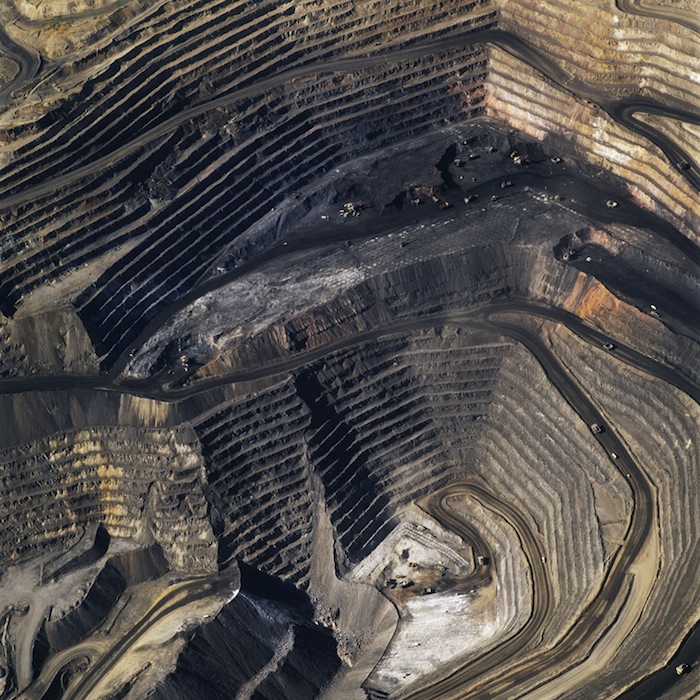
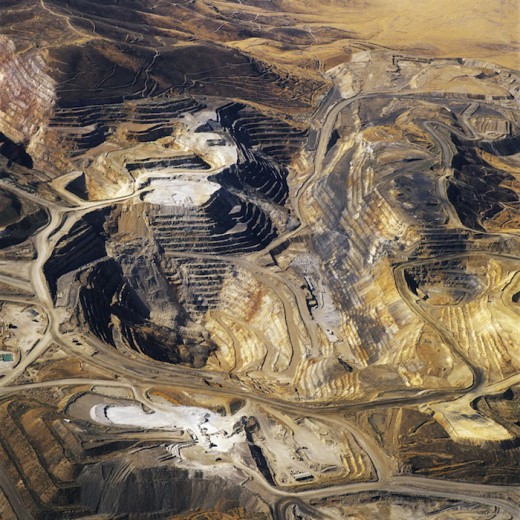
David Maisel‘s photographic series American Mine is getting on a bit now–he started it in 2007–but it’s one of those projects that become more relevant with age. To me his work highlights the paradox of admiring beauty in the organized destruction of something valuable. To be honest, all of David’s work is stunning; I suggest checking out his portfolio.

According to the American Mine project page, “Rather than a condemnation of a specific industry […] my images are intended as an aesthetic response to such despoiled landscapes. These sites are the contemplative gardens of our time, places that offer the opportunity to reflect on who and what we are collectively, as a society.”

Pictured above: American Mine (Carlin, NV 21)

Continue reading “David Maisel’s American Mine”

Mail(Art)

Thanks to an email Justin had sent me a few days ago, I’ve discovered the existence of mail art!

Sometimes, I miss the qualities of snail mail; the anticipation of its arrival, receiving it, and the heartfelt ingredients  inside of it.

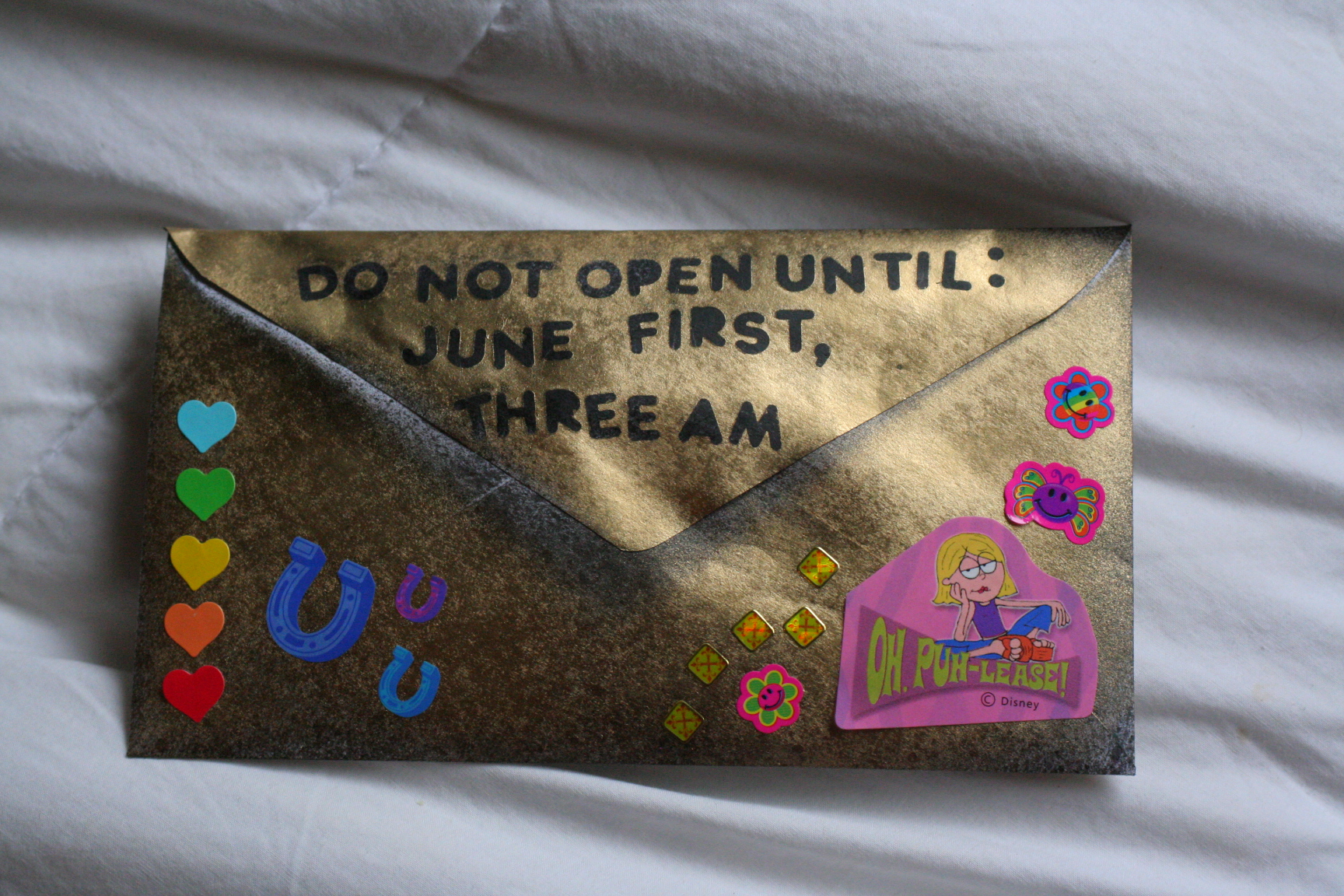
Lately, I’ve been all about sending letters. The photo above is one of three top secret birthday letters.

Justin referred me to Hyperallergic, a grand site-of-all-trades (or a blogazine, as they’ve coined)  that houses creative ideas, ways of thinking, projects, and ridiculous amounts of other things pertaining to art and it’s discontents.

What I really enjoyed was their Mail Art Bulletin, an endeavour that invites anyone to submit their own personalized letter to be posted on their bulletin and  in turn is featured on their blog for everyone to see. I’m going to spend one of my free nights working on a surprise of my own to send in!

Continue reading “Mail(Art)”

Outpost Journal: Art, Design, and Action from the Fringes

An interesting project to look into …

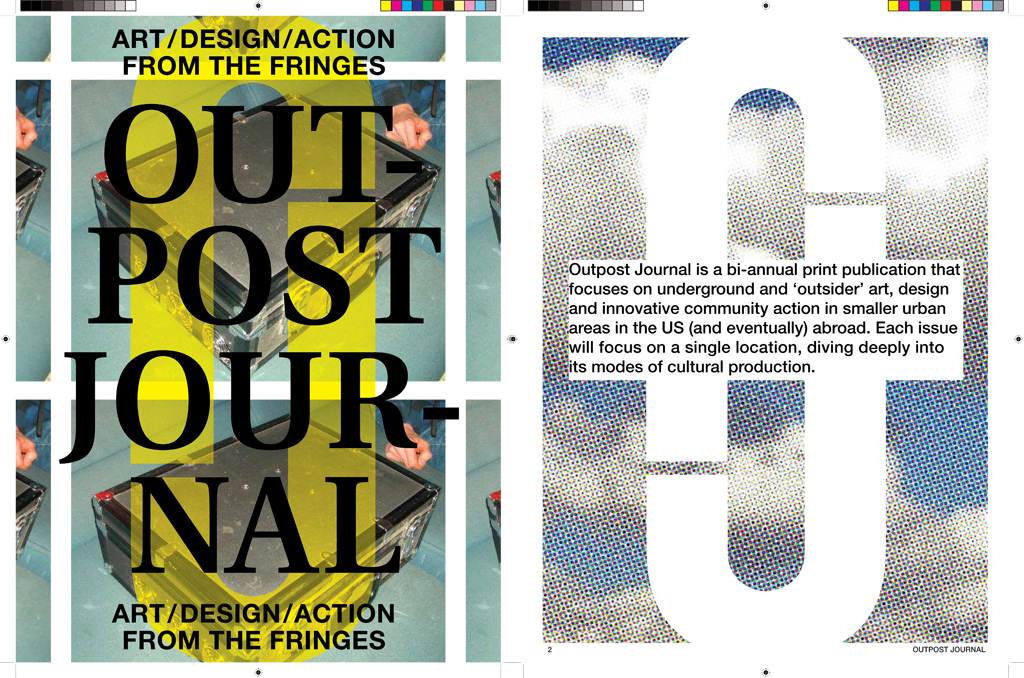
Outpost Journal is a biannual, non-profit print publication on innovative art, design and community action from cities that have been traditionally underexposed beyond their local contexts. Founded in 2010, Outpost aims to give wider exposure to artists and activists from smaller cities back in more recognized centers of artistic practice and commerce, such as New York and Los Angeles.

Outpost is a journey into the creative heart of a place. Via features like Secretly Famous (profiles of the most infamous artsy locals), guerrilla engagements with tourist attractions, historical explorations, mapping projects, and deep dives into artist collectives and organizations, Outpost plans to expose the myriad ways in which unique local communities arise through creative collaboration and production.

Support it over at their Kickstarter Campaign.

[via an email]

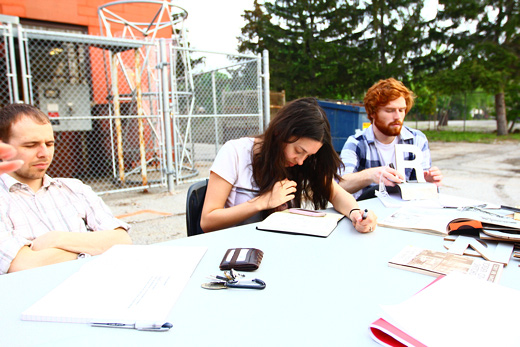
We’re outside around a table, together. It’s May. How to Forget the Border Completely.

We’re back to Friday nights. Someone thought to move the tables outside. In the dimming light, we worked. Many things are on the task list.

We’re starting to work on a publication of sorts for How to Forget the Border Completely. It’s been a really clarifying decision to pull the strands of research we’ve been working on for the project together in a form that will allow the entire project to be read at once.

Continue reading “We’re outside around a table, together. It’s May. How to Forget the Border Completely.”