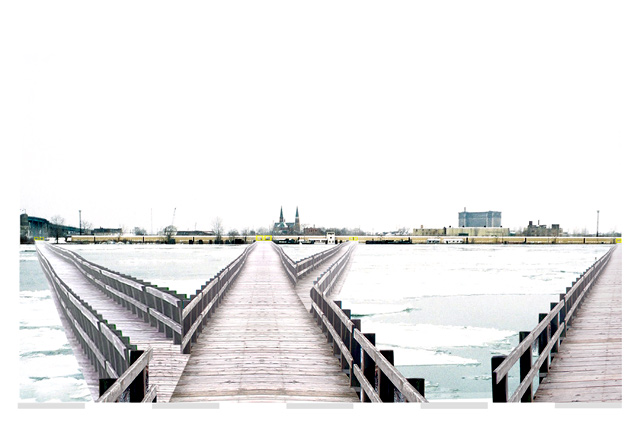
How to Forget the Border Completely, continued: 707PX

Following up on our How to Forget the Border Completely project from last year, collaborator Tom Provost continues to work on ideas around pedestrian border crossings (which you can read all about in the HFBC book!)

Photos and text by Tom Provost


In the summer of 2011, I was in dialogue with Broken City Lab about the idea of forgetting the border… completely! We thought about what could be done at the architectural scale to overcome the enormous divide between Windsor and Detroit. We thought about the possibility of prioritizing pedestrians over industry. We also considered what kind of architectonic could close the gap between the super-human-scale and the individual – a post-industrial dilemma easily visible from the river’s edge. The result was 707PX.
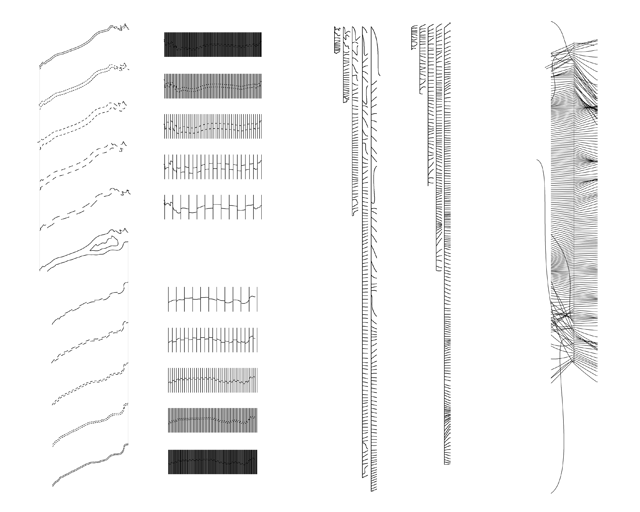
707PX is a speculative project engaging the border cities of Windsor and Detroit in a new entanglement. The geopolitical division acts as an indicator only, a naïve datum. The architecture examines the surreal condition of complete pedestrian dominance with form as an end goal of the process. Ultimately, it is the process that dominates to form a surreal pedestrian condition along the river. The concept became physical after pursuing the connection of past, present, and future incarnations of the river. It began with a map from 1796 that was meticulously traced along both edges, reifying what has now been striated. These new edges were examined as a whole and then as a part. By repeatedly scaling and the slicing them into multiple sections, it quickly revealed an allegiance to an old-world geographic division native to its very own history – the French ribbon farm. The ribbon farms are noticeable on the map from 1796 as they indicate human presence. They are cordoned off plots, extending narrowly and perpendicular to the river. By alluding back to this system, the architecture can interfere with the modern schema at the human scale.
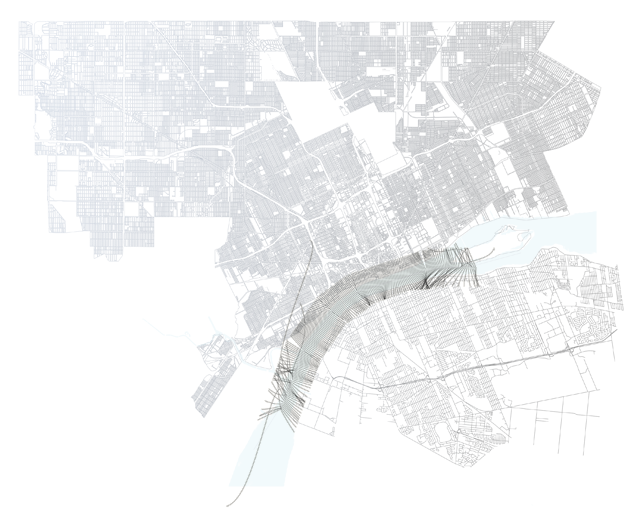
The multiple collections of river’s edge sections are then distributed evenly on their respective sides, in sequential order. The sequence creates tactility close to rippling, with a rhythm clearly visible on both sides. With the border as a datum, both sides dialogue and seesaw at various moments, creating subito and crescendo. The finale occurs when the sequence, thought of as attached to a string, is lifted and becomes conformed to the unique, precise, and mathematical geopolitical division. It should be noted that the 1796 map omits division. The river appears as a singular moving force between bodies of and is left graphically plain. The form of 707PX reifies the singularity of the river by adjoining both cities and entertaining a pedestrian agenda. This investigation answers the question of how one is to forget the border while simultaneously subverting its presence.
Hi, 5 with Alex Asher Daniel

About the Hi, 5 Interview Series

Hi, 5 (5 Questions) is a web-only interview series which presents five questions to artists, activists, and creative thinkers alike. The project acts as an educational device which allows us to gain insight into the narratives that define successful individuals. We are interested in the motivations behind ambitious ideas and how change has been affected by those with the passion for progress in their practice.

About Alex Asher Daniel

Alex Asher Daniel is an American painter residing in New York City. Alex has a show of portraits coming up in March 2012 at the National Black Theatre in Harlem.

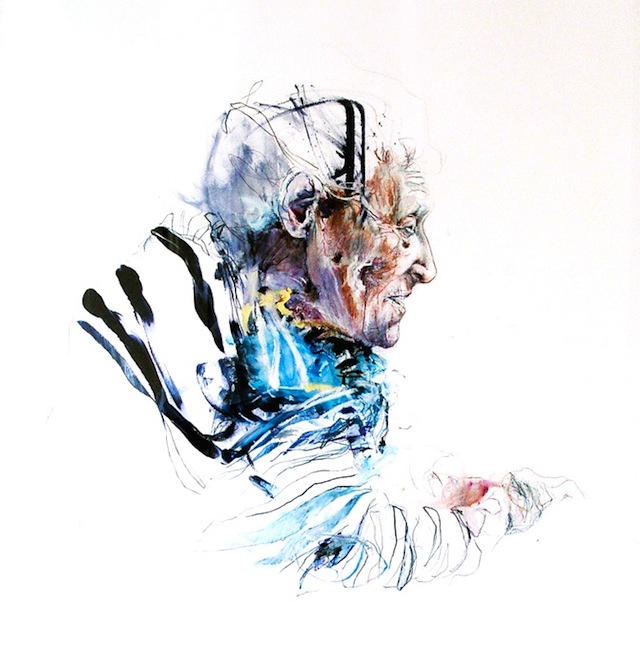
Alex Asher Daniel - London Head Number 11

Alex Asher Daniel

February 1st/2012

If you had to describe your current self to a 16-year-old you, what would you say?

I still feel 16 at times, just with more battle scars. In many ways I am trying to reach back and find where I was as a child. There is a pure love of art and music when you are young, really letting it embrace you, an enchantment. I want the feeling again of loving a band and their music, before you actually met them and it ruined everything.

Could you describe an evolution in your work or way of thinking?

The work can not help but evolve if it is coming from a truthful place, because you yourself are ever changing. Even when I have made a point to work in a uniform series- each time I begin a new painting I feel as though I have never painted before. I have found myself consistently drawn to certain subject matter, but the approach to how I paint it is always changing. In my early work I was inspired by the figure, but I was intrigued by the shape of letters, numbers and blocks of colour. I incorporated that into my work, and it came across very graphic and two-dimensional. Today, I still explore the human body, but I am searching for meaning within the unseen space around my subject- it makes for a much more multidimensional experience.
Are there any people who have been instrumental in the development of your way of thinking and viewing the world?

That’s a big question. Off the top of my head… Of course, a great influence early on were my parents and their sensitivity for the arts and music, and their awareness of the human dynamic. The places I grew up in my youth, and the communities that surrounded me, especially the bay area and it’s social and spiritual consciousness.

The poet, Michael McClure, who was my English teacher in college, encouraged me to continue my studies in mysticism and the esoteric, both of which have been great influences on my work. There was a book I read when I was younger, an analysis of John Coltrane’s music by Bill Cole, which was a great inspiration at the time. My friendship with Caetano Veloso, who has such a beautiful heart, inspired me to have a more delicate approach to being. Around the time I first arrived in New York City, I met the designer Bill Katz. Bill let me use his studio, which is where I did my first series of portraits, so that was an important time for me. He also introduced me to my favorite scotch. There are so many more… but I will spare you.

How do your political beliefs inform or fuel your work as an artist?

I grew up in an environment surrounded by activism, and I feel that when done intelligently, the arts are the most powerful means of expression and education. I, however, am drawn to more ethereal explorations, so at times I was concerned with whether I should speak out more in my work, but then I realized that our works’ existence alone is revolutionary.

What do you feel a city should be or do for its inhabitants?

A city does nothing for its inhabitants but exist as a blank canvas for what you can manifest. Participate.

http://www.alexasherdaniel.com/

In Store: A Series of Documentary Shorts on SRSI

We’re incredibly excited to be able to post this trailer for the forthcoming series of documentary shorts, In Store, produced, directed, and edited by the astoundingly talented, Daragh Sankey. Here’s the background from the In Store website:

It’s been a long time coming, but I’m finally posting stuff from my work in Windsor. It is a series of documentary shorts called In Store. It’s stuff I shot during Broken City Lab’s SRSI Project. SRSI stands for Storefront Residencies for Social Innovation, and it involved artists from across the country doing residencies in three vacant Windsor, ON storefronts.

I’ve got a trailer up now, and the shorts themselves will start showing up in a week or two. To stay on top of it, you can follow the sitethe twitter feedThe RSS feed. Or, if you’re reading this from the main Angry Robot site, the posts will show up there too. Or you can wait for me to just beam the stuff into your brain, which I’m sure will be available as a delivery platform any day now.

What can you expect from this? There will be about 10 films total. Most follow an artist as they do their thing on the residency, but they’re not all summaries; some single out moments. A longer one will be about Broken City Lab, the organizers of the event, and will be a bit broader than just the SRSI event. One will be about Windsor. I’ll be releasing a new one every week or two.

What’s it all about? Surprisingly, many of the artists used the space less as a gallery, and more as a base camp for engaging with the city. They produced art that was questioning, playful, exploratory and thought-provoking. You will see: disco balls, transplanted plants, fictional security guards, roving libraries, Detroit, gambling, a long street of vacant houses. If there’s a theme, it may be the challenges facing post-industrial cities like Windsor, and the role of art in articulating and helping face those challenges.

Hopefully, you’ll enjoy it.

Keep your eyes here: http://angryrobot.ca/instore/

Border Town Design Jam

photo courtesy of http://dividedcities.com/

One of our dear friends (and Homework presenter), Tim Maly, from the great city of Toronto is hosting an event continuing off of the work he did with the Border Town Design Studio last year.

Here’s the details, if you’re in the area (and here’s more detailed information):

BORDER TOWN DESIGN JAM

From Friday March 2, 2012 to Saturday March 3, teams of clever people will get together to solve a User Experience problem relating to border towns. Would you like to be one of them?

Border Town Design Jam (#btdj)
Using border towns as a point of entry, we’ll approach political geography as a design problem. This design jam will take place over 1 day (and a half), from March 2 to 3, 2012. Tickets are now available on Eventbrite. This event is presented in collaboration with ThingTank Lab.

Interested in seeing and hearing the results of this jam? We’re opening up our final show and tell to the general public – get your free tickets to attend here!

********************

Topic
The topic and design challenge will be revealed at the kickoff party on Friday March 2, 2012, 6PM. However, here’s a hint:  ”Everyone must pass”

About Design Jams
Design Jams are one-or-two-day design sessions, during which people team up to solve engaging User Experience (UX) challenges. Learn more about Design Jams. 

Who should attend Design Jams
Anyone really – Human-Computer Interaction (HCI) & Design Students, Interaction Designers, UX Researchers, Information Architects, UI Designers, Web Designers, Graphic Designers, Hardware Hackers, Policy Nerds, Developers + more… The day aims to improve collaboration skills and help attendees learn and practice various UX techniques including but not limited to Research, Brainstorming, Sketching, Wireframing and Prototyping.

What happens at a Design Jam?
Attendees sign up in advance. Upon arrival they assign themselves to teams based on the skills they could contribute and what they’d like to learn. Teams are then presented a design challenge that they tackle by doing research, sketching, guerrilla testing and other UX techniques. They are encouraged to share their process and ideas halfway through enabling them to get feedback from other teams as well as other mentors in attendance during the day. The day concludes with final presentations to the entire group. Outcomes could take the form of sketches, storyboards, a video or even a prototype – whatever communicates the idea best.

What happens to the ideas we come up with?
All output materials will be shared on the Border Town and ThingTank Lab websites, and teams will be asked to compose a blog post about their design process and ideas.

Licensing
To facilitate the free exchange of ideas, all outputs, visualizations and other contributions made during the day must be contributed under the Creative Commons Attribution (CC-BY) license. This basically means anyone can use ideas generated at the Design Jam, as long as they credit the original authors.

********************

Organizers
Feel free to contact any of the following with questions and queries.

From Border Town design studio (@dividedcities)
Emily Horne @birdlord & Tim Maly @doingitwrong

From ThingTank Lab (@thingtankTO)
Marie-Eve Belanger @wrongposture

Upcoming Show: Two Tales of a City / Deux Contes d’une Ville

Two Tales of a City

March 9th – May 4th, 2012

Workshop & Opening: Friday March 9, 3:30pm @ Hamilton Farmer’s Market & 6:30-8pm @ Hamilton Artists Inc.

161 James Street N. Hamilton L8R 2K9


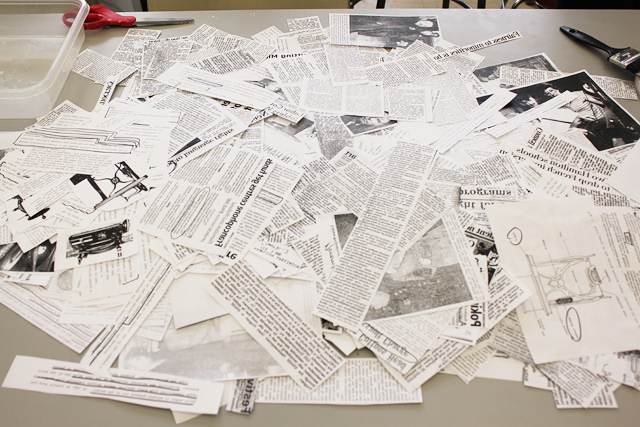
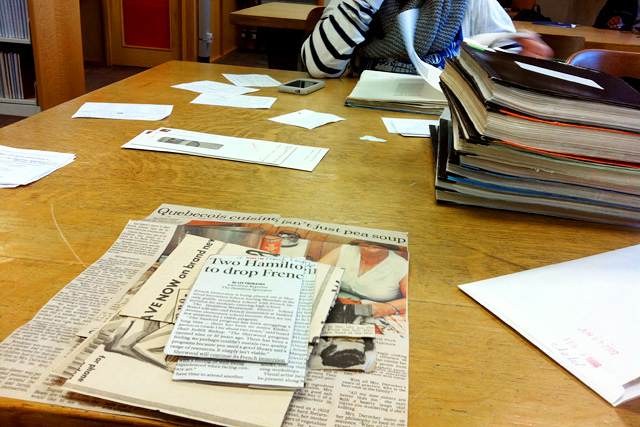
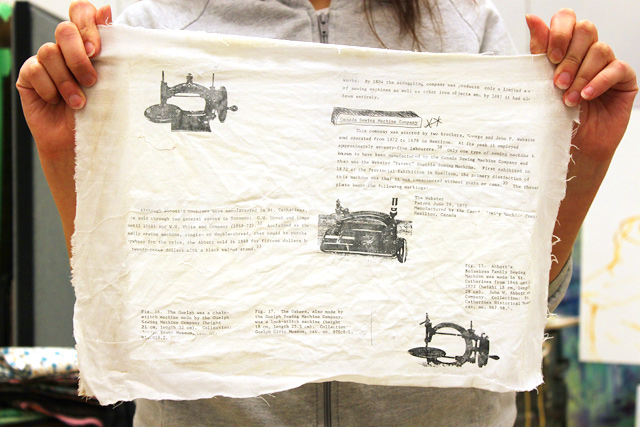
Two Tales of a City aims to examine a range of social, economic, cultural, and political dualities tracked throughout Hamilton’s past, present, and future. Gathered from archival research, interviews, and pop-up surveys and timelines, Two Tales of a City will present competing, intertwining, and parallel narratives of Hamilton through a large-scale fabric banner, oversized bunting, a workshop, and forthcoming publication.

The fabric banner installed along the side of HAI’s new building will feature a rotating series of call-and-response dualities over a six week period, while the oversized bunting will span 135 feet hung across the roofline and act as a timeline of collapsed and thriving industries, experiences, struggles, and victories of the city.

While created by drawing on stories, experiences, and data from Francophone and Anglophone communities in Hamilton, the project will culminate in a re-distribution of the timeline bunting to the community by allowing gallery visitors to take pieces with them at the close of the exhibition.

Featuring documentation of the projects, essays, and a collectively written story, the publication will be created from activities at the upcoming workshop, and will be available in print at the close of the installation, April 27, 2012. The Tales of a Timeline: Hamilton’s Stories Workshop will take place on Friday, March 8th at 3:30pm at Hamilton Farmer’s Market, with the exhibition officially opening later that night from 6:30-8:00pm at HAI.

Please contribute to the exhibition by filling in this fill-in-the-blank form and telling us your story about Hamilton!


Deux Contes d’une Ville

9 Mars – 4 Mai, 2012

Ouverture Vendredi le 9 mars de 6;30-8pm, & Les Fables d’une Chronologie : Histoires de Hamilton Marché Fermier d’Hamilton (35 boul. York, Hamilton), dans la cuisine communautaire à 3:30pm

Hamilton Artists Inc.

161 rue James N. Hamilton L8R 2K9

Ouvert ce vendredi « Artcrawl » le 9 mars jusqu’à 11pm.


Deux Contes d’une Ville vise à examiner une gamme de dualités sociales, économiques, culturelles et politiques soulignant le passé, le présent et le futur de la Ville de Hamilton. À partir de la recherche amassée des archives et de l’histoire chronologique de la ville, d’interviews et de questionnaires, Deux contes d’une ville nous présente des narrations de Hamilton en conflit, entremêlées et parallèles en utilisant une bannière à grande échelle, une série de fanions surdimensionnés, un atelier et une publication rétrospective vers la fin de l’exposition.

La bannière de tissu installée sur du côté du nouvel édifice de « Hamilton Artists Inc. » affiche une série de phrases contenant des dualités, extraite du questionnaire. Cette bannière changera au cours de la durée de l’exposition, soit huit semaines. La série de fanions géants mesure 135 pieds de longueur et est suspendue au long du toit. Ces fanions représentent l’histoire chronologique des industries disparues et celles toujours existantes et des expériences, défis et victoires de la ville.

Créer à partir des histories, expériences et de l’information accumulée au sujet des communautés francophone et anglophone de la Ville de Hamilton, le projet culmine avec la redistribution des fanions à la communauté en permettant aux visiteurs de la galerie d’en prendre des échantillons, à la fin de l’exposition.

Mettant en vedette la documentation du projet, des ouvrages littéraires et une histoire écrite collectivement, la publication sera créée des activités de l’atelier à venir et sera disponible vers la fin de l’installation, vers le 27 avril.

L’atelier : « Les Fables d’une Chronologie : Histoires de Hamilton »,  prendra place Vendredi le 9 mars, 2012 au Marché Fermier d’Hamilton (35 boul. York, Hamilton), dans la cuisine communautaire à 3:30pm, avec l’ouverture officielle de l’exposition plus tard le même soir de 6:30 à 8:00pm à « Hamilton Artists Inc. » (161 rue James N. Hamilton).

S’il vous plaît contribuer à l’exposition en remplissant ce formulaire fill-in-the-blank et nous dire votre histoire sur Hamilton!

Hamilton: Deux Contes d’une Ville – Formulaire

Deux Contes d’une Ville (9 Mars – 4 Mai, 2012  à Hamilton Artists Inc. ) vise à examiner une gamme de dualités sociales, économiques, culturelles et politiques soulignant le passé, le présent et le futur de la Ville de Hamilton. À partir de la recherche amassée des archives et de l’histoire chronologique de la ville, d’interviews et de questionnaires, Deux contes d’une ville nous présente des narrations de Hamilton en conflit, entremêlées et parallèles en utilisant une bannière à grande échelle, une série de fanions surdimensionnés, un atelier et une publication rétrospective vers la fin de l’exposition.

S’il vous plaît contribuer à l’exposition en remplissant le formulaire ci-dessous et contez nous vos histoires de Hamilton.


[gravityform id=”9″ name=”Hamilton Madlibs” title=”false” description=”false”]

Hamilton: Two Tales of a City Fill-in-the-blanks (English)

Two Tales of a City (March 9th – May 4th, 2012 at Hamilton Artists Inc.) aims to examine a range of social, economic, cultural, and political dualities tracked throughout Hamilton’s past, present, and future. Gathered from archival research, interviews, and pop-up surveys and timelines, Two Tales of a City will present competing, intertwining, and parallel narratives of Hamilton through a large-scale fabric banner, oversized bunting, a workshop, and forthcoming publication.

Please contribute to the exhibition by filling in the form below and telling us your story about Hamilton!

Or, do it in French!


[gravityform id=”8″ name=”Hamilton Madlibs” title=”false” description=”false”]

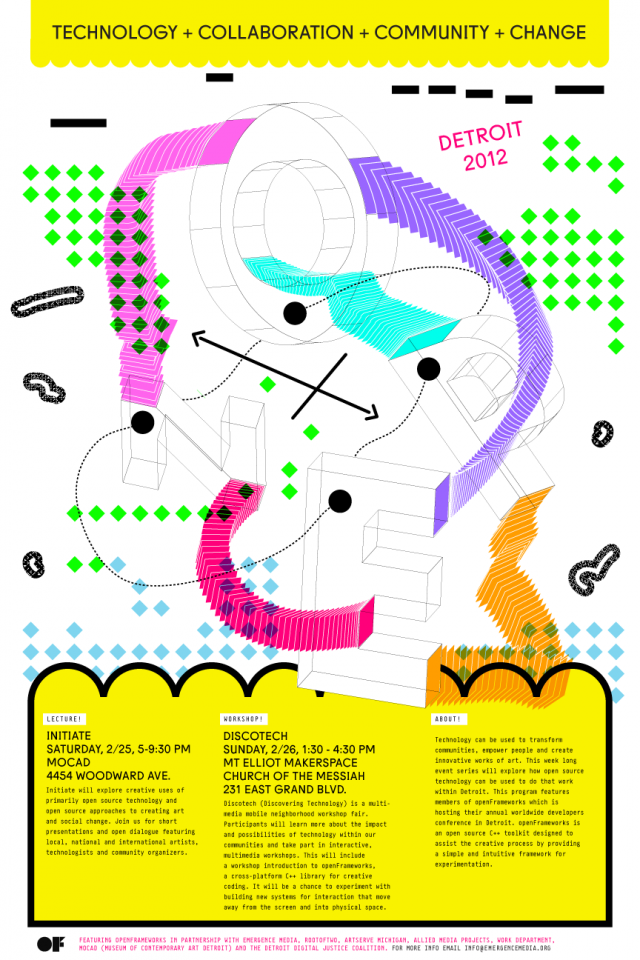
Initiate! Open Frameworks Detroit

I’ll be presenting Broken City Lab at:
Initiate! Technology + Collaboration + Community + Change
Saturday, 2/25, 5-9:30 PM
Museum of Contemporary Art Detroit
4454 Woodward Ave Detroit MI, 48201

Looking forward to a great discussion on creative uses of primarily open source technology and open source approaches to creating art and social change with a bunch of awesome talented people.

Hope to see you there!

Rodrigo Martí on field work and alterity

Barricade Sculpture workshop courtesy of rodrigomarti.com

This is part of an ongoing set of one-question emails sent to people we know, or would like to get to know, about things that interest us and inform our collective practice. They’ll be featured on the site weekly, usually on Fridays. These questions are more about unfolding ideas than about the people we’re asking, but we do ask those kinds of questions too.

We’re pleased to continue this project with a question for a dear friend and exceptionally generous artist, Rodrigo Martí.


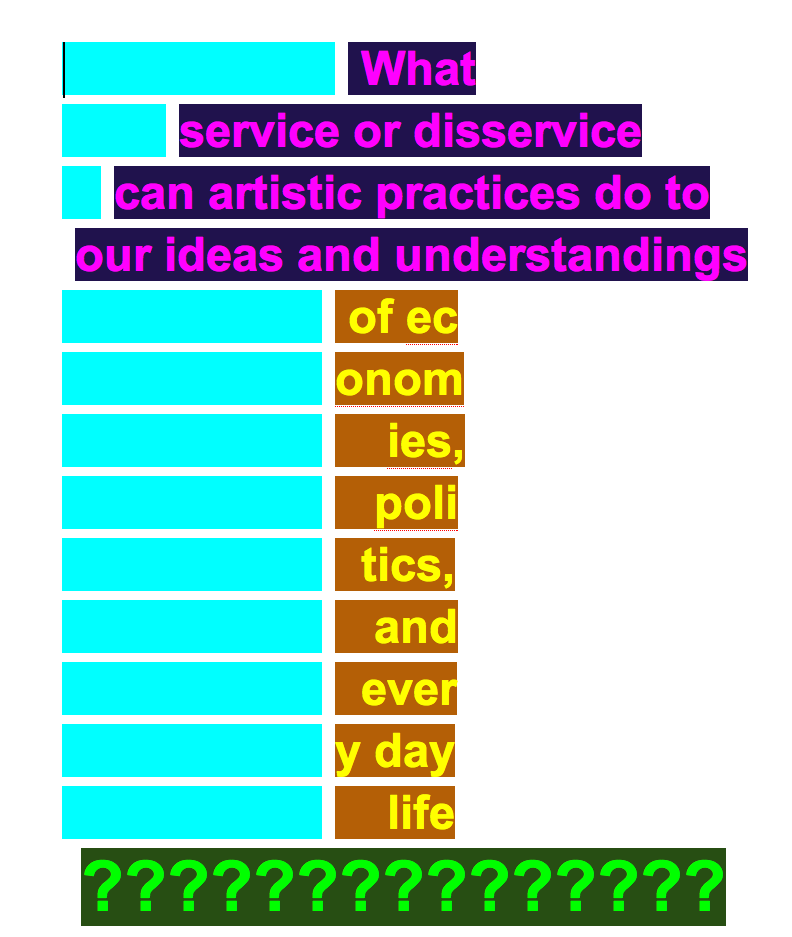
What service or disservice can artistic practices do to our ideas and understandings of economies, politics, and everyday life?

Google Docs mushroom by RM

freaking out on field work
rumminations of battles won, lost and those yet resolved.

We were still green behind the ears having just begun a demanding graduate program a week prior. Directed by an invited artist and a curator, we were set to start our first group project. The four month endeavor would consider the responsibility of cultural institutions to their surrounding communities.

The steps were simple enough. Step one; mapping out community-based organizations that aligned with our political motivations, we were then to make contact and initiate a working relationship. There lay the snag in our step. A few of us began to squirm in our seats over the rush to start working in the field. It just so happened that the loudest dissenters were those of us (myself included) who had formal arts school backgrounds. We the squirmers, argued for the necessity of proper preparation which for us meant having more time, doing more reading, and engaging in more in-depth debate around the nature of field work before ACTUALLY getting ‘out there’. The response by the teachers was unequivocal: they insisted we cool our nerves and act on our dedication to the goals of our intended partnerships. Our commitment was an indication of our readiness to begin doing the inevitably dirty and unpredictable work in the field, period.

It occurred to me several months later and after the completion of the project that there was a significant pedagogical, even epistemological position being advocated by our teachers’ insistence on getting dirty rather than rooting ourselves in scholastic insight. Obviously – being in a graduate program – reading would definitely happen at some point. What’s clear to me now is that our hesitation marked a pedagogical and cultural bias we had picked up involving the nature and process of research and ‘good’ cultural production. This caused those of us generally more comfortable in the academic setting to fall back on academia as a preparatory safety bubble to postpone the insecurities felt in getting ‘out there’, potentially making things worse, or making fools of ourselves.


– ALL THE ALL CAP FREAK OUTS –

An echo resonated in my mind from the first gander at Broke City Lab’s question, I’d heard it before somewhere. Preoccupation with the value of our work as cultural practitioners working in the field has come from cynics arguing against its relevance and ethics, by practitioners recognition of the issue as a hurdle to surpass or an ongoing anxiety; it is most definitely in the rumblings of my own thoughts. While the complexity ingrained in the questions of service or ‘doing good’ offers an enormous area to consider, my focus here is on the initial anxiety and its ensuing self-doubts. There is an inherent self-doubt in the questioning of doing good vs. doing bad. Doubt has proven to be constructive to our modern modes of production and in our resultant identities, and though it is fruitful in many instances, it can be detrimental. This doubt’s genesis lies in existential self-questioning rather than a skeptical look at the structural, disciplinary or historical questions. It is my hope to warn against the creeping in of self-doubt as an excuse to work within one’s comfort zones while meandering some of its causes.

I’m in the midst of reading Grant Kester’s second book, The One and the Many, in which he considers the nature of collaborative art in today’s global contemporary art scene. There are two comments he makes that are particularly relevant and succinct. While framing the pressing ethical implications of artists opening up to alterity, Kester points out that there is “no art practice that avoids all forms of co-option, compromise, or complicity.”(1) While this statement can easily be considered a truism, it is also too easy to project insurmountable expectations and build pristine glass palaces around our intentions, especially when embarking towards new territory in our practices. While this projection can be the ‘spirit’ or ideal of your work, lacking a distinction between the image and the necessarily blemished path it must travel to become realized has easily resulted in frustrated efforts and unnecessary hesitation in my experience. This same disparity can lead to prematurely asking: ’is working in the field really worth it?’ without ever dedicating oneself to completing the necessary work. While I have had the fortune to work with, learn from and aspire to the work of several artists who have realized massive, successful projects extending to years of dedicated ground work, fundraising, stranddling of disciplinary and class lines etc.. It is John Cage’s suggestion to help restart an artist’s blocked practice: start anywhere, that trumps lofty intentions to the daily adherence to get through the daily hurdles and road blocks on the path of completing any effort.

The second Kester reference is framed by a larger cultural observation he makes, noting the growth of collaborative practices in recent years and commenting that these practices consider “extended interaction and shared labor..(as well as) participatory practice itself… as a form of creative praxis”(2). I agree with considering collaboratively working in the field as its own space of creative development, sustenance and learning. It has its own particular forms of engagement, not only in the inevitable clashes of working in alterity or the inevitability of the thumb of random, unforeseen or unavoidable disturbances finding their way into our pretty, schematic images of our work. Collaborative endeavors as a form of venturing and working with radically different elements in our practice are a particular artistic form and medium in and of itself. It is from this understanding that my grad school profs founded their advice to chill out and get out into the freakin’ field.

Stress, anxiety and freaking out are inevitable and helpful reaction that help push us to thoroughly prepare for an uncertain task. In a sense as public practitioners, we’re asking for it.

So, what can artistic practices do to our ideas and understanding? ANYTHING! No matter if its devoted gaze is fixed on politics, economics, everyday life or any other framing of time, system of value or discipline. But when considering what we do, and particularly what is being done today in the incipient institutional framing of public practice, I’d begin by underlying the need for not only an articulation of the nature of the ethical value of our labor, but also for the necessity to maintain a productive mix of morale support and productive critical commentary or (to add an avant-garde-y splash) ‘rigueur’. Before beginning our first year project, artist and theorist Suzanne Lacy unambiguously proclaimed to my cohort that ‘us public practitioners need to do double the work’. More reason for finding and sharing techniques to sustain individual determination and promote the freakiness one gains from the proximity and dirtiness of being ‘out there’.

footnotes:

1 – Kester, H. Grant. The One and The Many: Contemporary Art in a Global Context.(Duke University Press 2011) 2.

2 – Kester, H. Grant. The One and The Many: Contemporary Art in a Global Context.(Duke University Press 2011) 9.


Rodrigo Marti is a Mexican-Canadian artist who’s social and conceptual practice has lead to an increased involvement in sociopolitical concerns. Recent projects have worked with issues of access in public education, student activism and gang intervention with particular interest in public speech, myth and freedom of expression. Rodrigo completed his Master’s of Fine Arts in Public Practice at Otis College of Art and Design in May of 2011. He is based in Toronto, Canada and on rodrigomarti.com.

Prototyping Projects for Halifax

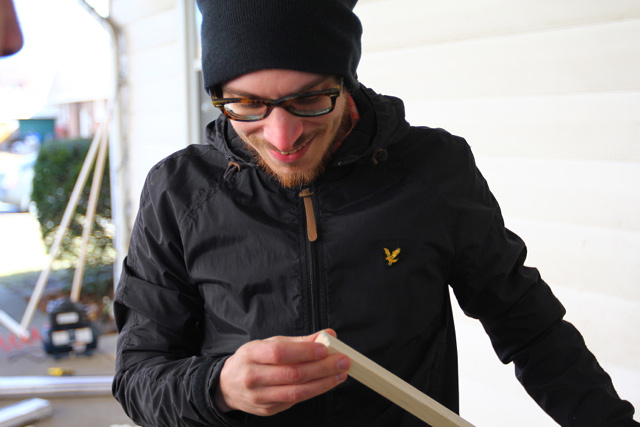
Josh, Hiba, and I spent Monday prototyping some projects for our upcoming project in Halifax. This was building off of some small macquettes that Hiba did a week ago.

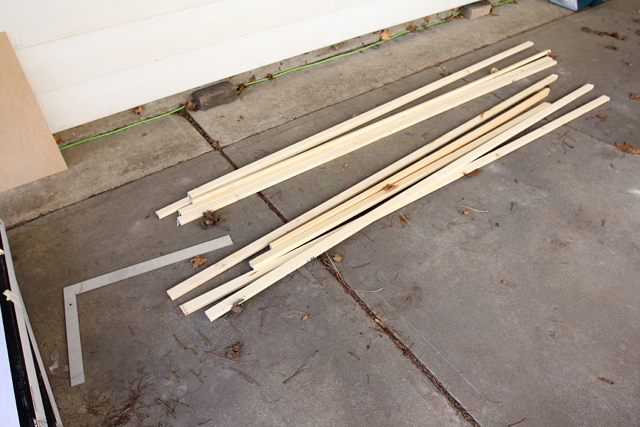
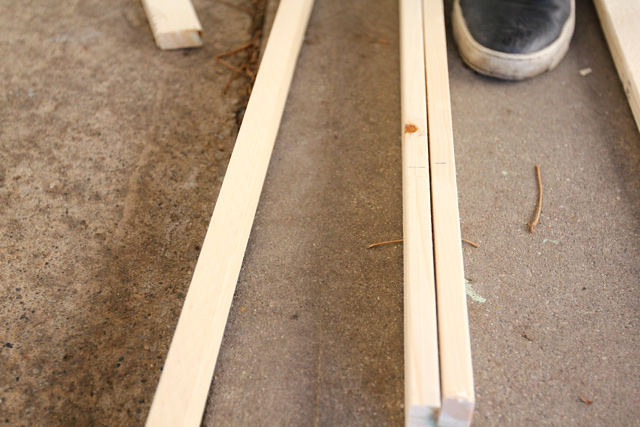
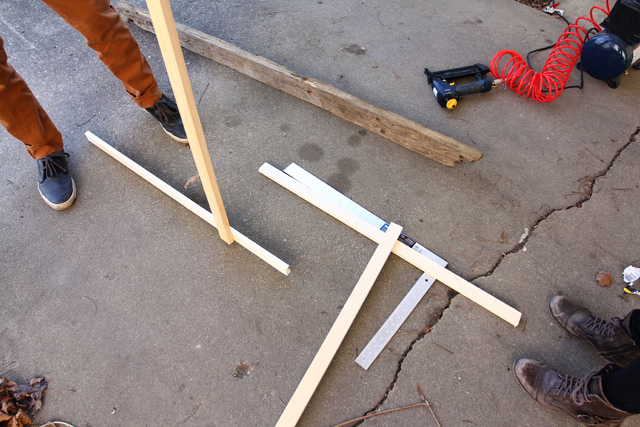
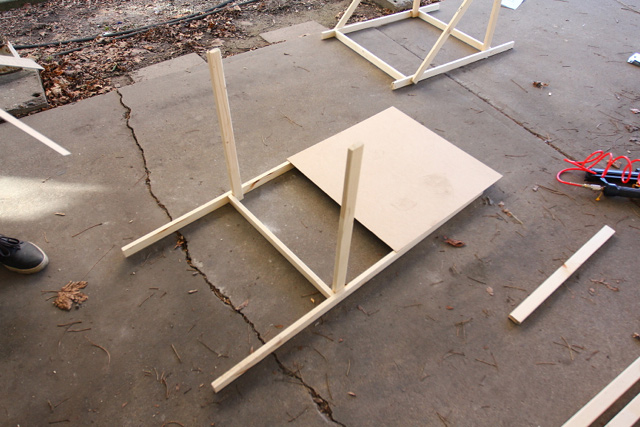
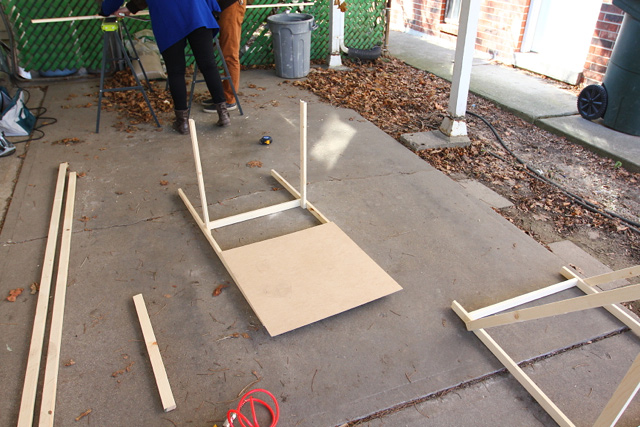
We wanted to work at full scale, so we got a bit of wood and started thinking through building.

The process was really quick and dirty, we just wanted to get some things closer to full scale to start looking at them and figuring out how we’ll move forward.

We’ll likely end up rebuilding these out in Halifax anyways, so these really will act just as a model.

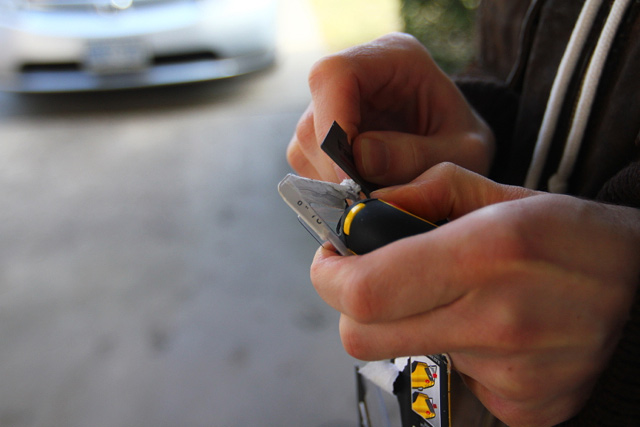
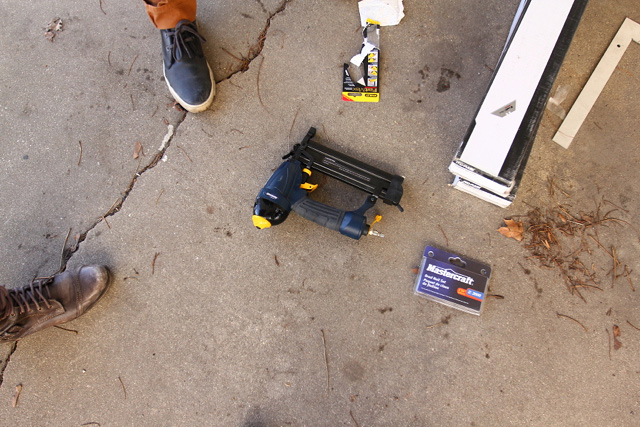
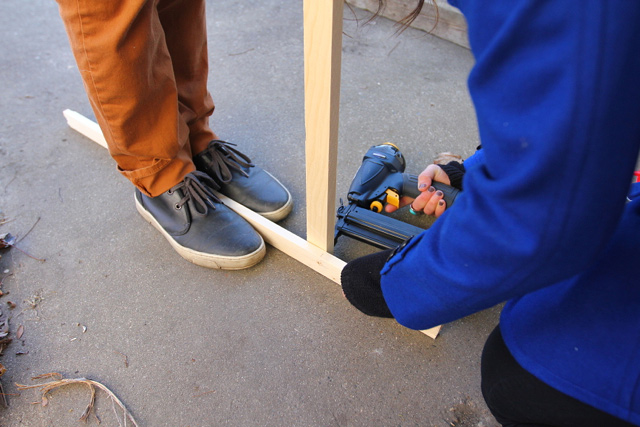
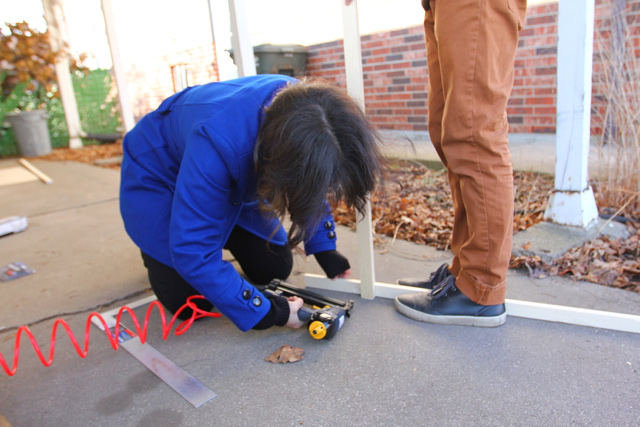
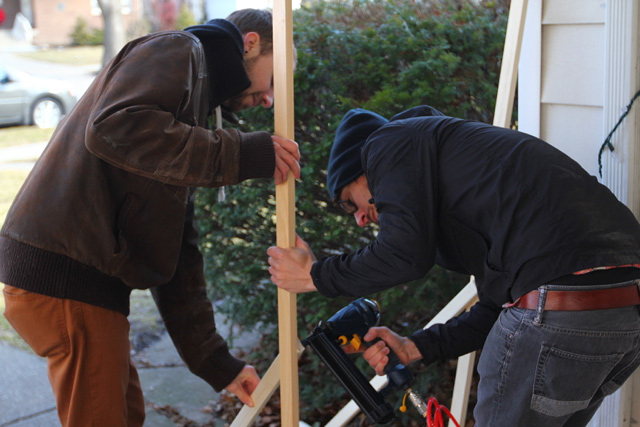
Some of the tools. Yes, a nail gun. More fun and less sturdy than a drill.

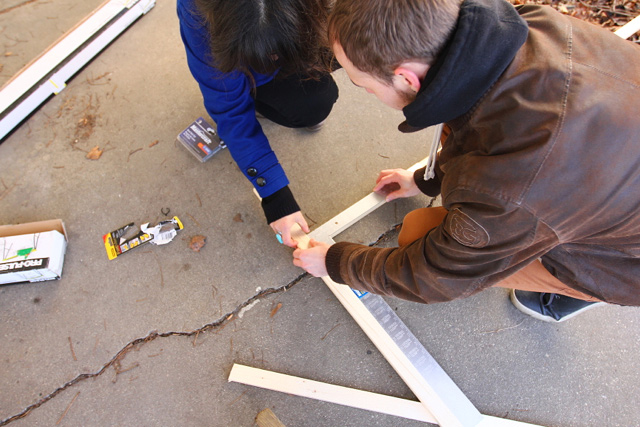
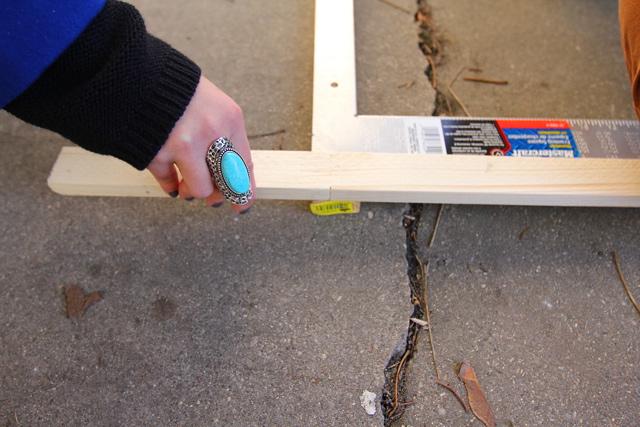
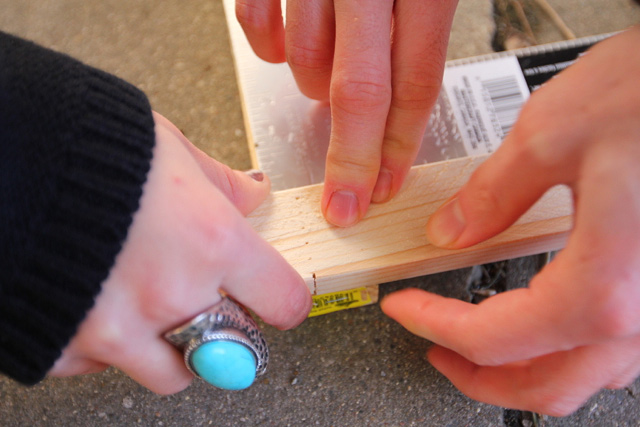
Hiba squaring things up.

Josh, perfecting.

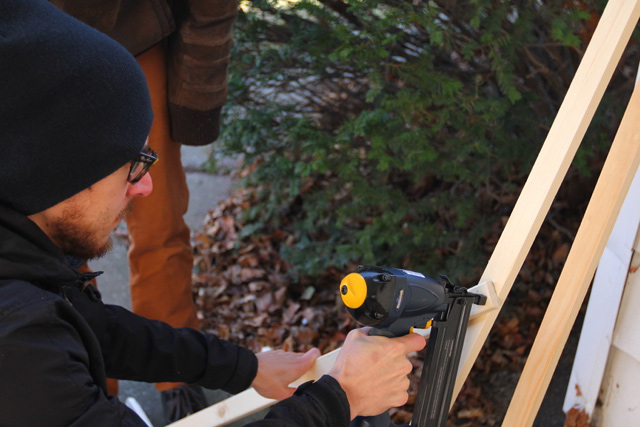
Hiba nail-gunning.

It stands.

Nail gun attack.

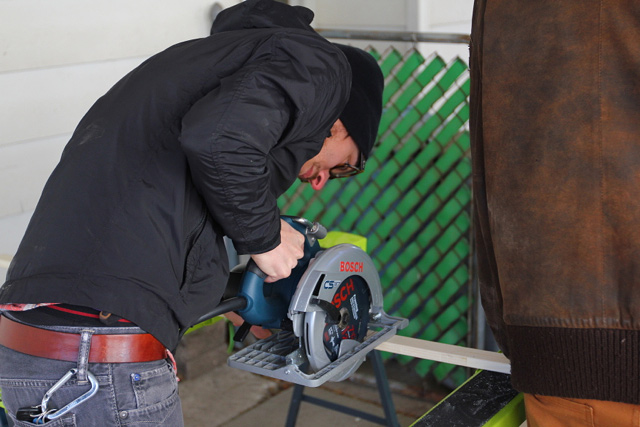
Circular saw. Serious.

Inspecting the cut.


The second leg…

More reinforcements.

And this as a result.

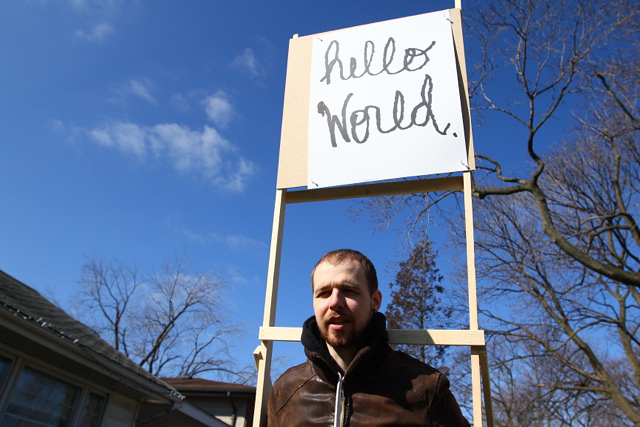
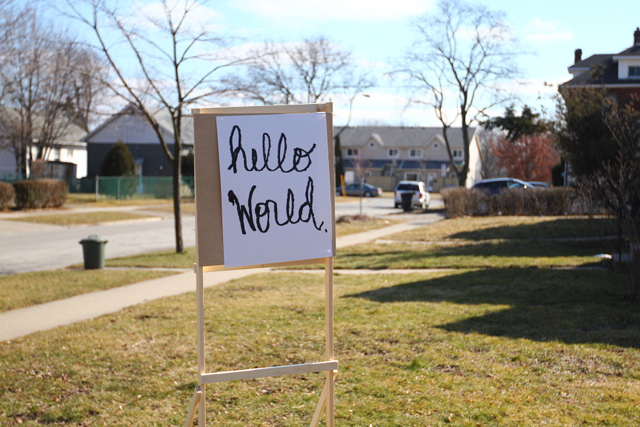
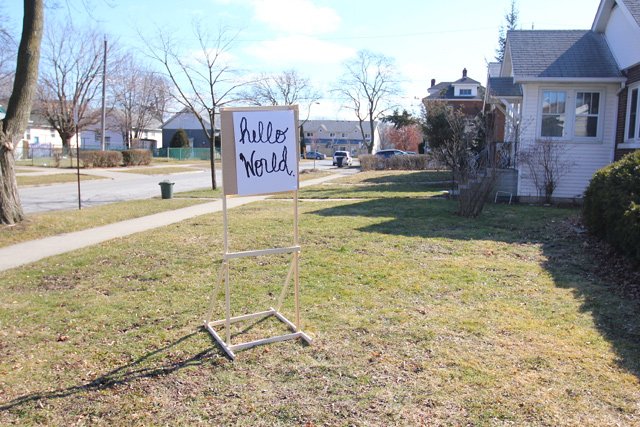
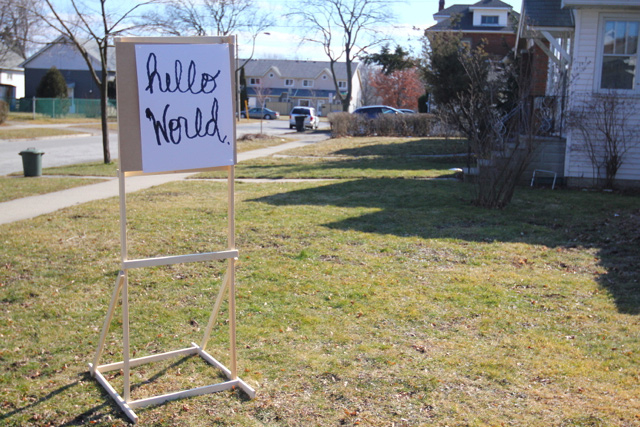
A very light-weight and portable sign easel. Designed for anyone to borrow and use for their own messaging.

Not quite scaled appropriately. We’ll end up with more surface area for the hardboard and the poster will actually be made on a roll of paper.

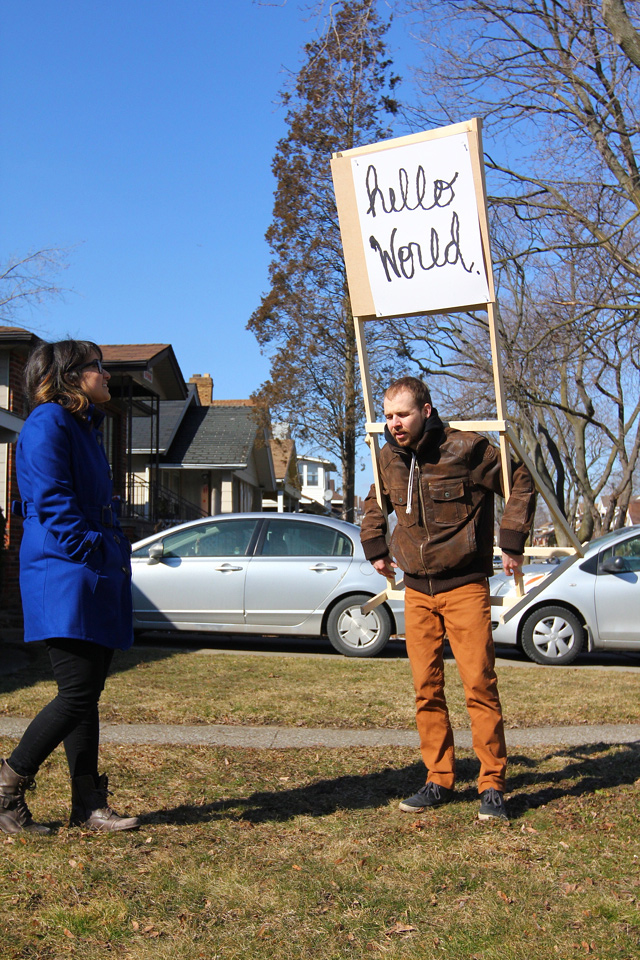
And maybe we’ll turn it into a backpack.

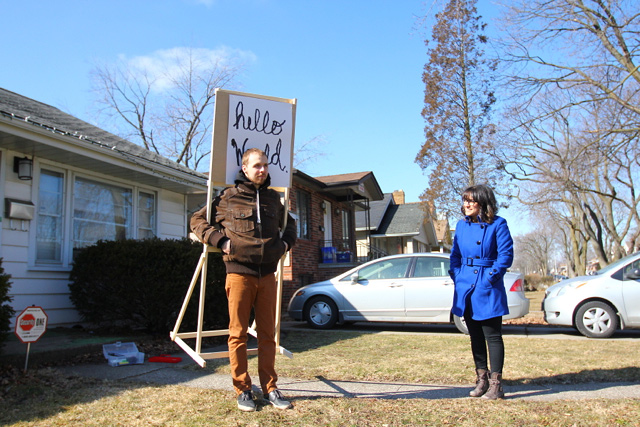
Josh seems comfortable enough.

Other ideas include adding some wheels and making it foldable for even easier transport.

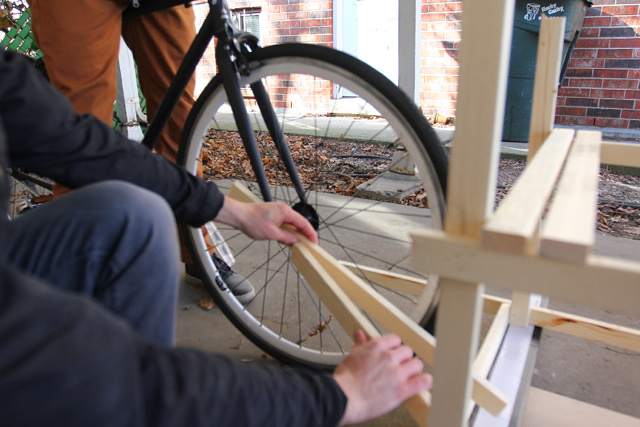
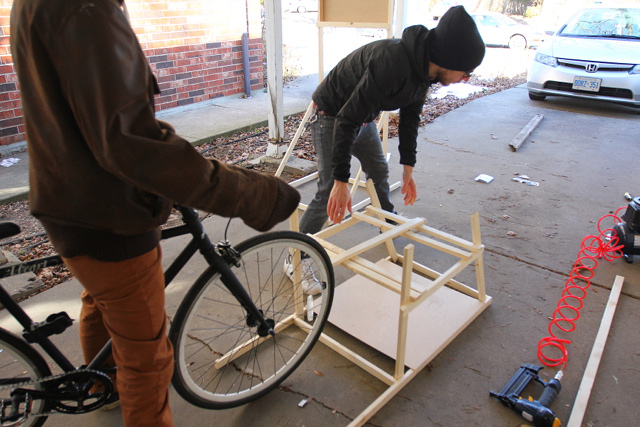
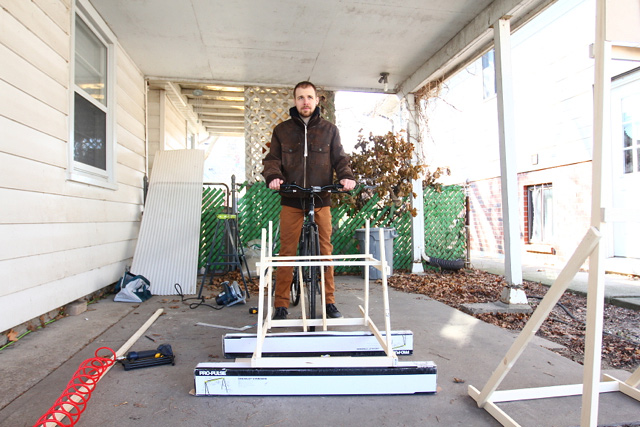
Then, onto the next project model — the bike projector attachment.

This was seriously fast prototyping, and a lot of fun. Though it’s possible that Josh had moments of panic watching joints going together that were not measured, cut correctly, or even all that well secured.

But, here’s the gist of it…

Almost a reverse trailer for the front of the bike to hold a projector and a lot, lot, lot of extension cord.

Maybe tomorrow we’ll add some castors and more bracing. More soon.