Steve Lambert on Utopia

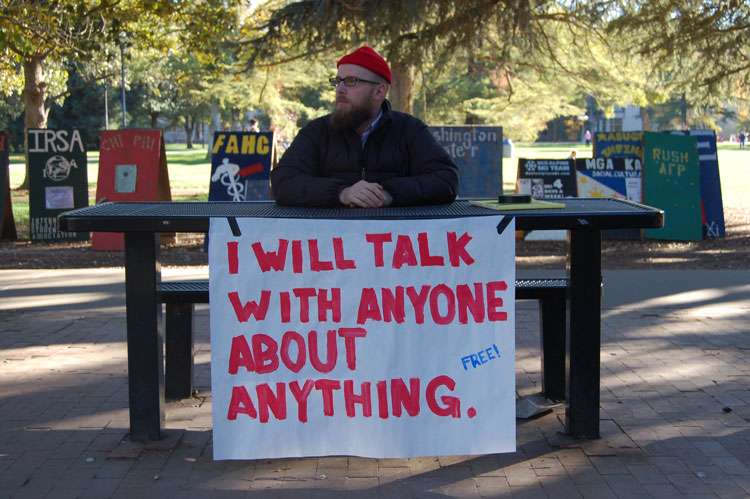
Steve Lambert "I WILL TALK WITH ANYONE…", courtesy of visitsteve.com

This is part of an ongoing set of one-question emails sent to people we know, or would like to get to know, about things that interest us and inform our collective practice. They’ll be featured on the site weekly, usually on Fridays. These questions are more about unfolding ideas than about the people we’re asking, but we do ask those kinds of questions too.

We’re pleased to continue this project with a question for one of our most favourite artists, Steve Lambert.


How might you write an if-then-else statement to describe the notion of utopia in your practice?

IF the world is not what we desire

THEN deal with reality as it has been constructed for us

ELSE make it ourselves


Steve Lambert’s father, a former Franciscan monk, and mother, an ex-Dominican nun, imbued the values of dedication, study, poverty, and service to others – qualities which prepared him for life as an artist.

Lambert made international news after the 2008 US election with The New York Times “Special Edition,” a replica of the “paper of record” announcing the end of the wars in Iraq and Afghanistan and other good news. He has collaborated with groups from the Yes Men to theGraffiti Research Lab and Greenpeace. He is also the founder of the Center for Artistic Activism, the Anti-Advertising Agency, Add-Art (a Firefox add-on that replaces online advertising with art) and SelfControl (which blocks grownups from distracting websites so they can get work done).

Steve’s projects and art works have won awards from Prix Ars Electronica, Rhizome/The New Museum, the Creative Work Fund, Adbusters Media Foundation, the California Arts Council, and others. His work has been shown at galleries, art spaces, and museums nationally and internationally, appeared in over fourteen books, four documentary films, and in the collections of The Sheldon Museum, the Progressive Insurance Company, and The United States Library of Congress. Lambert has discussed his work live on NPR, the BBC, and CNN, and been reported on internationally in outlets including Associated Press, the New York Times, the Guardian, Harper’s Magazine, The Believer, Good, Dwell, ARTnews, Punk Planet, and Newsweek.

He was a Senior Fellow at New York’s Eyebeam Center for Art and Technology from 2006-2010, developed and leads workshops for Creative Capital Foundation, and is faculty at the School of the Museum of Fine Arts, Boston. Steve is a perpetual autodidact with (if it matters) advanced degrees from an reputable art school and respected state university. He dropped out of high school in 1993.
Hi, 5 with Phil McAndrew

About the Hi, 5 Interview Series

Hi, 5 (5 Questions) is a web-only interview series which presents five questions to artists, activists, and creative thinkers alike. The project acts as an educational device which allows us to gain insight into the narratives that define successful individuals. We are interested in the motivations behind ambitious ideas and how change has been affected by those with the passion for progress in their practice.

Today we interview Phil McAndrew. Phil creates intriguing and original content, and has worked for a large and diverse client base. He also has the benefit of being extremely hilarious and we were quite pleased when he emailed us back with some great answers.

About Phil McAndrew

Phil McAndrew is an illustrator and cartoonist from Syracuse, New York, the snowiest city in the United States. He’s created illustrations and comics for books, magazines, newspapers, television, theatrical sets, clothing, posters, album covers, gallery exhibits, websites, and fun. He graduated from Daemen College’s illustration program after being awarded their portfolio-based four year visual art scholarship.

Phil currently lives in San Diego, California.

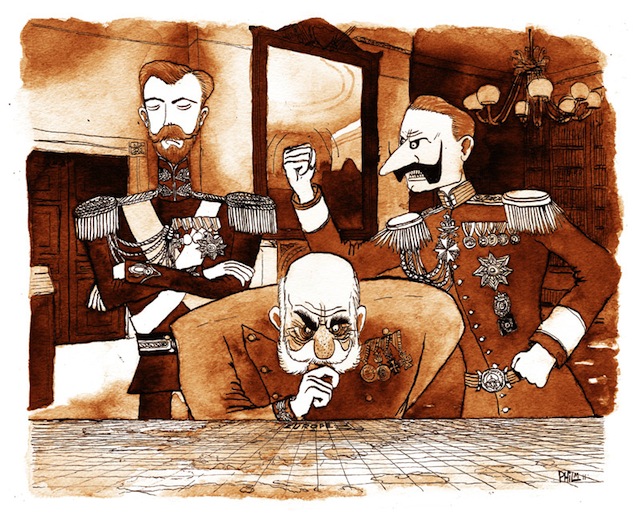
Phil McAndrew - Diplomacy

Phil McAndrew

January 31st, 2012

If you had to describe your current self to a 16-year-old you, what would you say?

I’d describe myself to 16-year-old Phil as someone who gets to sit at home and draw pictures and eat candy all day. That was pretty much my goal as a 16 year old if I remember correctly, though at the time I don’t think I was actually convinced that it was really possible (or at least that I’d personally ever be able to get to that point).

Could you describe an evolution in your work or way of thinking?

My work and way of thinking has definitely shifted more and more towards “just have fun, be a nice guy and be honest with yourself” and away from trying to impress people. I mean, I’ve always tried to keep those things in mind but I’ve definitely learned first hand exactly how important it is to simply have fun and to be awesome, both to yourself and to others (hint: it’s very important). If you’re really allowing yourself to have fun, it’ll show through in the quality of your work and improve your life.

Are there any people who have been instrumental in the development of your way of thinking and viewing the world?

So many people! I don’t think I could list them all if I tried. I think every single person I meet expands my view of the world, bit by bit. My way of thinking has been informed by various teachers all through my life, both the good ones and the bad ones. My parents and grandparents. My brothers and my friends. Jim Henson.

How do your political beliefs inform or fuel your work as an artist?

I don’t think my political beliefs really fuel my work very often, at least not the work that I put out into the world. I mean, you can probably get a really vague sense of what end of the spectrum my beliefs are at if you dissect every little aspect of my comics and drawings, but that’s rarely where my head is when I’m creating stuff. For a really brief time in college I tried my hand at political cartooning and sometimes I will still find myself reading about some ridiculous political insanity and in a moment of rage or bewilderment will sit down and start writing little comics lampooning one side or the other, but those comics almost never make it past being scribbles in my sketchbook. At the end of the day that’s just not the sort of work I want to focus on I guess. I’d rather make myself laugh.

What do you feel a city should be or do for its inhabitants?

I think cities are living, breathing things. And how awesome or terrible they are really sort of depends on, well, a lot of things. But mostly it’s inhabitants. So I guess I feel like inhabitants should be asking themselves what can I be or do for my city.

www.philintheblanks.com

Detroit Emergent Futures Lab

I had to post this so that we could collectively remember to follow up on this in the spring!

Opening Spring 2012 @ 2448 Market Street 

Detroit Emergent Futures Lab: A Learning Kitchen in The Eastern Market 

DEFL will be a year-round art and food lab + workshop, teaching and experimenting with a range of communities in Detroit, centered in the Eastern Market. We will work with local neighborhoods, schools and continuing education communities to learn cooking techniques, share stories about food and families, publish books, and work with the gardeners and farmers of urban Detroit. The school will also feature an annual Summer Intensive located in Detroit, pairing Graduate and scholars from around the world with Detroit communities. The home space will be centered in a professional kitchen – and restaurant, all meals will be prepared onsite sourced from the Eastern Market and urban gardens. DEFL will have a publishing partner, Signal-Return Press, for rapid production of books, research and special projects.

Building an axis between business, the academy, art, and culture, the Detroit Emergent Futures Lab will be a responsive and community-engaged institution. Nimble in its movements and fluid in its boundaries between business and art, urbanism and civic engagement, Detroit Emergent Futures Lab will support partners, participants, students and faculty working in hybrid forms in downtown Detroit.

More information here: http://www.leonjohnson

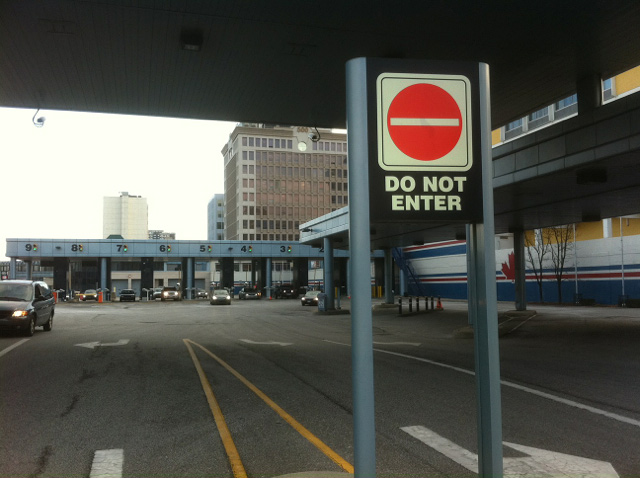
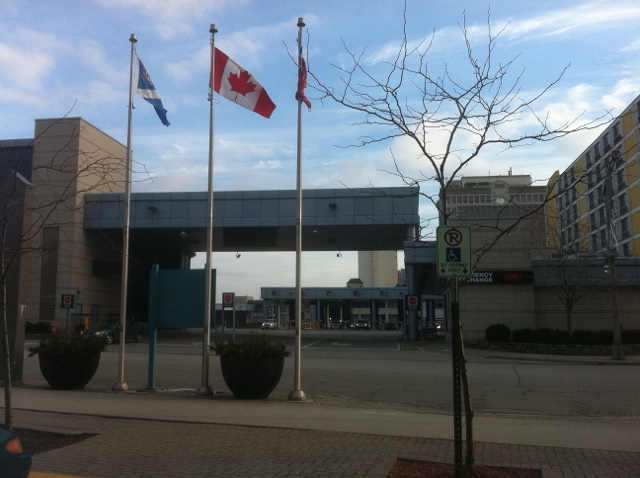
Also, on Thursday night they’re hosting a bit of an information session, at Cost Plus Wines from 6.00 – 7.30pm. So, if you’re not already heading to the AGW/SOVA talk, “Is it a Hybrid Practice?”, then consider heading across the border to find out more about this and tell us all about it.

[via an email from Etienne Turpin]

Reflections on Circulations

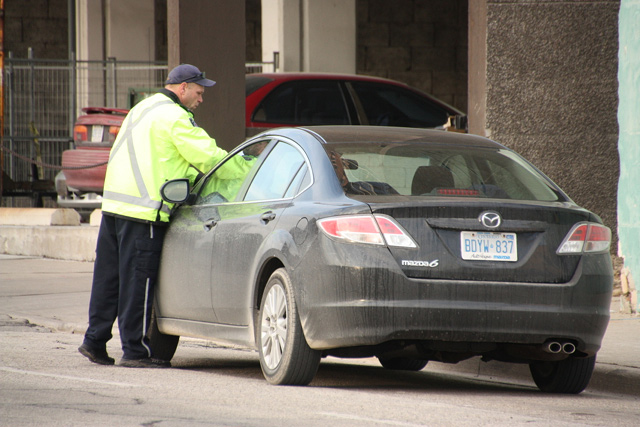
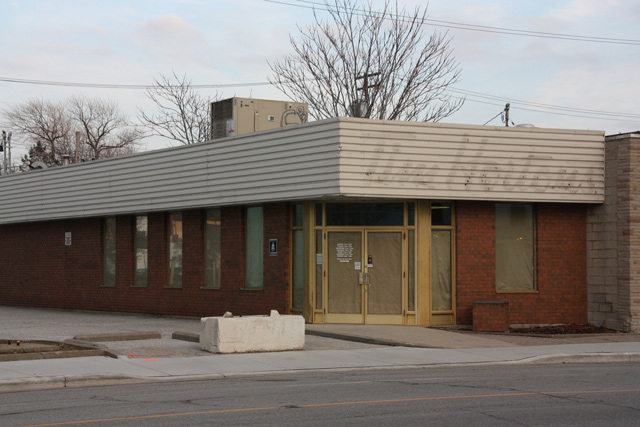
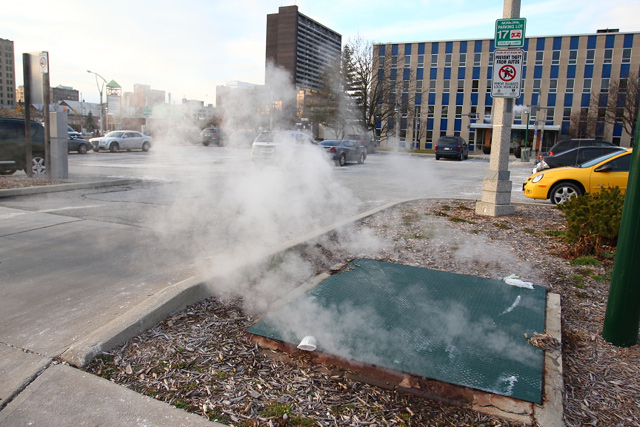
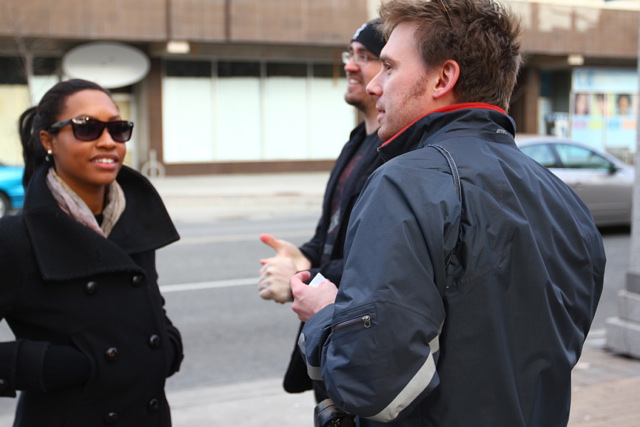
Last Wednesday I hosted an algorithmic walk around downtown Windsor with some University of Windsor Communications Studies and History grad students. The class, led by Drs. Mike Darroch and Rob Nelson, spent about an hour exploring the city, as per the algorithm, in an area between Park and Pelissier and McDougall and Tuscarora. Groups of three spread out throughout the area and stepped through the algorithm in a different order.

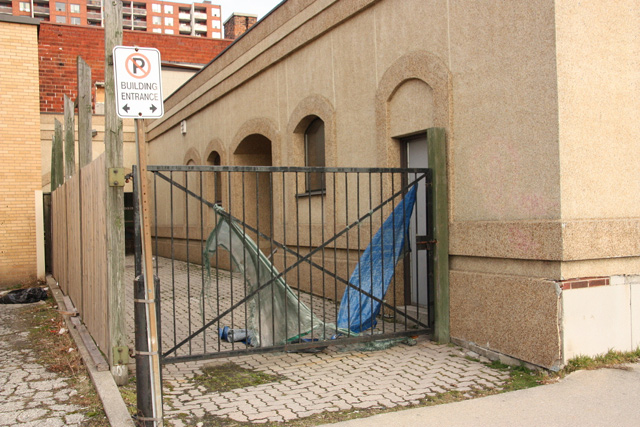
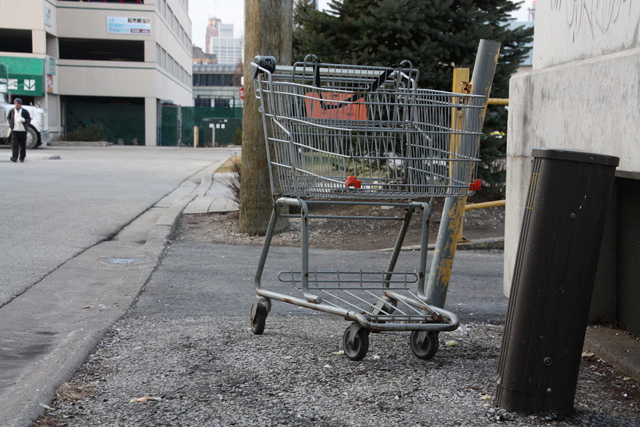
The algorithm connected with some readings the class had done on ideas of circulation. It was based on a series of simple suggestions to look for things that disrupt, capitalize, or imagine forms of circulation in the city. At each step in the algorithm, groups had to take a photograph. Below are some images from the walk.

Find an in-between space.

Find an example of urban improvisation.

Find a transaction.

Find a space to occupy.

Find something symbolic.

Dr. Darroch and some of this students on the walk.

Find  an in-between space.

Find something symbolic.

Find an example of urban improvisation.

Find a transaction.

Find a safe place.

Find the heart of the city.

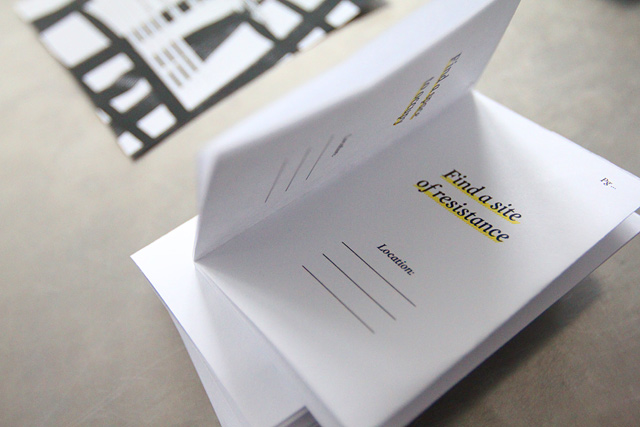
I think this little 8-page booklet format could work well for our upcoming walks. I know we had talked about theming these walks. Any ideas for the first one on the 13th?


Nick Tobier on art, expectations & encounters

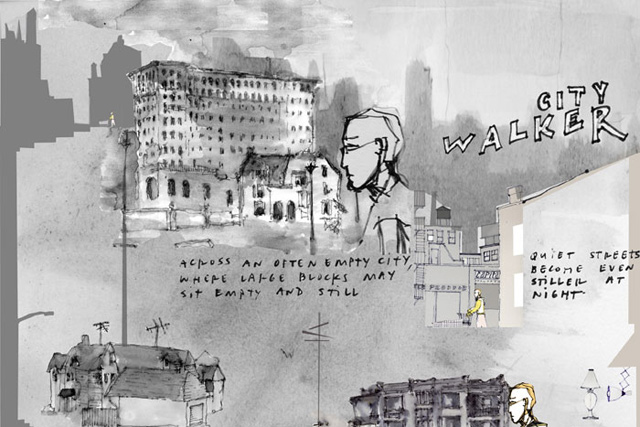
City Walker, courtesy of everydayplaces.com

This is part of an ongoing set of one-question emails sent to people we know, or would like to get to know, about things that interest us and inform our collective practice. They’ll be featured on the site weekly, usually on Fridays. These questions are more about unfolding ideas than about the people we’re asking, but we do ask those kinds of questions too.

We’re ecstatic to continue this project with a question for a recent artist-in-residence at Homework: Infrastructures & Collaboration and all-around excellent Detroit neighbour, Nick Tobier.


What does art do for people who experience something that they don’t necessarily read as being art?

An intuitive response to anything, I think, an honest encounter with the world is just about as direct and honest as you can get in having an experience. Wonder, puzzlement, pique, bemusement, delight–I am a big fan of all that swirling around before we pause and recognize what it is or why it is.

Once it is pinpointed and sorted, and understood amidst all of the other things it most closely resembles, the experience may or may not be (art) but it is starting to fade.

Wonder, for instance, that I imagine 14th century pilgrims to Chartres Cathedral saw when they looked up at the stained glass windows. That may be a type of awe-inspiring transcendent encounter with art, where a gut response is flushed with sheer scale and visual information.

Expectations and context affect just about everything, so with the pilgrimage, I suppose you are somewhat primed for something perspective-shifting. And while maybe that’s too grandiose a claim or romantic a vision, I’d stand up and say that the revelatory experiences I aspire to tend to the wonder/bemusement spectrum up there with revelation

The pilgrim takes off purposefully to encounter an inspiring experience. Our contemporary equivalent (perhaps without the religious directive) may know far too much to be enraptured by a visual display. Tell me it is art ahead of time, and my expectations are set to judge. But shift from the cathedral or its near equivalents in cultural significance to a more everyday context–a suburban strip mall, a highway, an intersection, a routine sequence in life. Here is where the struggle to achieve transcendence is most needed today. If even for a split second, we can sidestep the expectations of what the next second is going to look, sound or feel like, the seconds after that will be infinitely possible.


Nick Tobier (that’s me) would say (I do) that he does public construction. Nick studied landscape architecture at Harvard’s Graduate School of Design and subsequently worked as a landscape architect in private practice and with the New York City Department of Parks and Recreation/Bronx Division. Through individual and collective work, Tobier’s interest in the potential of public places has manifested itself in built public projects and actions in San Francisco, Detroit and New York, internationally from Toronto to Tokyo, and performances on the stage and in the streets from Milan to Paramaribo, Suriname and at The Edinburgh, Minneapolis and Philadelphia Fringe Festivals.

In his work and teaching, currently as an Associate Professor in the School of Art & Design at The University of Michigan, Tobier focuses on the integration of art and society, and actively challenges artists to expand their self-definitions and scope. These efforts have included partnerships with artists and farmers; critical and celebratory involvements between artists, art students and broad communities; lectures as performances and vice-versa; and a growing commitment to lasting partnerships working with creative individuals and communities in Detroit.

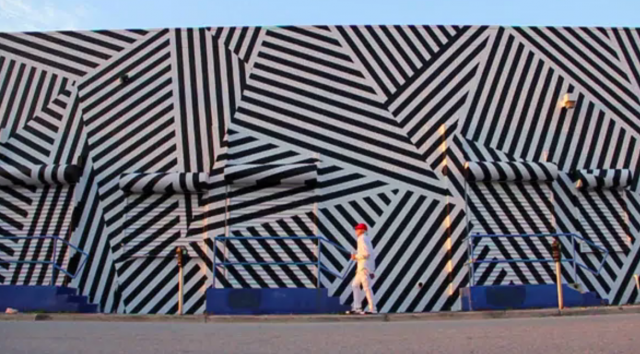
Here Comes the Neighborhood


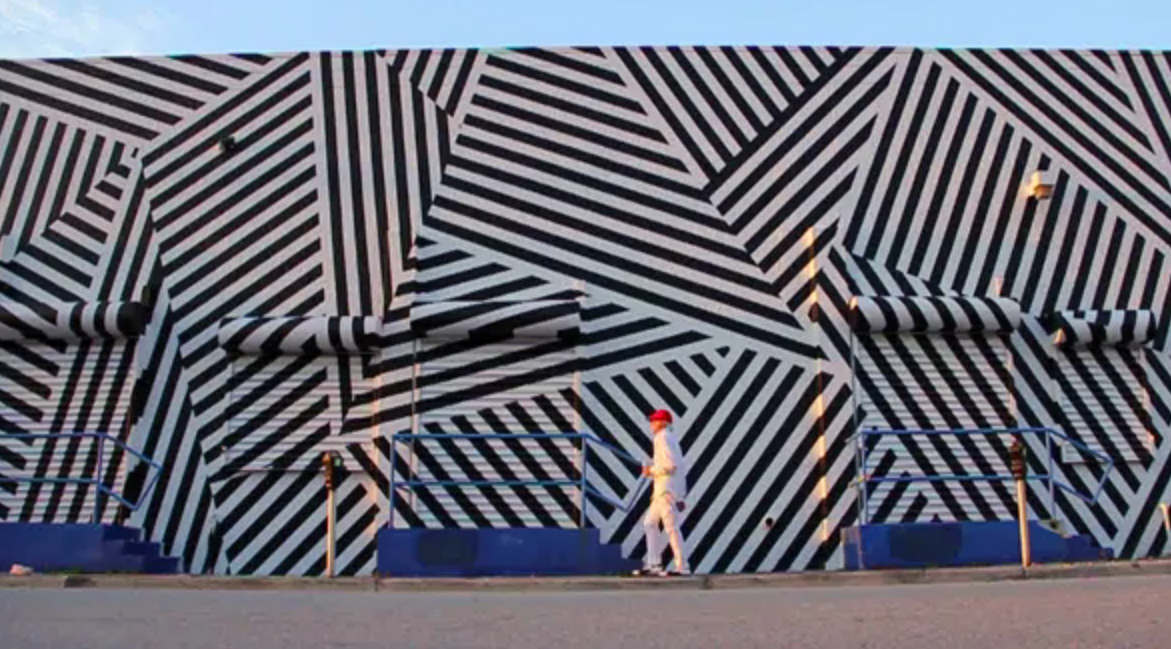
HCTN EPISODE 1 : INTRODUCING THE WALLS from Here Comes the Neighborhood on Vimeo.

I dream daily about a colourful, messy, city as this one.

For the amount of dead space that lies between places, there should be something to pull people in and make them walk by and engage in something, even if it’s only momentarily. It reminds me about something I had thought up a while ago in re-imagining Maiden Lane as a more interactive space…. (more on that at a later time.)

HERE COMES THE NEIGHBORHOOD explores a unique juncture in history as a new community emerges and evolves. A progressive urban revitalization campaign is examined in the first person, using this year’s new Artists and their commissions as a lens to explore a neighborhood in transition. The Series is framed by colorful overview and concluding episodes, providing the scope of past, present and future.

An outdoor museum. Why can’t some form of this project be done here?

Thanks Tom.