Pop-Up Possibilities: Sketches

Tom Provost came by a couple weeks ago with an idea for a new collaboration. We’ve work with Tom before on How to Forget the Border Completely — in particular the proposals for 1,000 Pedestrian Walkways and the Windsor-Detroit Portals.  In short, the new project is to take the form of a triangular sign, something like you might find on an empty lot waiting to be developed. On each of the three sides of the sign would be a proposed development for the particular site on which the sign is located, along with three perspectives on the possibilities of that development ever taking place or not.

The development would be a large-scale proposal — something that could undoubtedly transform a selected site, and would probably verge on the impossible — would attempt to articulate not just a “new use” for a selected site, but a one that might reflect the values and directions that we would like to see the city take on. We’re approaching this with the mindset of impatience and lack of confidence in the powers that be to create a truly interesting place to live. The proposals will aim to engage in imaginative speculation, but also try to draw into a critical discourse the ways in which we seem to disarm ourselves collectively from building truly great community assets. We so often rely and play into the very imaginary game of community consultation on projects long ago set (mostly) in stone, this seems like a great project to assert a different stance, process, and set of ideas for developing various parts of our city.

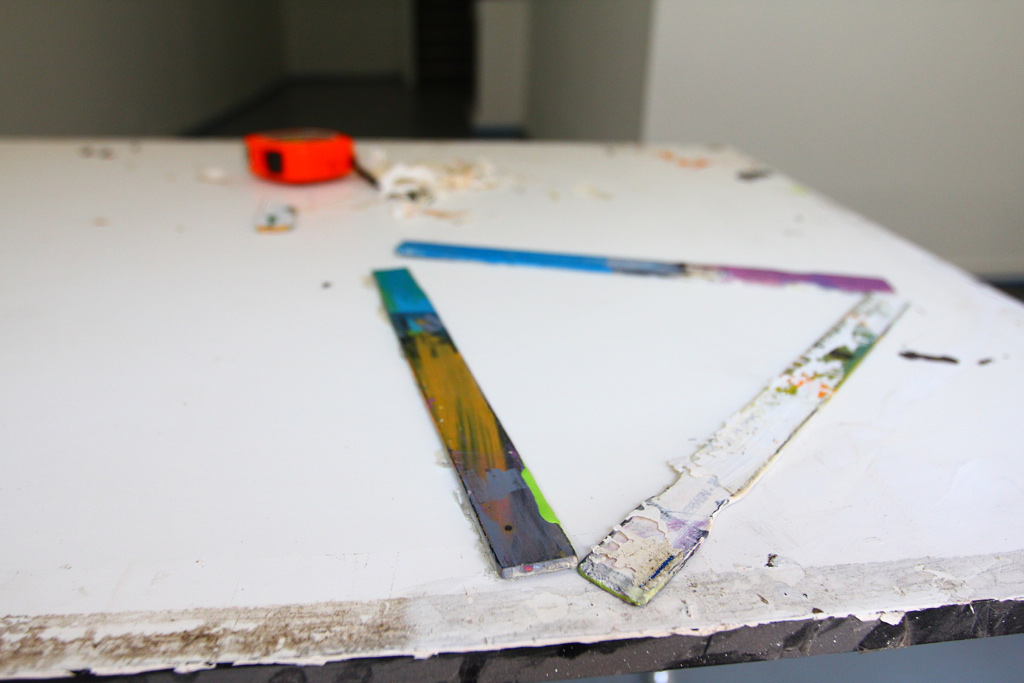
Also, these stir sticks were less a model, and more of a visualization tool for us to talk through the project. In early stages, I’m always so intrigued with how things shift and circle back around and change entirely.
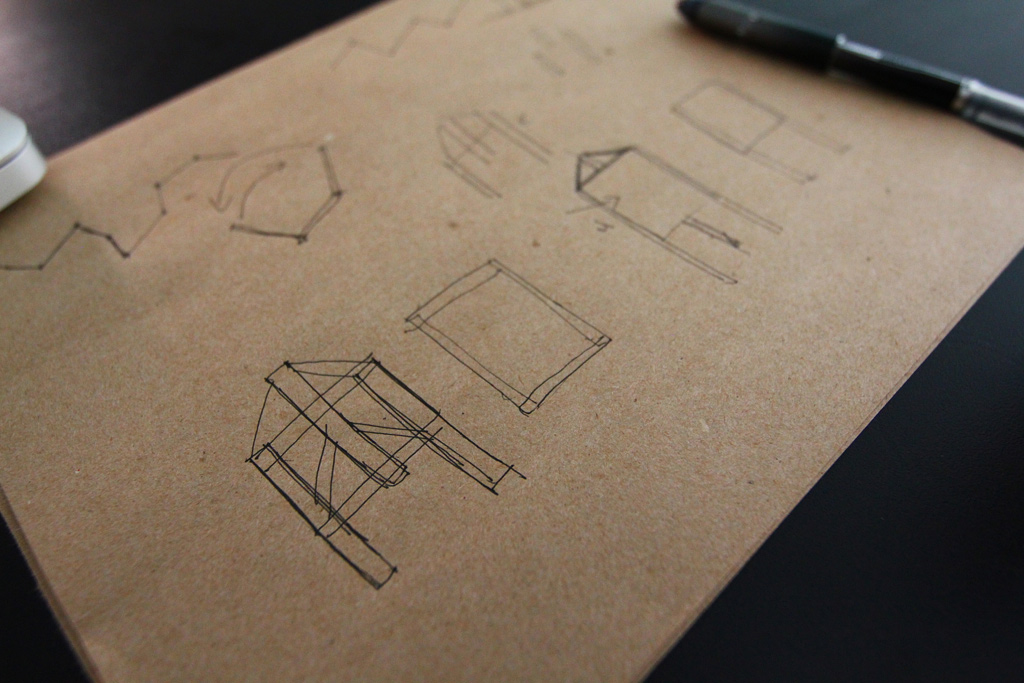
When I caught up with Tom earlier this week, we spent a lot of time talking form.
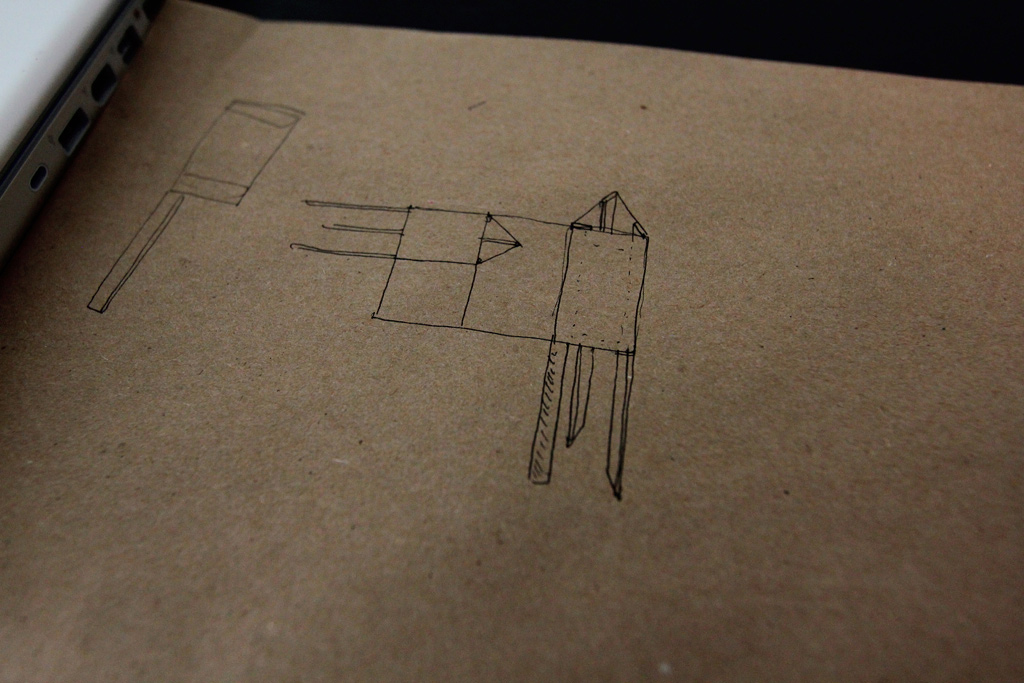
Trying to find a balance between efficiency with the materials we’ll buy (how many faces, ideally, will come out of on piece of plywood), and making these things somewhat transportable led to discussions about size, the number of them we might build, and certainly the level of spontaneity in their arrival(s) to the selected site(s). All of these elements in turn vastly change the “weight” (in all senses) of the signs — where’s the line between an authority in structure and an intimidation (and in turn backgrounding effect) of the structures?
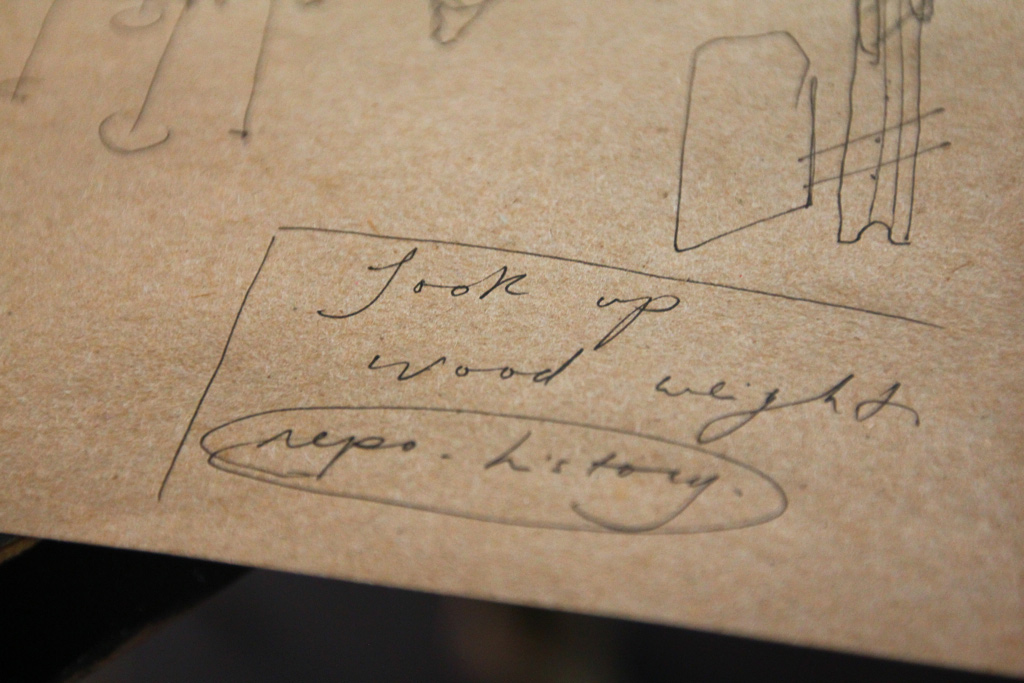
We took notes on this really basic paper (almost the feel of a smooth construction paper). In the past, Tom has used this for making the bases of architectural models, which looks incredible. We’ll be using a similar technique to basically grid and create a larger image for each face of the triangular sign.
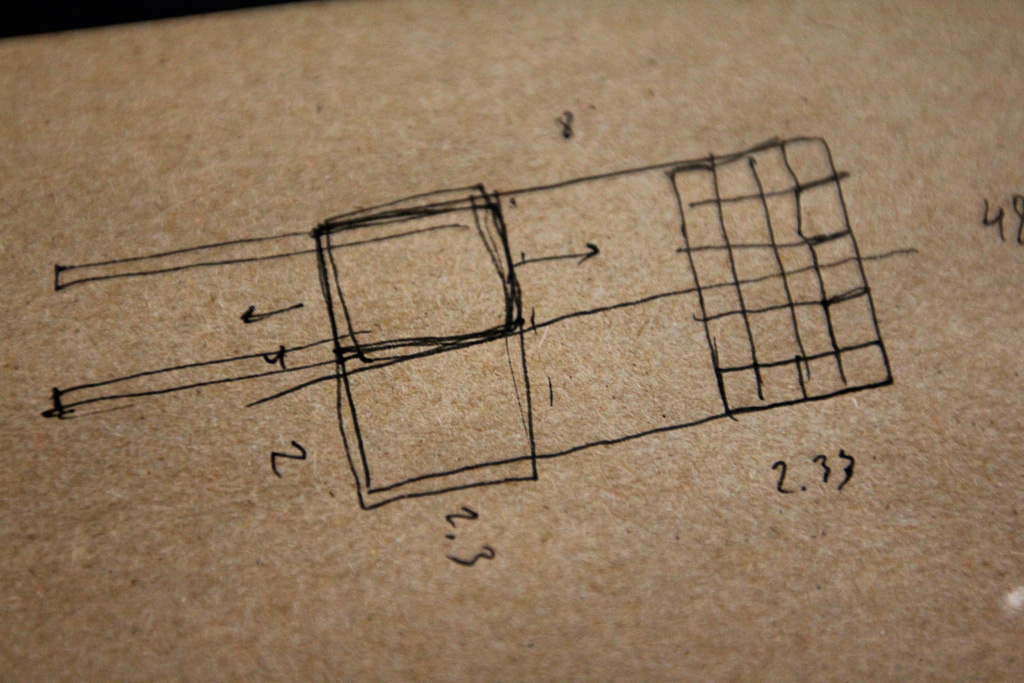
We’re looking at these signs being somewhere around 2ft x 4ft for each face. The sketch above was looking at other possible shapes.
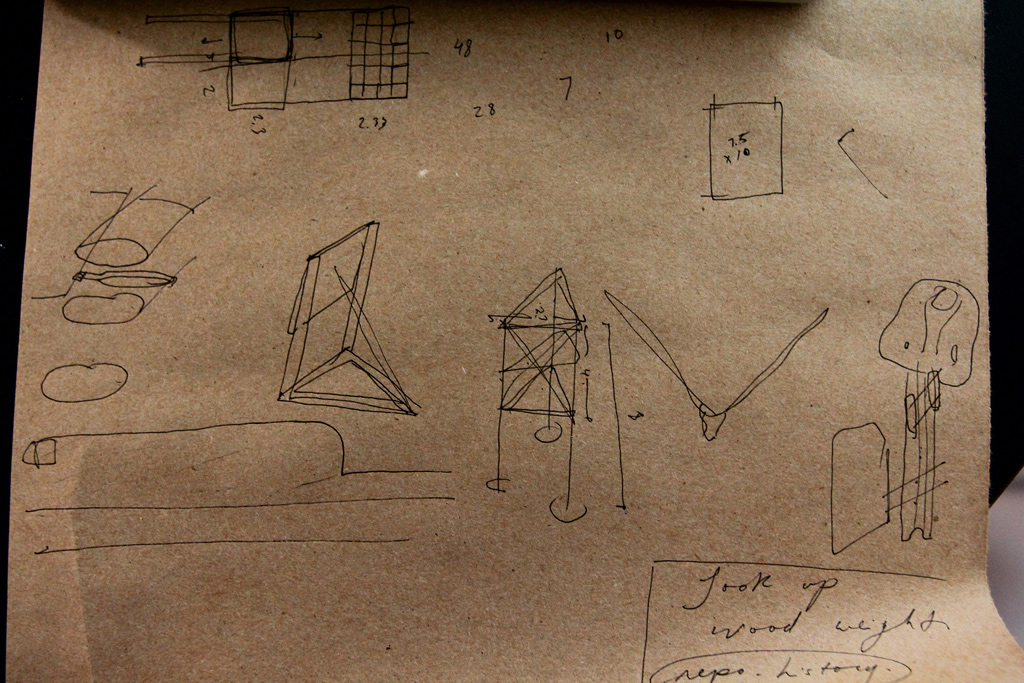
A visual walk through of our discussion.
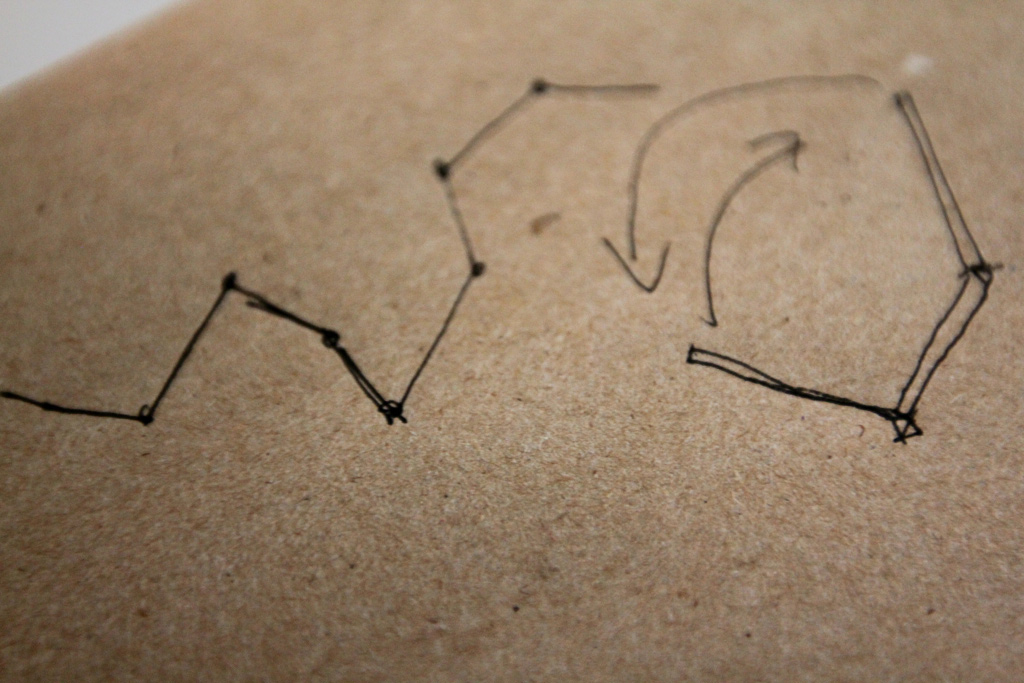
We also talked about the possibility of these forming a temporary a wall or partition that could provide more surfaces and the possibility to randomize the form on site, using hinges for each face.
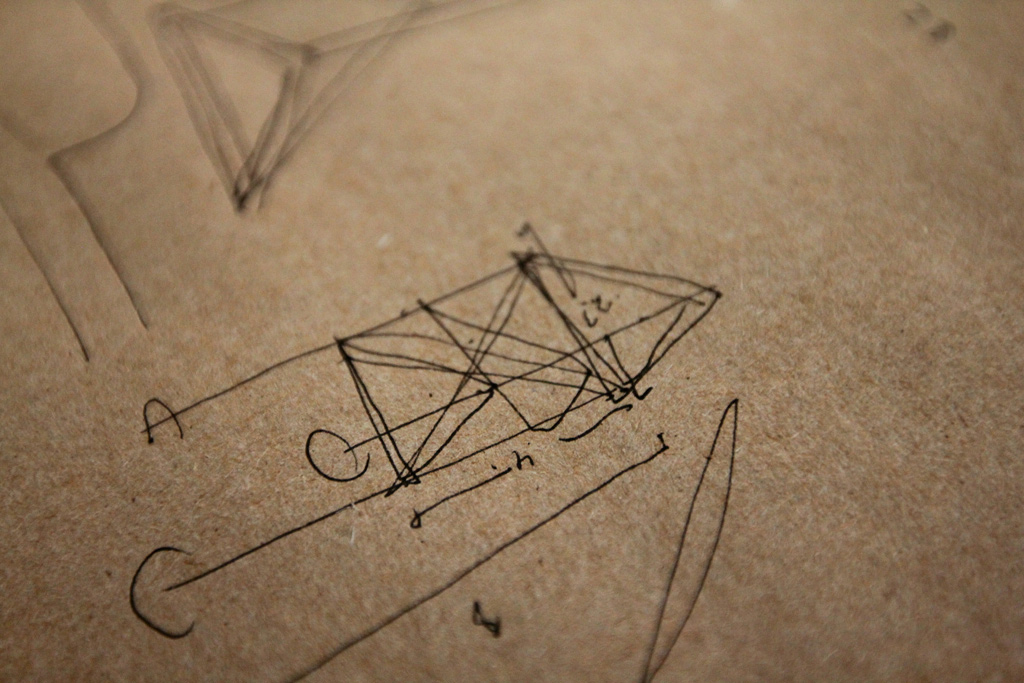
But we ended up revisiting the three-sided structure, coming to a fairly resolved (at this point) direction, moving towards utilizing the three sides of the structure to discuss the limits of approach that various actors take to something like a development. What views, acts of persuasion, money, political tactics, and rhetoric does a developer bring to a new proposed project versus that of a city councillor or that of a community member who lives in the neighbourhood in which a new development is being proposed?

We’ll build later this summer.
Early Research: Letters from Styrofoam (letter library)

These are early days for a spontaneous new project, but here’s how we’re starting. Rosina, Hiba, and I met on Friday and after going through our usual to-do list, we started discussing some new projects. These new projects are all going to be tied together, and we’ll be writing about what that tie might look like soon.

The starting point for this new project — maybe called the Letter Library Project, or maybe something very different — came from thinking about how we might collectively be framing the city of Windsor as it transitions (slowly) and what we might want to reframe, piece by piece. The city is once again at the top of the unemployment statistics, but there are some large infrastructural projects that are going to dramatically change the physicality of the city itself and in turn, the way we experience it, though it remains to be seen if this will actually change the city, or just reframe it for us.

And the background of this project might actually go back even a bit further, in terms of material, as Rosina and I had met earlier in the week to talk about working on some signage. Research led us to wanting to experiment with styrofoam — givens its rigidity and ease to work with.

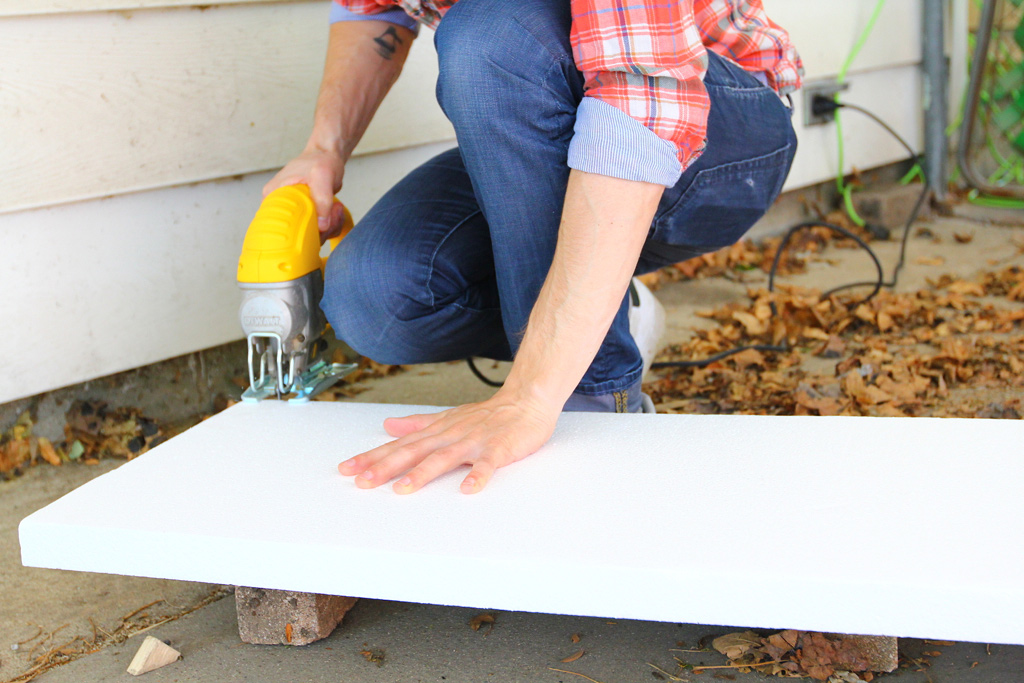
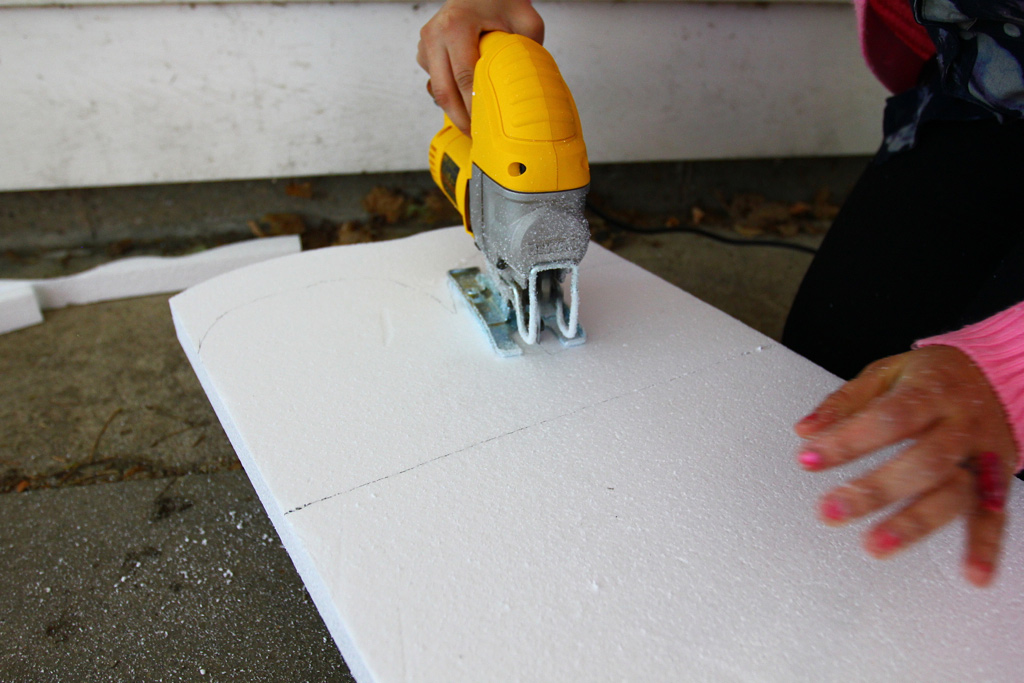
We saw a lot of videos online of people cutting styrofoam into different shapes (and certainly letters) with hot wires, electric knives, and yes jigsaws.

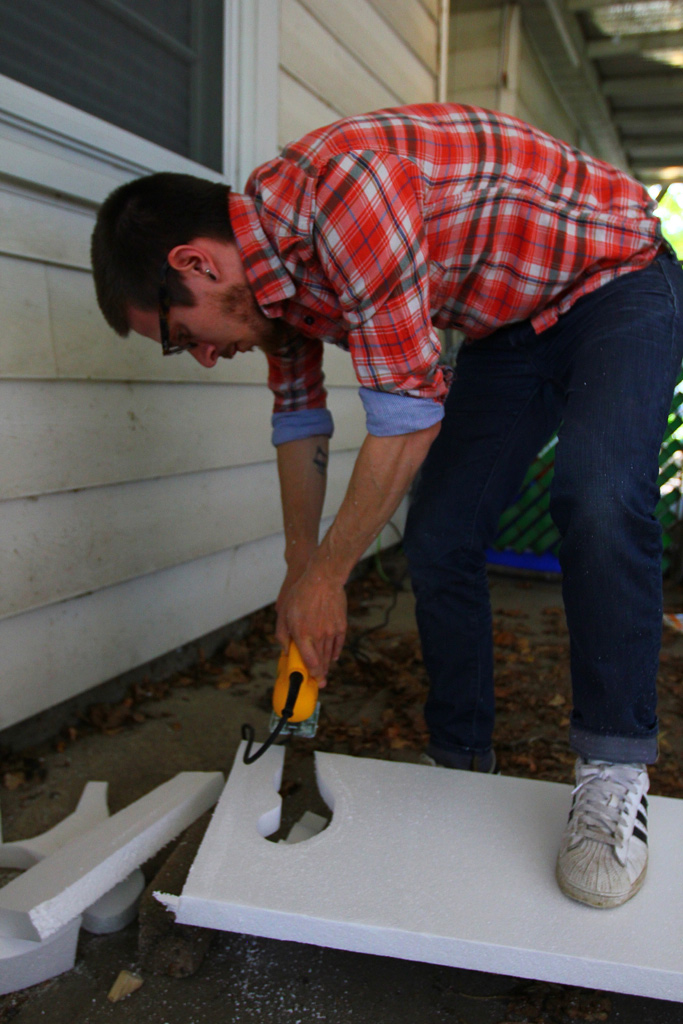
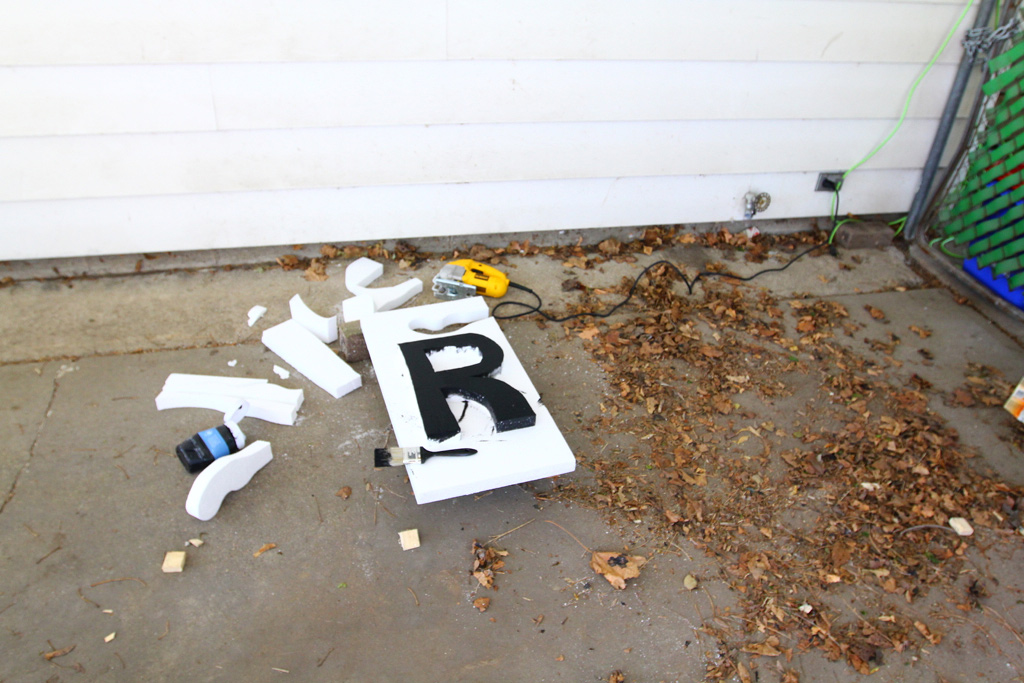
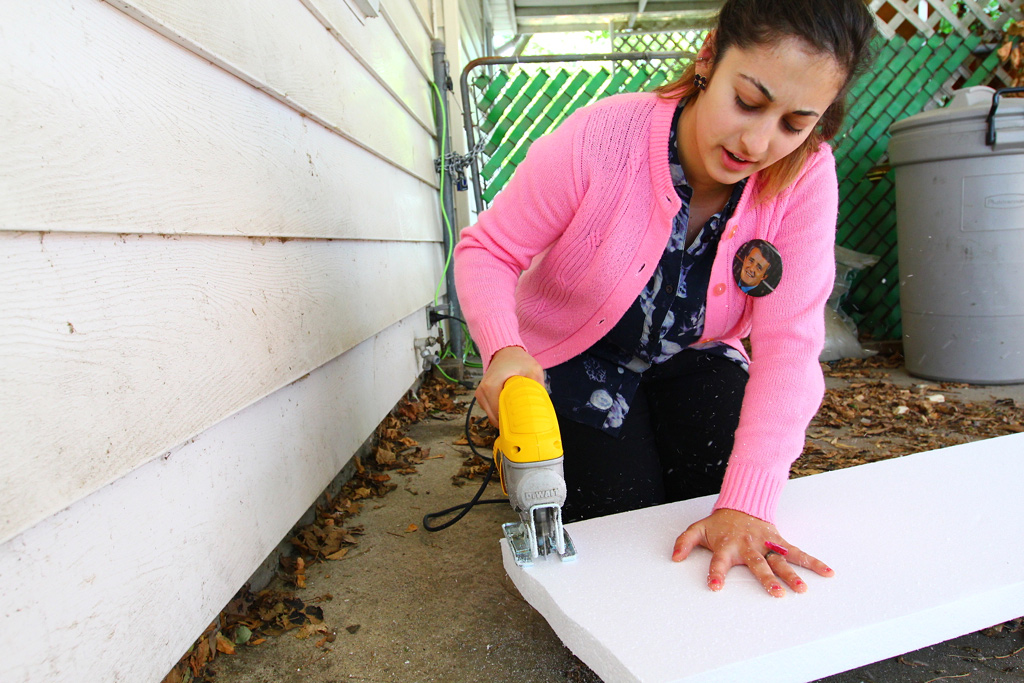
We had a jigsaw and so we went to it. The styrofoam we got was packaged at Home Depot as basically made for crafts and very small home projects. We weren’t sure that it would be dense enough for the cuts — at the time, we had assumed that the denser (and pink) insulation type of styrofoam would work better, but it was too expensive to bother testing with.

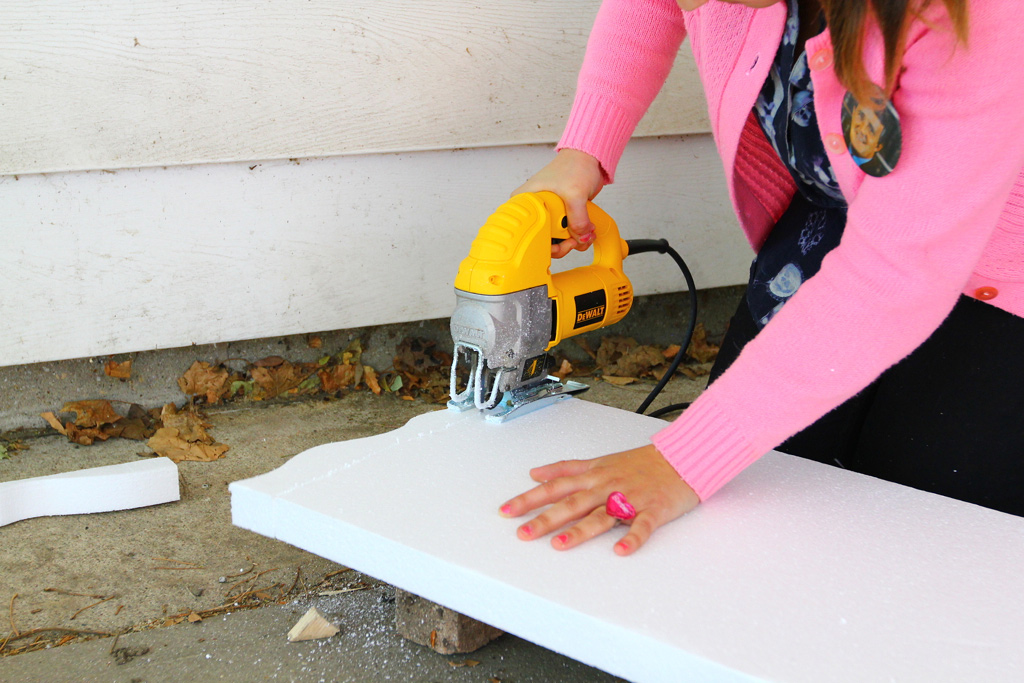
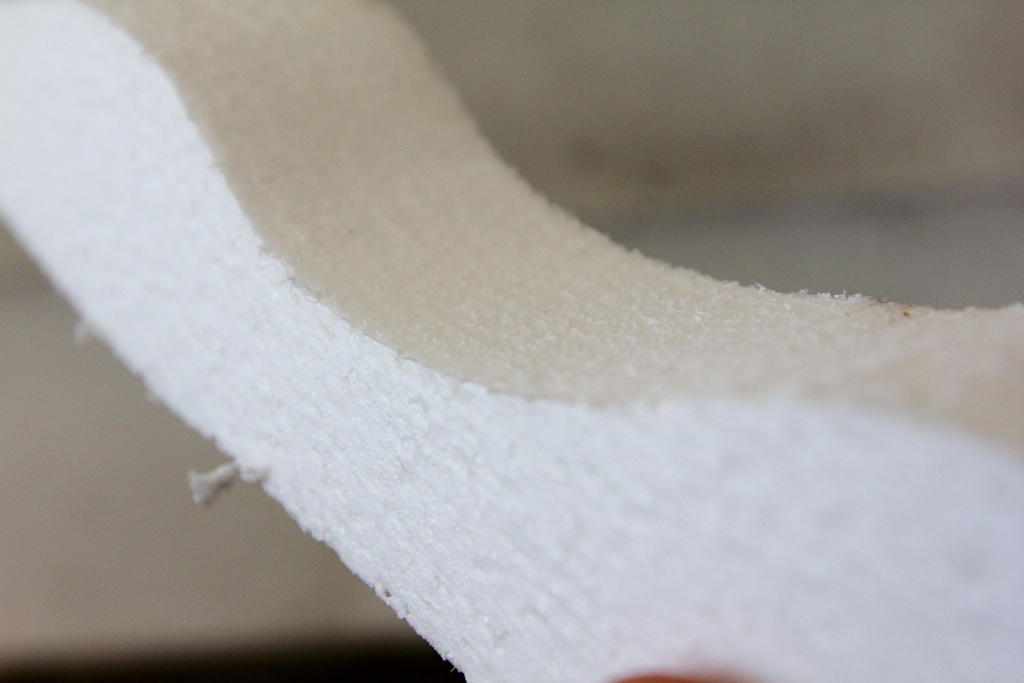
Given the scale of what we’re planning to do, the cost would have been enormous, so we went with the cheaper stuff to just get a feel for possible scale and process, even if the material itself may need to be changed down the road. But, as you can see above, the jigsaw with a 24 TPI metal blade did the trick and cut the styrofoam with a decent level of precision without the messy edges we had anticipated.

Hiba and I both took some test cuts before deciding to attempt a more complex shape.

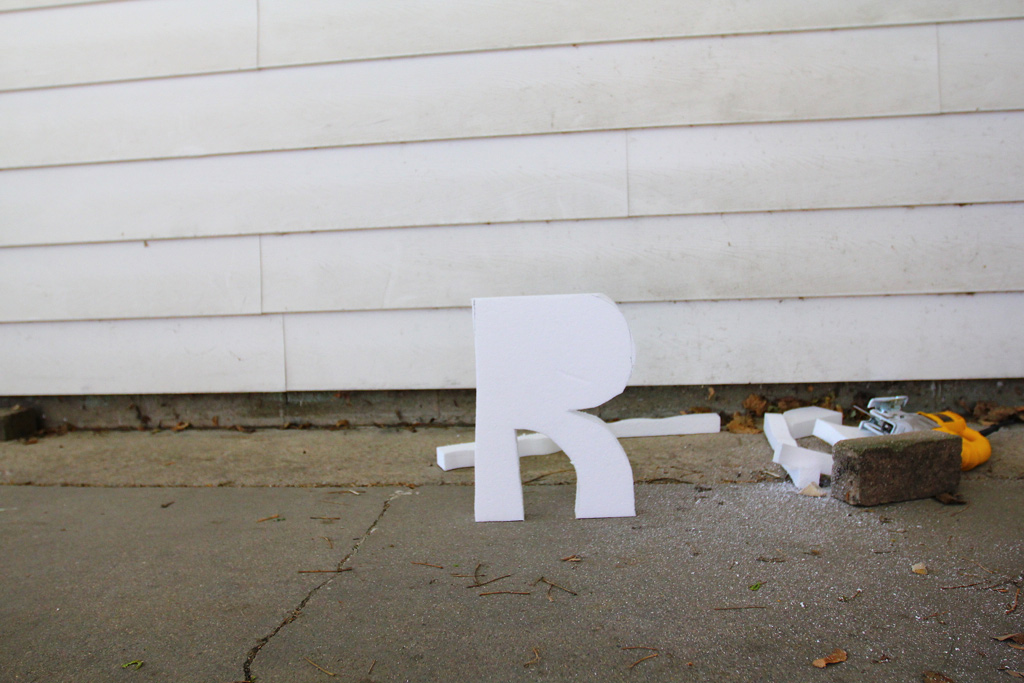
We selected the letter R for a test.

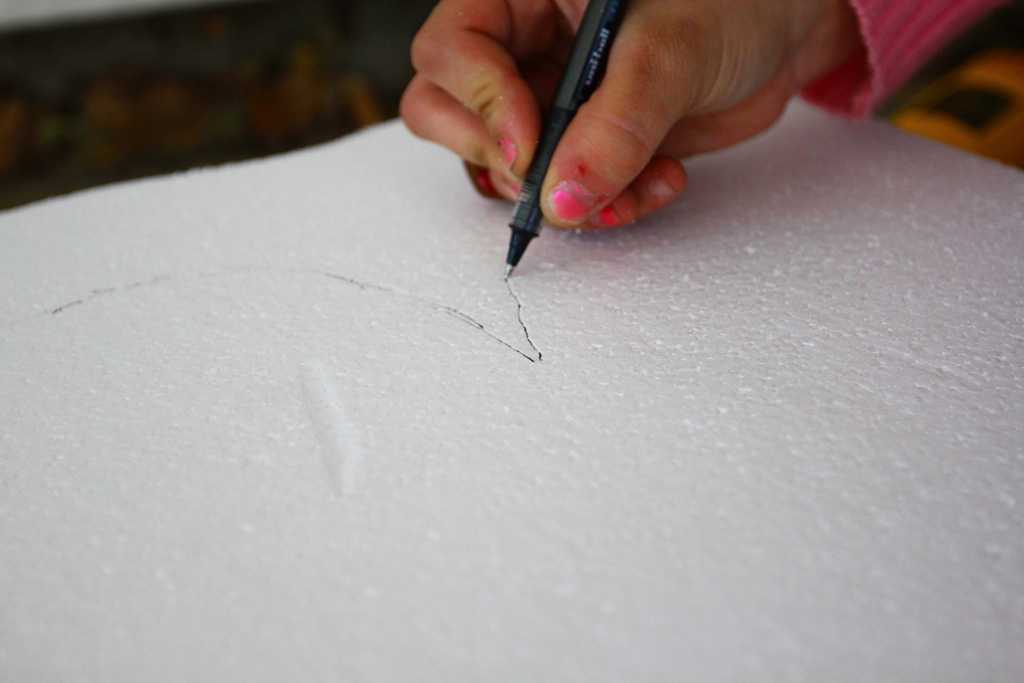
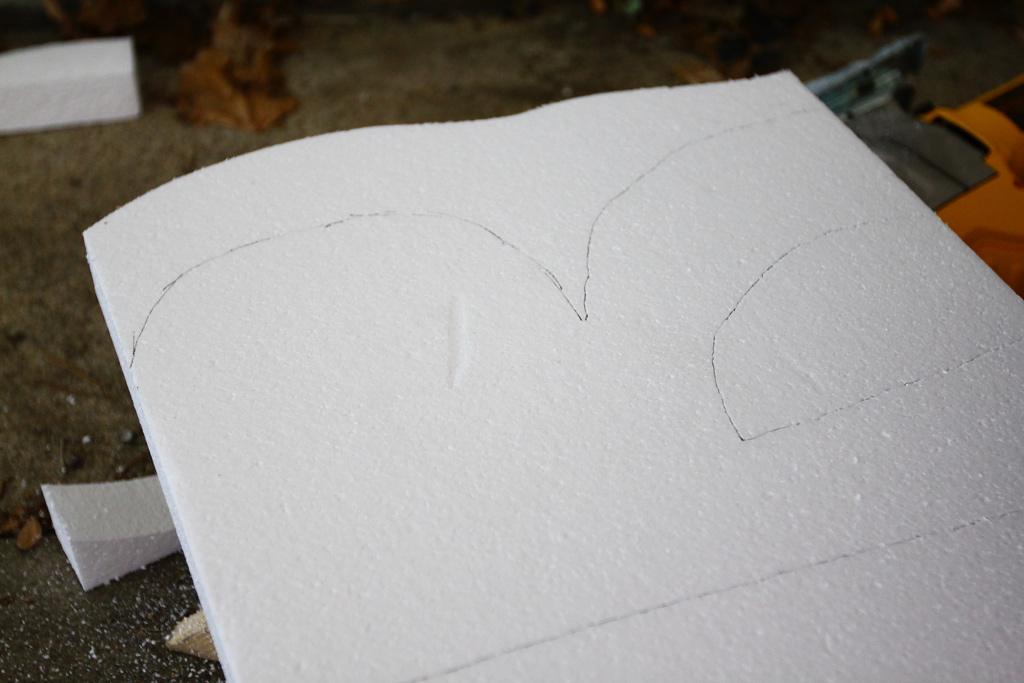
Hand-drawn for now.

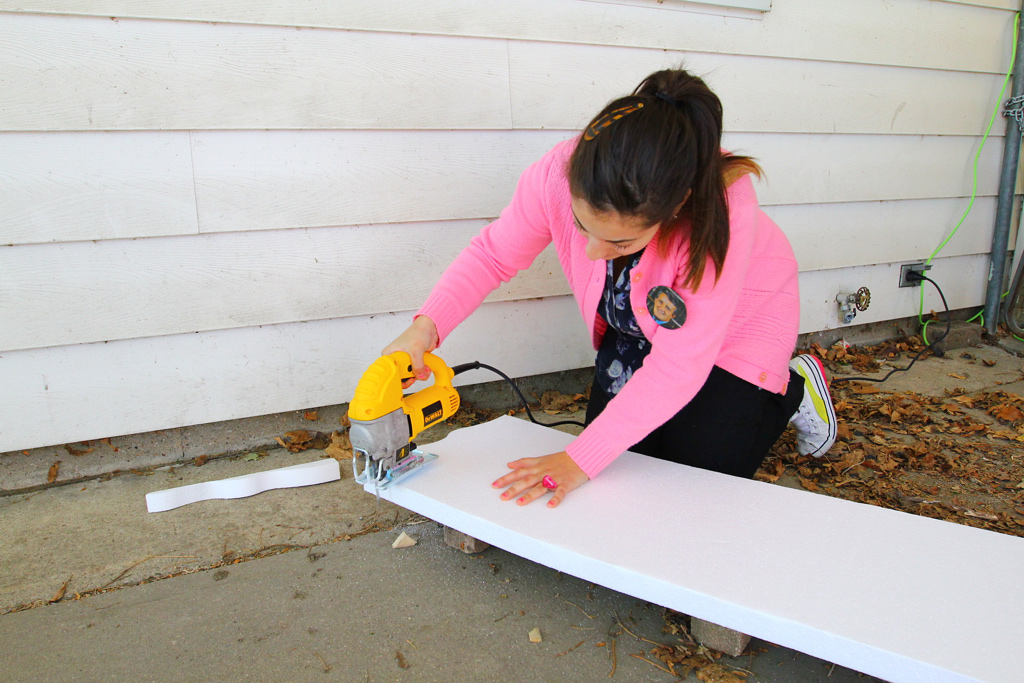
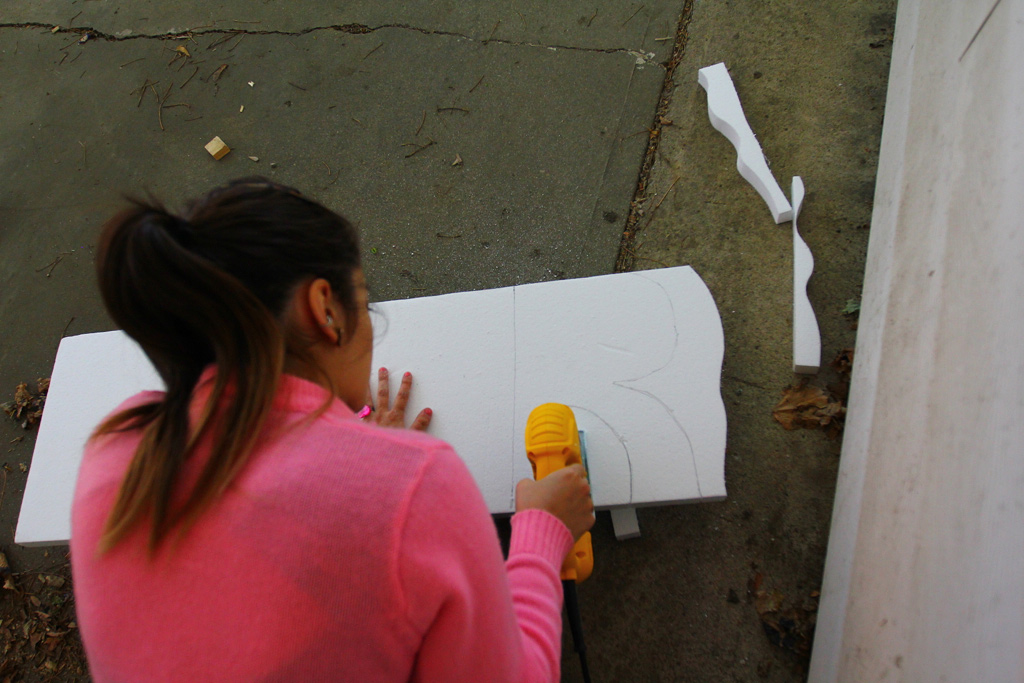
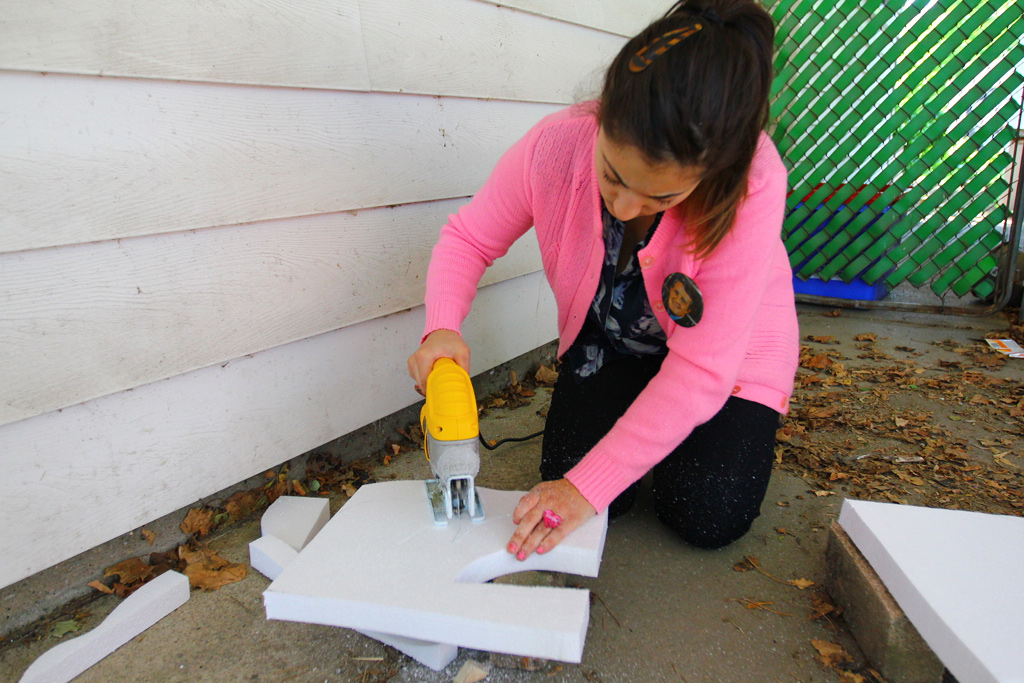
Rosina made the cuts.

Easy.

Rosina with the saw.

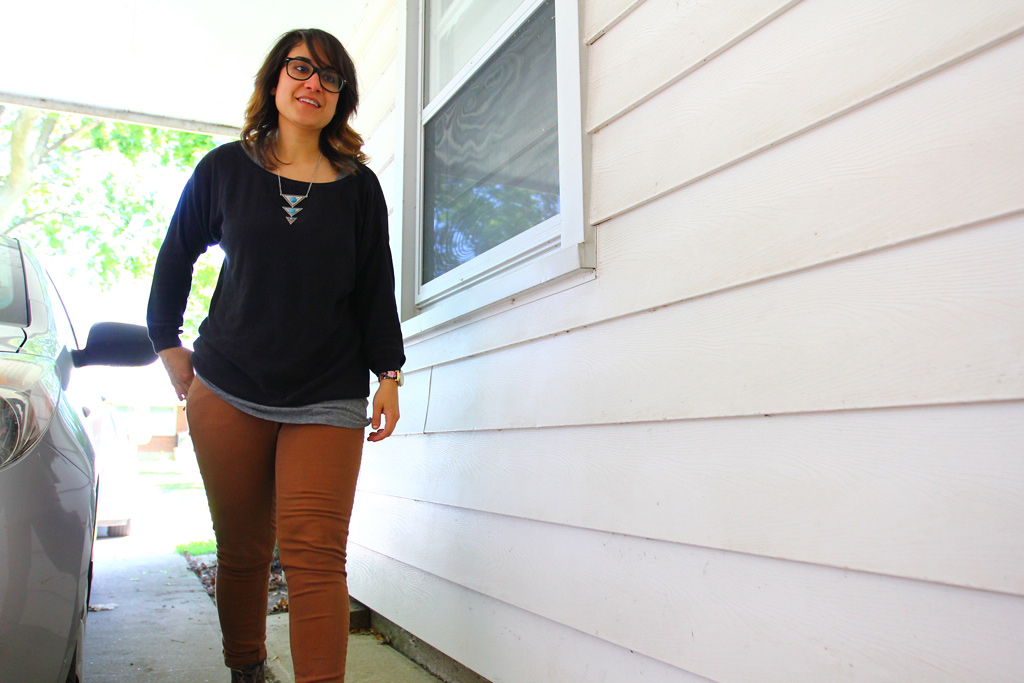
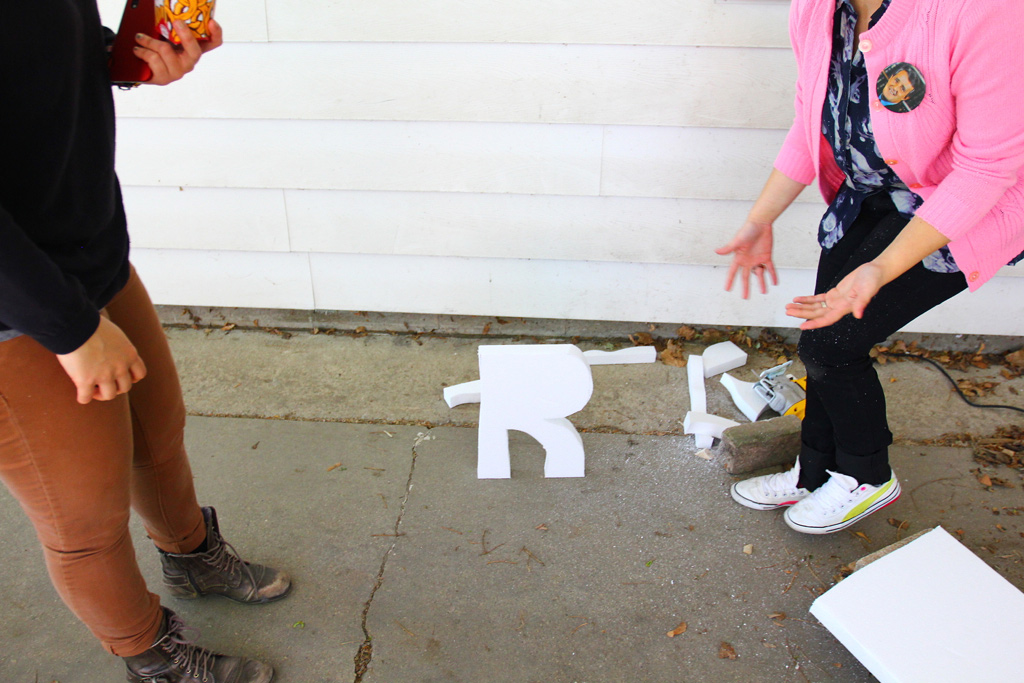
Hiba arrived a few minutes later.
We had a test letter.
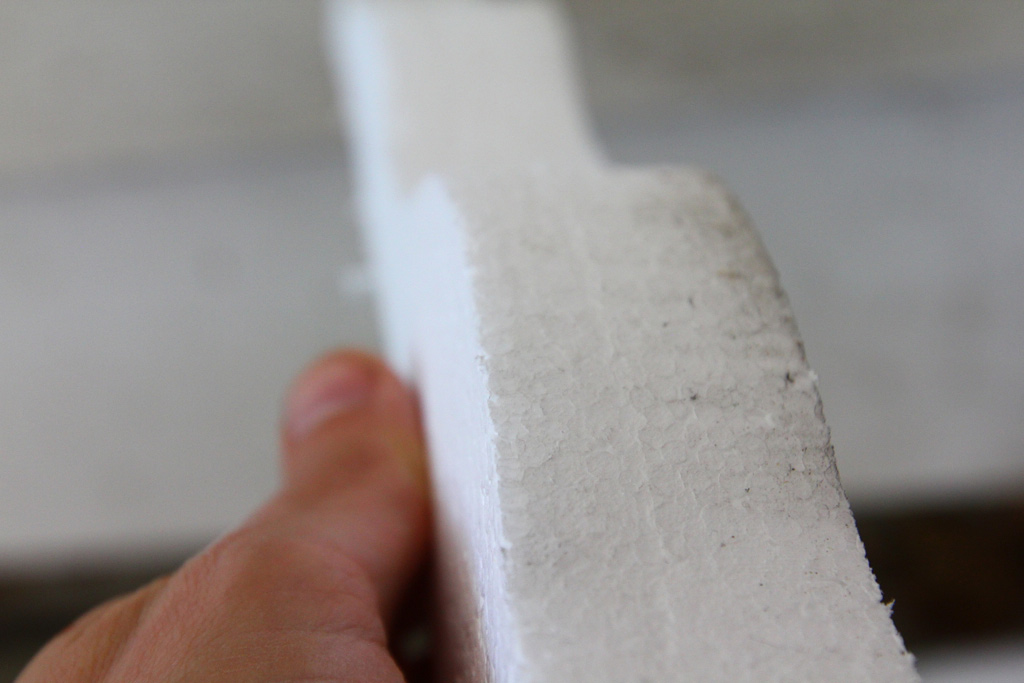
Another bonus of this type of styrofoam was the thickness allows the letter to stand up.
I think Rosina was really happy.

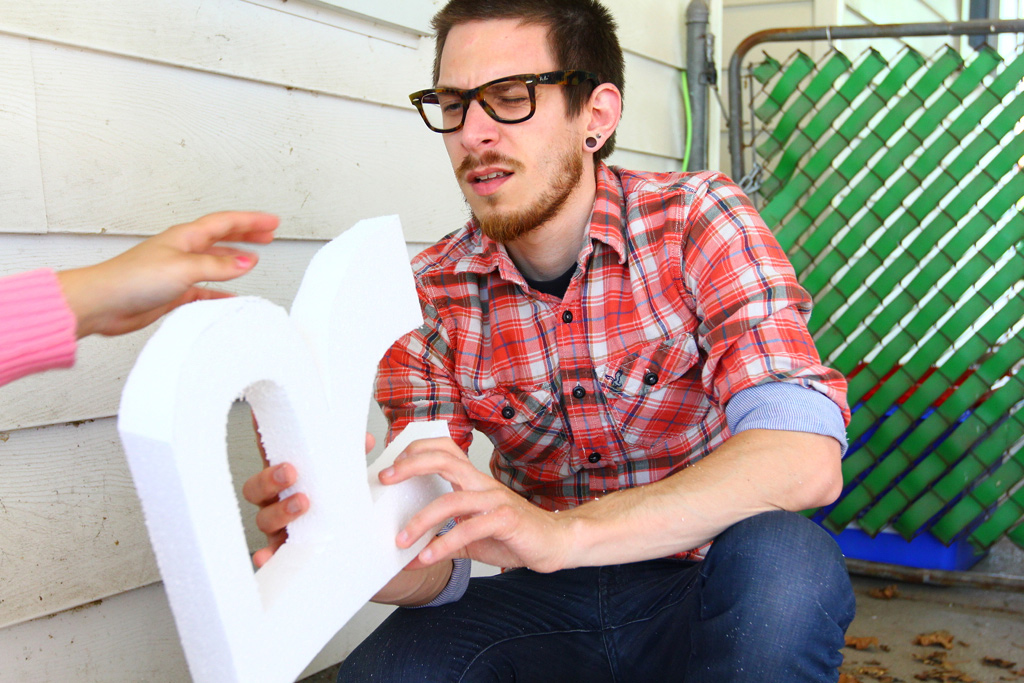
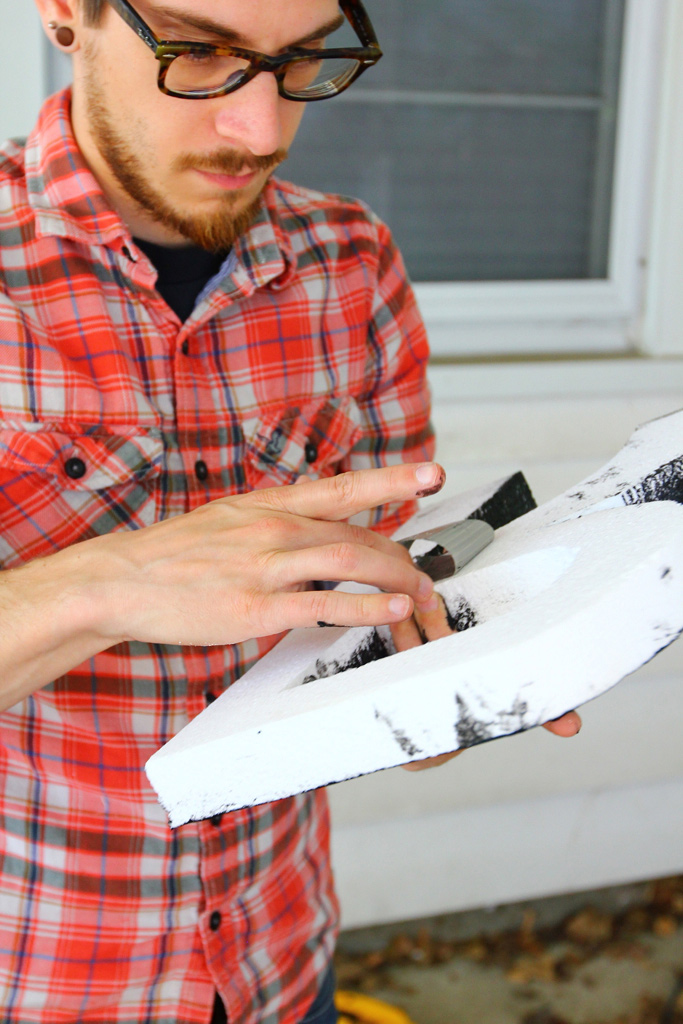
The cuts were fairly good, though we briefly wondered about finding a better way to avoid an angle on the edge of the letters — that is, the face of the depth of each letter would undulate a bit as we failed to hold the saw consistently at 90 degrees. A ban saw would be good for this, but it’s not essential.

I was trying to get a sense of how much we were moving the saw and what the effect was on the angle of the depth.

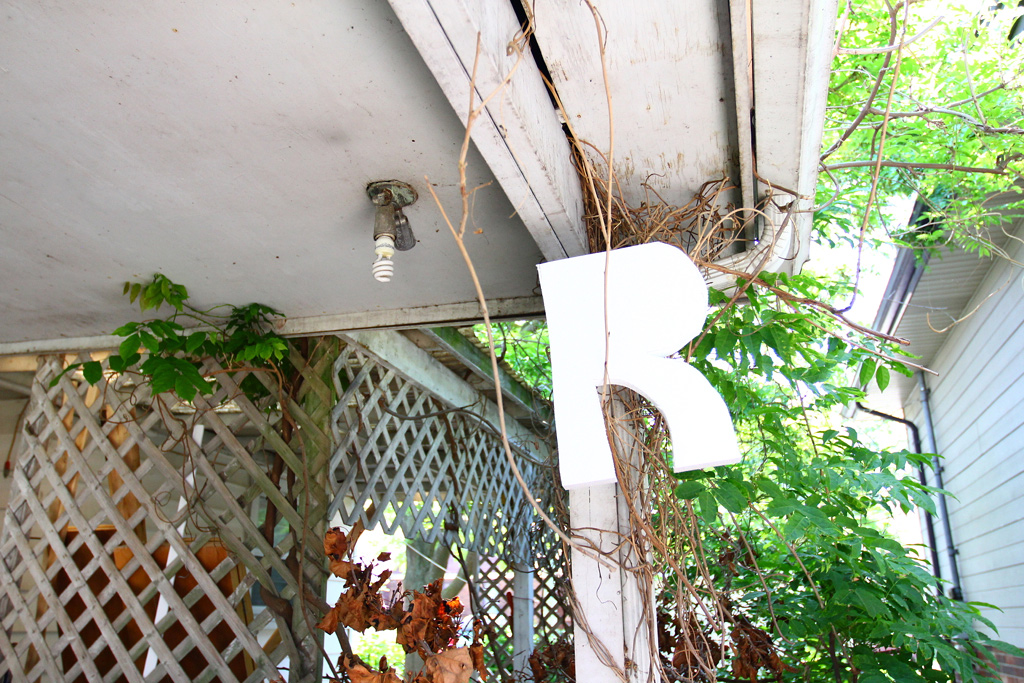
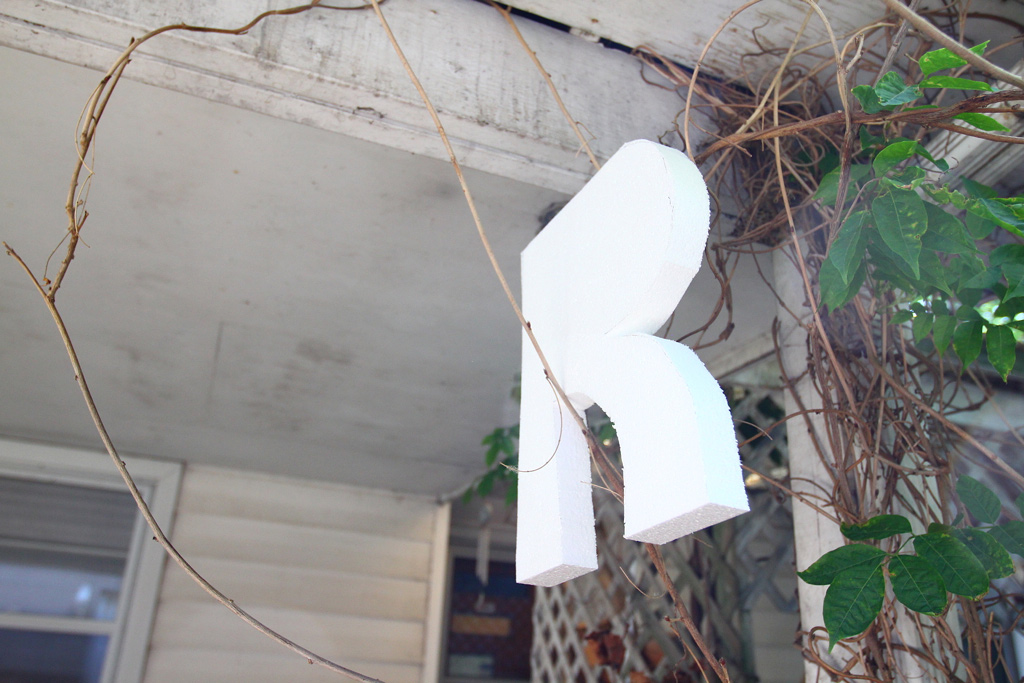
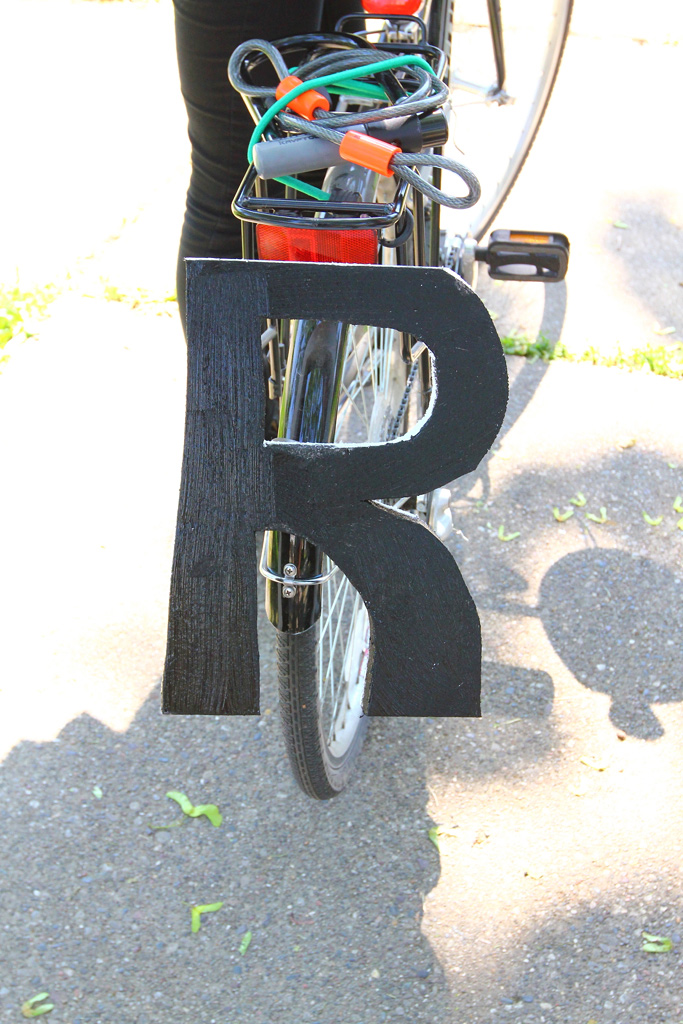
The letter R moves into the wild…

… and then returns for a quick coat of paint.

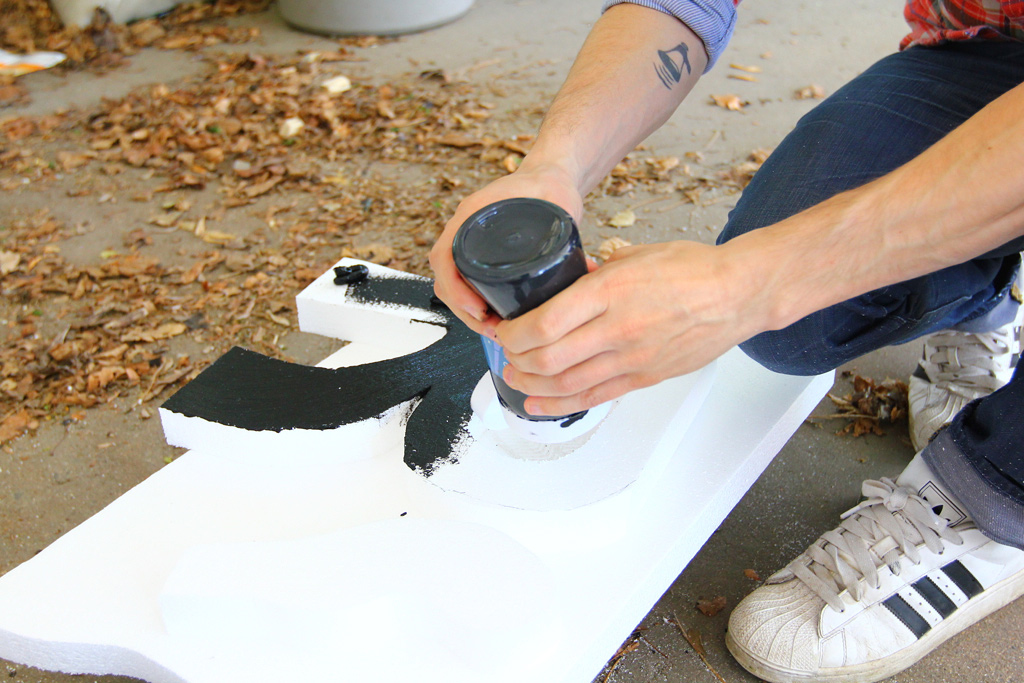
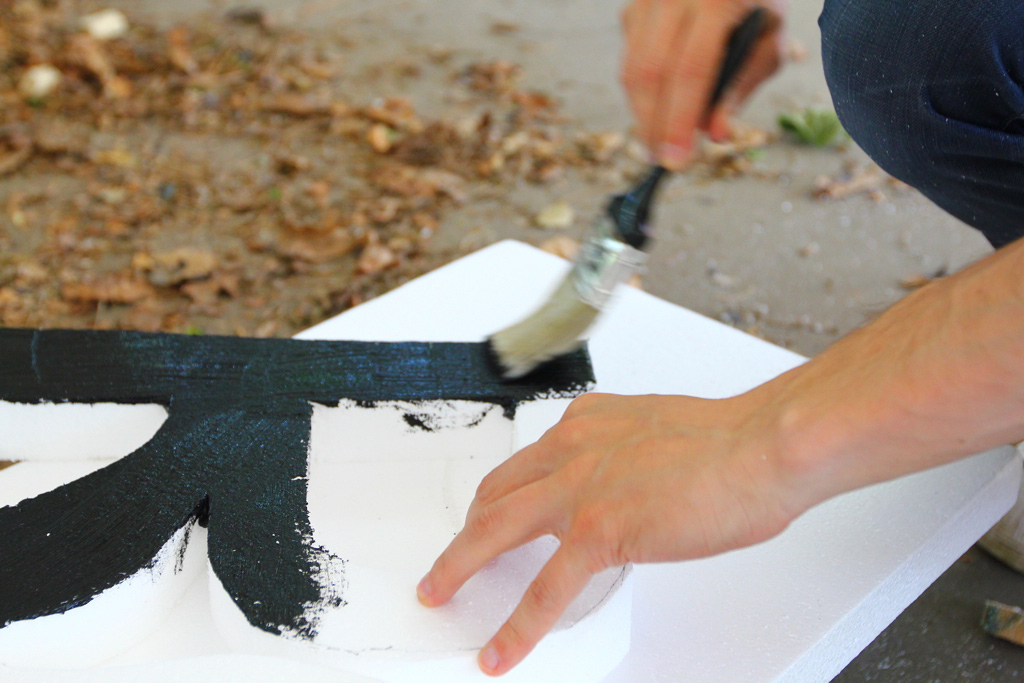
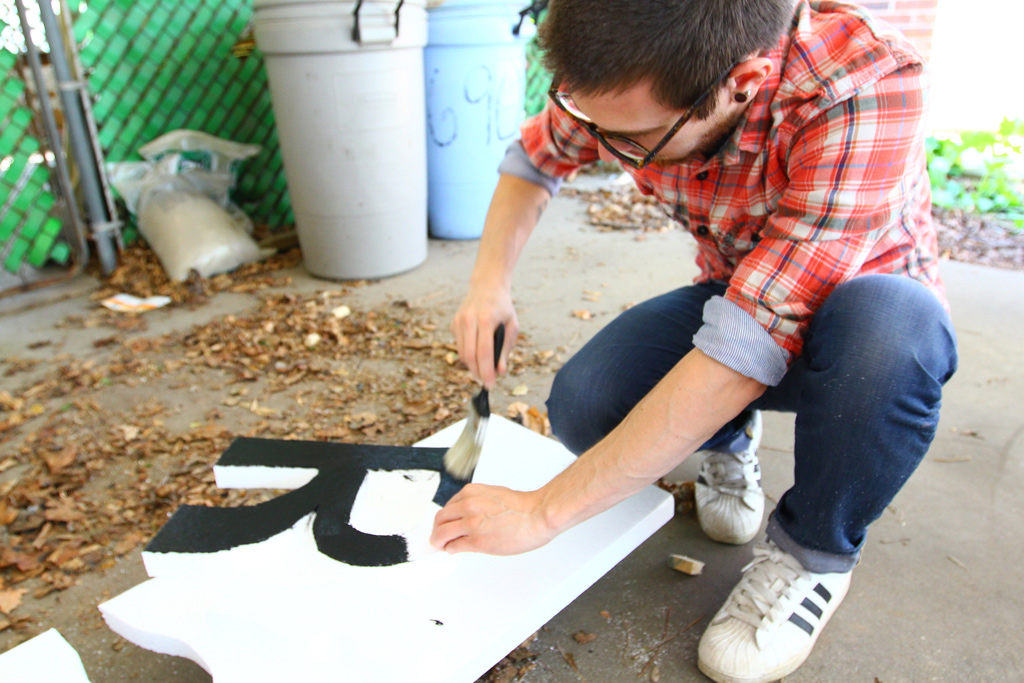
Spray paint would eat the styrofoam, but craft paint was no problem.

More painting.

The letter R dries.

Then, some duct tape.

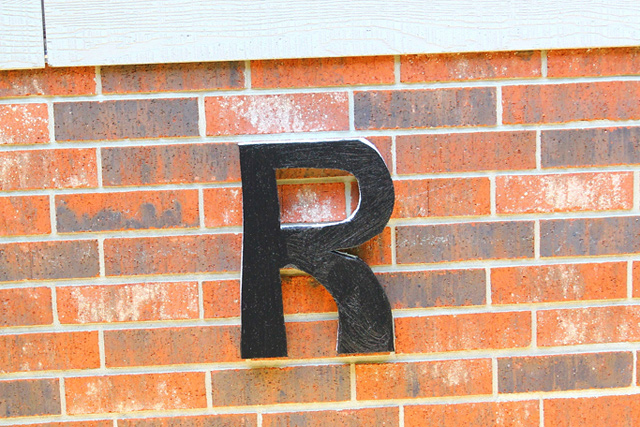
Given how incredibly light-weight the styrofoam is, duct-tape makes for a great mounting device. On brick.

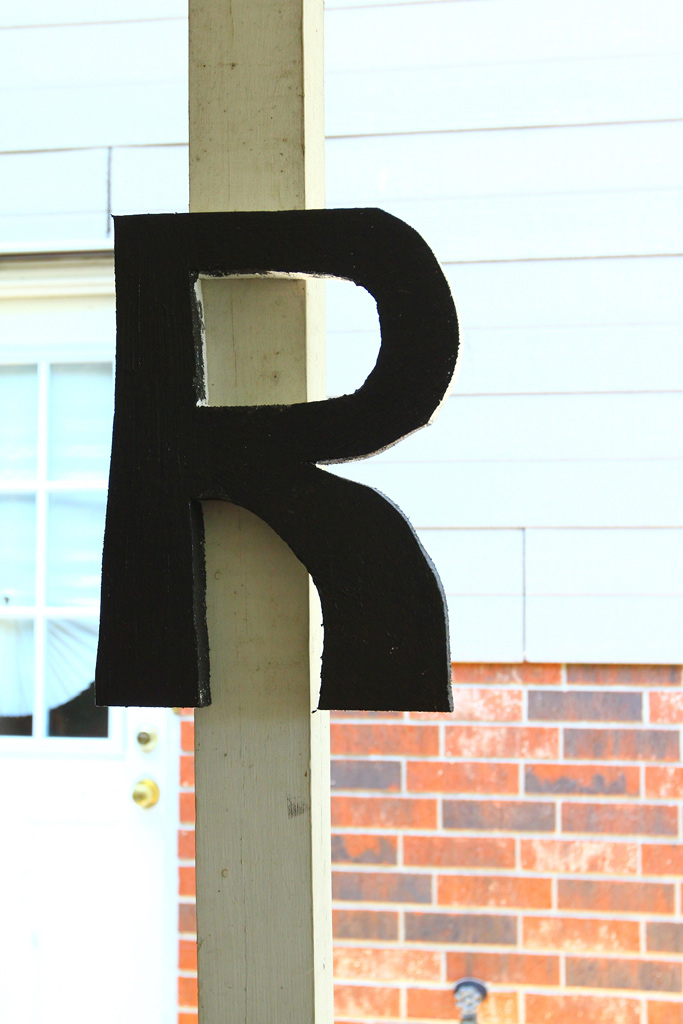
On wood.

On metal.

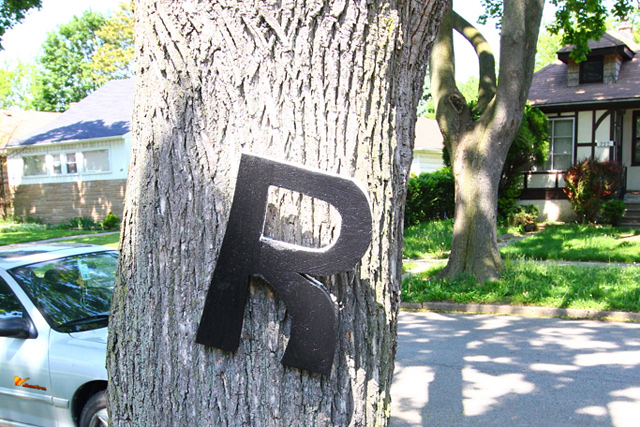
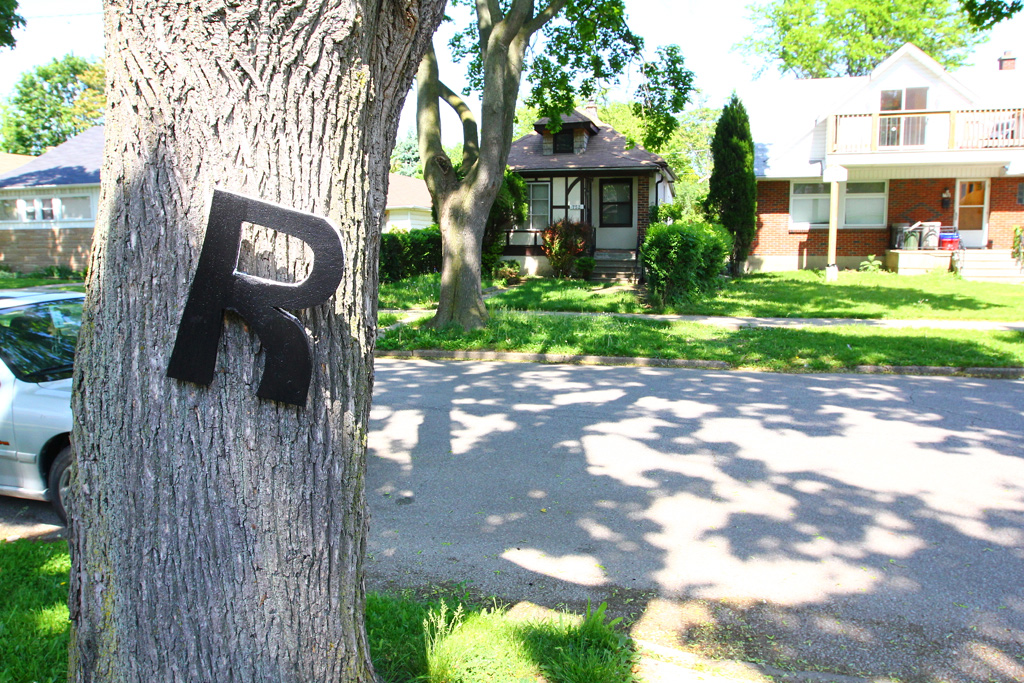
On a tree didn’t work as well, there wasn’t a lot of surface area for the tape.

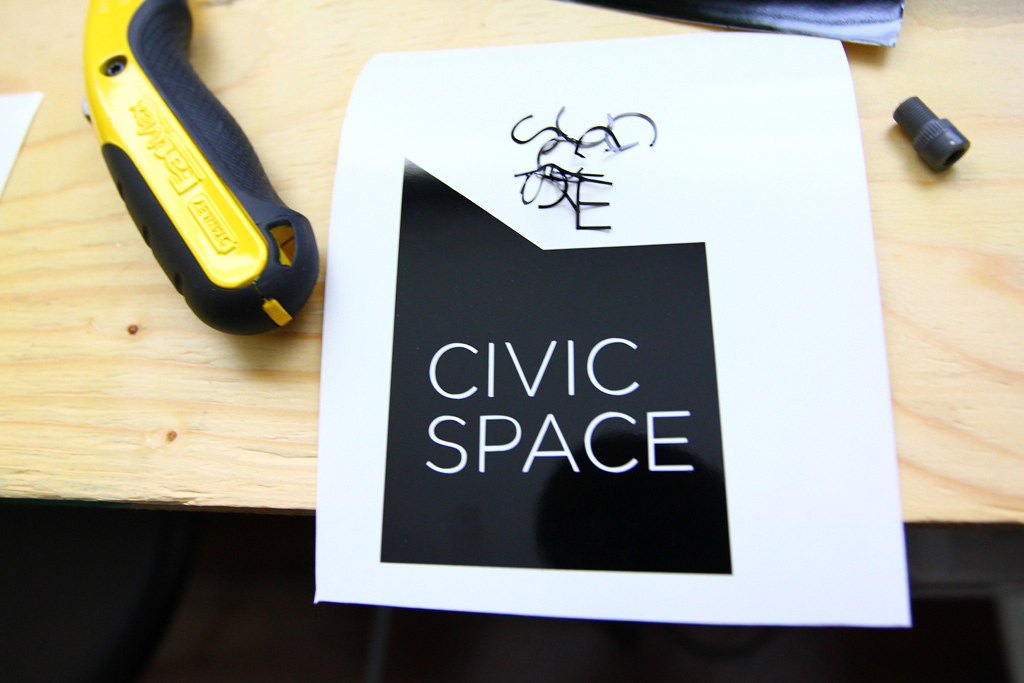
So, that’s the very early stages of a new project. The next steps will be cutting out a bunch of letter templates with the vinyl cutter in card stock, stencilling, cutting, and then a painting party, and then the project launch. Assuming all goes to plan.

And then there’s this … more soon.

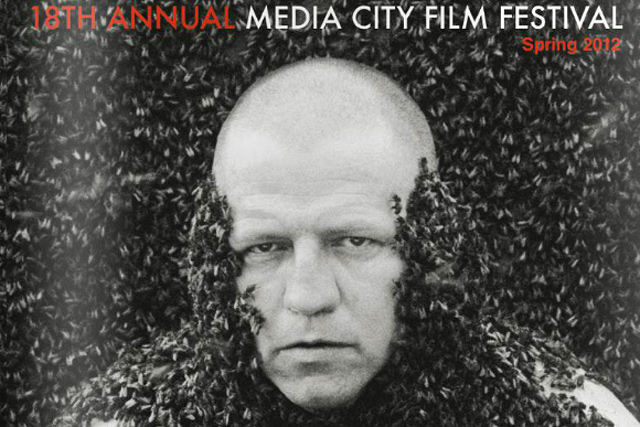
18th Annual Media City Film Festival

This week, the 18th Annual Media City Film Festival kicks off with a huge range of screenings featuring incredible works from around the globe and just down the street.

We’ll be co-presenting Thursday night’s International Program 3 with our friends at Mayworks, and our own Michelle Soulliere is also on the Media City board, but beyond just being good friends, the festival curates amazing films and a lot of other programming at the Art Gallery of Windsor that’s one of the highlights of the summer here in Windsor.

This year, things kick off with the first public screening of the Super 8mm films created by IAIN BAXTER& from the mid-1960s to the 1970s.

Check out the program, if you’re in the area, you should totally make a point of coming out, or making the trek down!

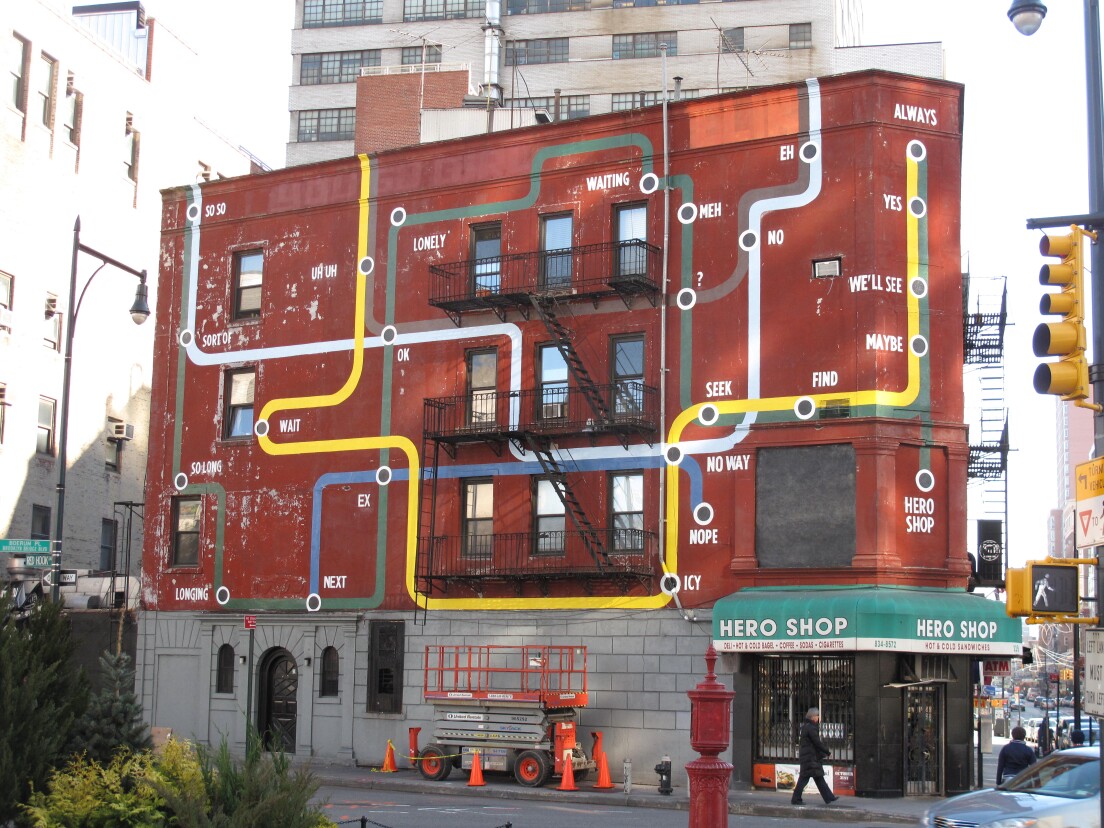
Steve Powers: Distilling Daily Stories into Incredible Street Art

Saw this video of a talk given by Steve Powers (who we’ve written about before) posted on Juxtapoz.

Steve Powers (aka Espo) speaks about his art at the PSFK Conference NYC. Powers discusses his recent public and private art projects, along with explaining his one-a-day art “Daily Metaltation” pieces. Powers is one of our cover artists to the current May 2012 printed Juxtapoz.

[via Juxtapoz]

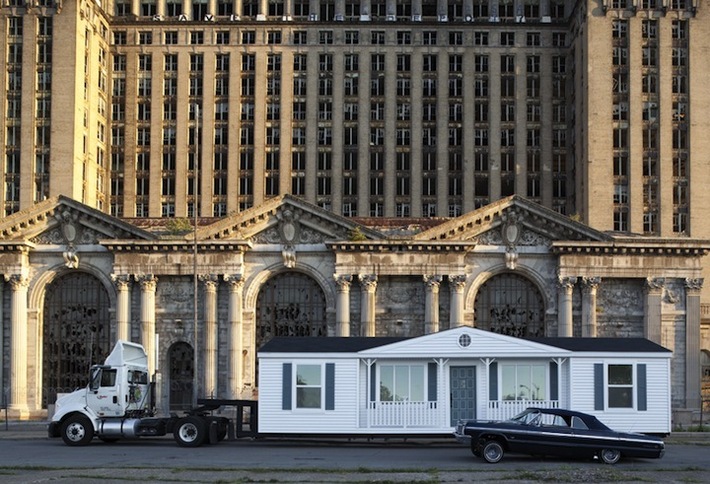
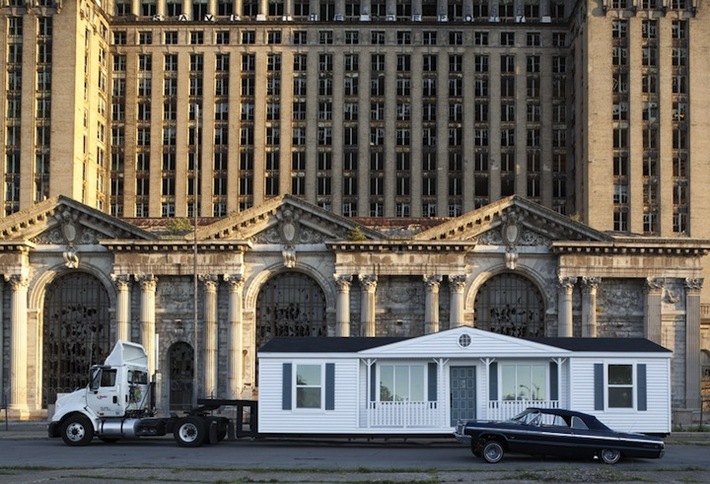
Rethinking the Role & Site of Social Services: Mike Kelley’s Suburban Home at MOCAD

Image via Artlog

Michelle and I visited this project when it first appeared at MOCAD back in 2010, and it’s incredible to see the next phase of this, just announced as a massive new addition to the project in Detroit that seems possibly not unlike Project Row Houses, but with a distinct Detroit feel.

From the article on Curbed:

The installation will be a replica of Kelley’s childhood home in the suburbs which will be used to provide social services to Detroit residents. Kelley himself oversaw the first stage of the project in 2010, when a mobile-home version of the suburban dwelling made a maiden voyage from downtown Detroit to visit the original Kelley home in the suburbs. The video of this, completed just before he died, is what premiered at the Whitney Biennial yesterday. Kelley’s idea was to create a symbolic reversal of the white flight that occurred in Detroit in the 1960s.

From the NYTimes article:

It will function nothing like a traditional museum or gallery and will show none of Mr. Kelley’s work, at his own insistence. The mobile-home part will remain detachable and will sometimes take its leave of the rest and journey through Detroit. The home as a whole will operate as an unconventional community service office, providing things like haircuts, social services, meeting space and a place to hold barbecues and perhaps for the homeless to pick up mail. “We’re thinking that our education staff will actually move out to the homestead and work from there,” said Marsha Miro, the acting director of the contemporary art museum.

It’s really curious to think about a long-term project like this being launched by an artist and carried forward (posthumously) by a museum, not to mention the complications of the politics of the architecture itself. I’m not sure what it will mean for the community immediately surrounding MOCAD, but it’s an incredible example to point to in terms of how we might rethink a number of institutions that provide social services.

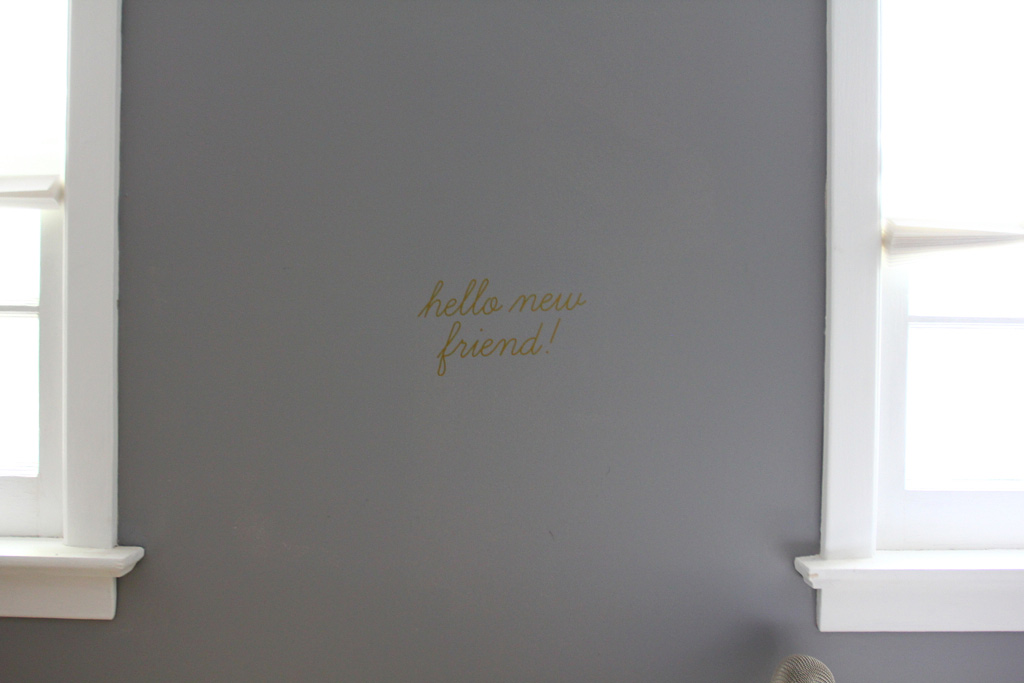
Hello new friend, some initial tests with our new vinyl cutter

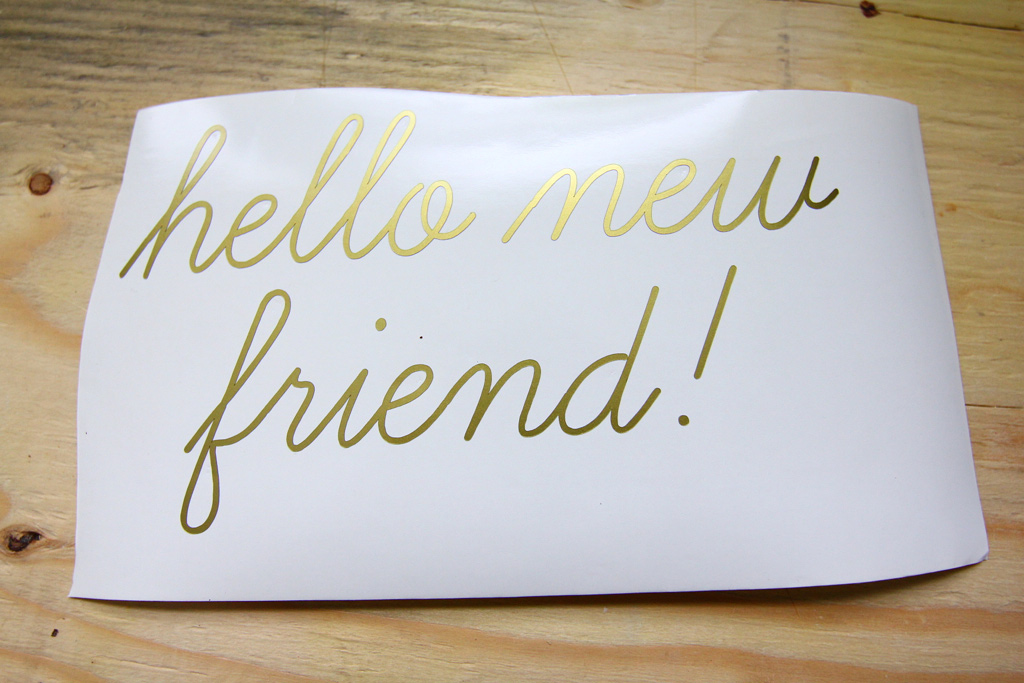
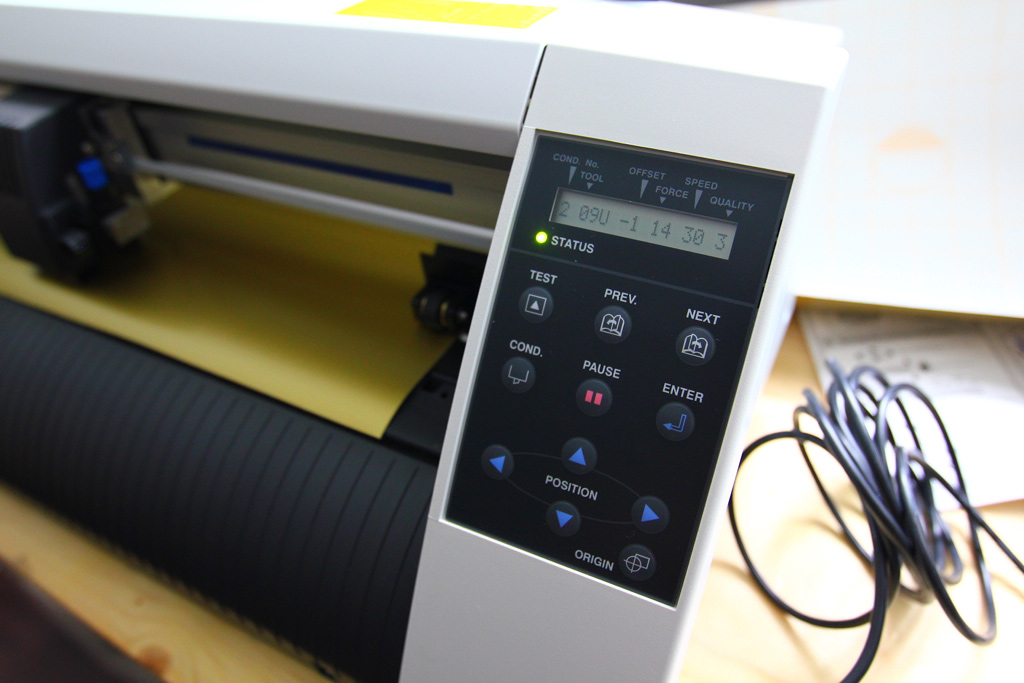
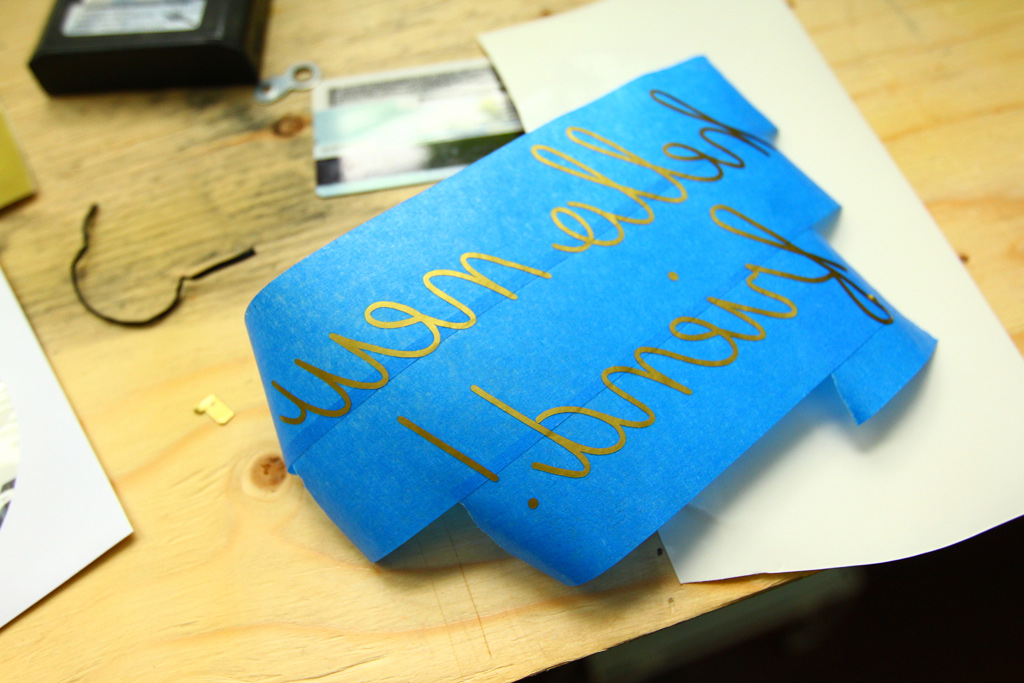
We recently acquired a Graphtec CE5000-60 cutter and we’re already dreaming up a whole bunch of new projects to put it to use. It cuts up to 24″ vinyl rolls (though I’ve also seen it score and maybe even cut cardstock) and with the Illustrator plugin, its incredibly easy. Above, a test with some gold vinyl.

It took only about 15 minutes to get it setup and running — there were some adjustments that needed to be made to in the offset to get the test triangle / square with the appropriate straight lines, but once that was setup and after I found the solution to the  HP-GL error 1 (change the command from HP-GL to GP-GL), I was able to send files from Illustrator just the same as you would send a file to print.

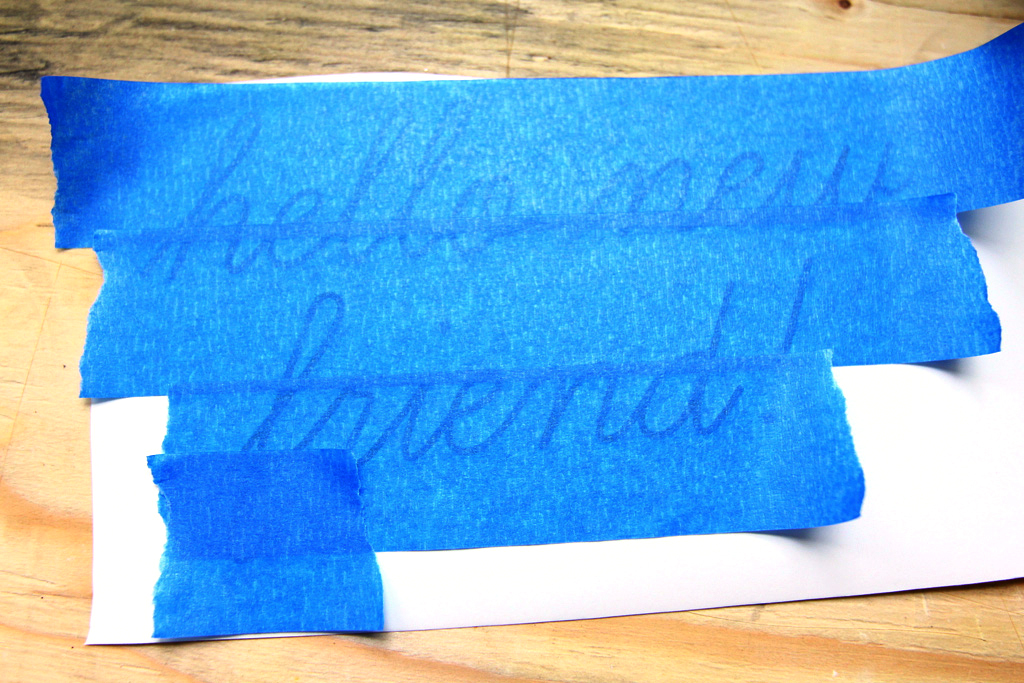
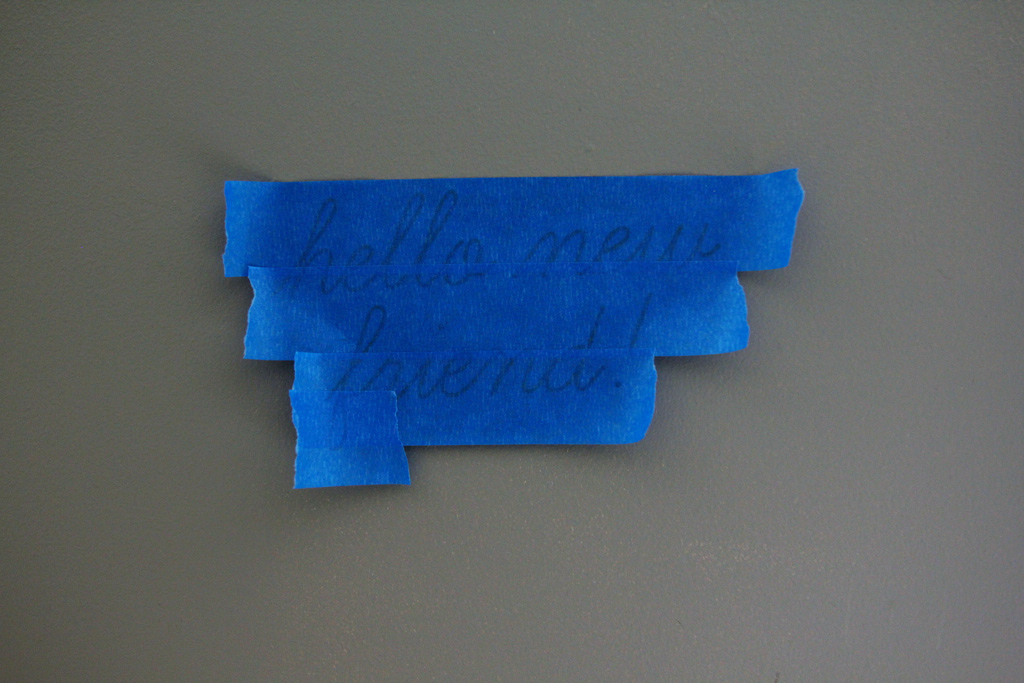
In these early tests, I’m just using some masking tape to transfer the vinyl.

It comes off pretty well — I was impressed with the quality and speed of the cut even with a cursive font like this.

I think they sell larger/wider rolls of masking-tape like material, but for now this works.

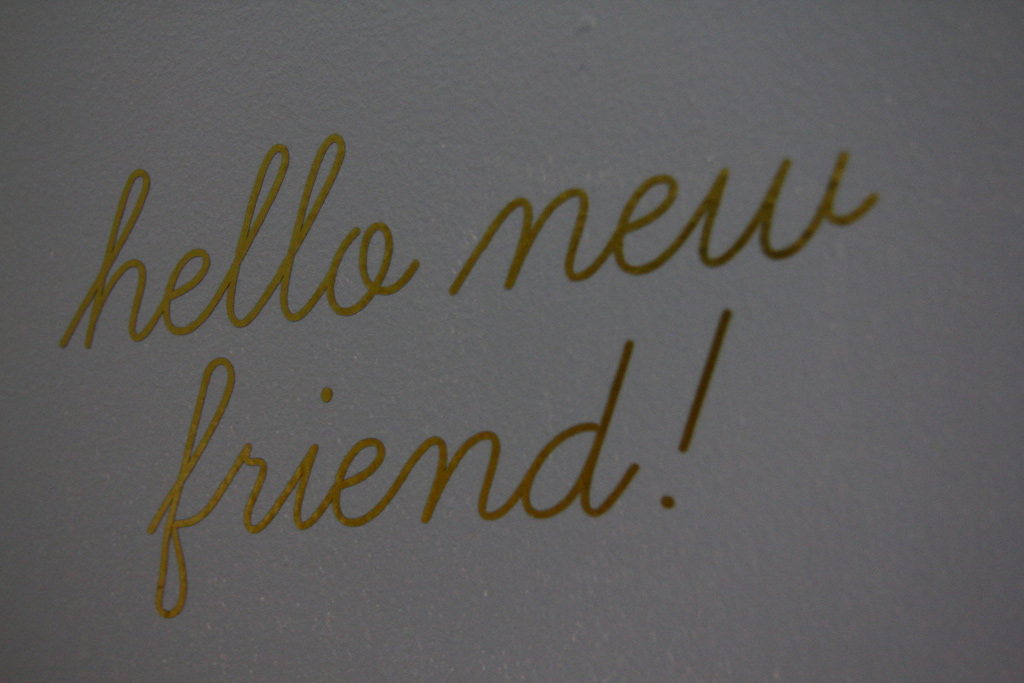
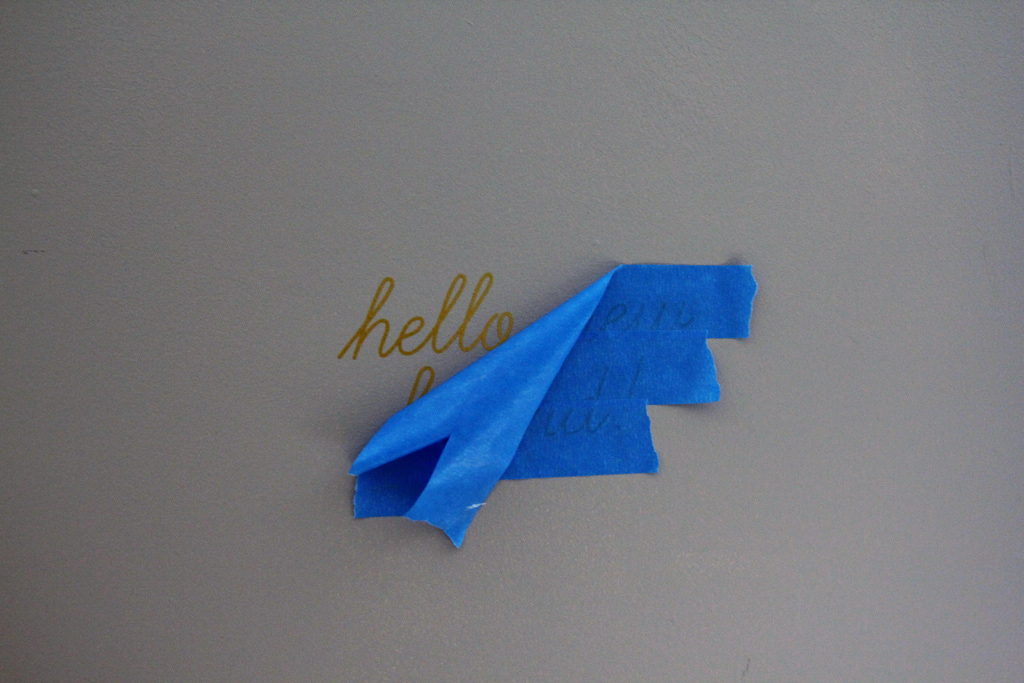
The maiden transfer onto a wall.

Easy transfer, just a little trouble with the bottom loop of the f.

So, a successful first test! In the past, we’ve worked with Printhouse for a lot of our one-off vinyl cuts, so if you’re looking for someone local we can highly recommend them. The things we’re going to be doing are just going to require so much volume that it was worth investing in one ourselves to do our own cuts. No details just yet, but I’m really looking forward to playing with this some more and I can’t wait to launch these new projects soon!

IN STORE: THE DEPARTMENT

Another installation of In Store by Daragh Sankey covering some of the incredible work that happened as part of our SRSI project a couple of summers ago.

Here’s the overview of this week’s segment on the Department of Unusual Certainties from Daragh:

I basically shared an area with these guys. Like Sara French and of course the Broken City Lab crew, we were all there over the whole month. (I wasn’t actually there the whole time, but came down for the first couple weekends.)

I had to decide in the editing how much of their footage to include – I had quite a lot, because of their long stay and also because of the sheer scale of their ambitions. I had a cut that only concentrated on the speed dating event, but I thought there was a lot of interest that got excluded so I made it what you see now, perhaps sacrificing cohesiveness for scope and … awesomeliness, hopefully.

Here’s a downloadable PDF of the Tip Sheet from the DoUC site.

Vacancy. It’s one of the big challenges for Windsor, as it is for any shrinking city. The downtown has been hit much harder – Windsor is a classic North American “donut city” where suburban expansion and downtown decline go hand in hand. (More on this in an upcoming film.) There are no easy responses, and I hope that my use of end titles will not seem like I’m trying to argue that the Department’s activities in Windsor led directly to a decrease in the vacancy rate. But their recognition that there was a lack of communication amongst store owners, and their tapping into some of the energy that resulted from opening the lines of communication, seemed to be heading in the right direction, at least.

Nothing’s set in stone, but I have probably three more films to go, maybe 4. There’s some really great stuff coming up, so stay tuned!

Hi, 5 with Luci Everett

About the Hi, 5 Interview Series

Hi, 5 (5 Questions) is a web-only interview series which presents five questions to artists, activists, and creative thinkers alike.  The project acts as an educational device which allows us to gain insight into the narratives that define successful individuals.  We are interested in the motivations behind ambitious ideas and how these individuals chart personal change in relation to their surroundings.

About Luci Everett

Luci Everett is a graphic designer and illustrator living in Melbourne, Australia. She does a lot of paper cutting, painting and scanning.

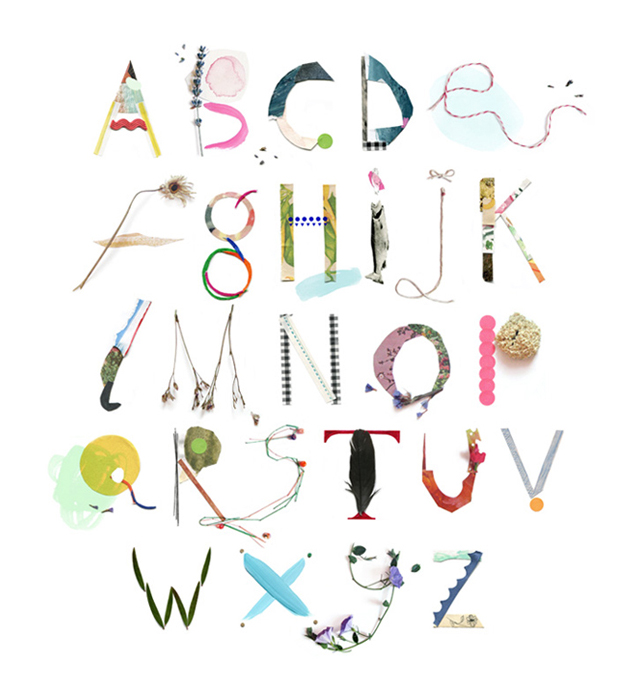
Luci Everett - Alfalfabet (2012)

Luci Everett 

If you had to describe your current self to a 16-year-old you, what would you say?

Relationships and friendships are much easier now. It’s not going to be sudden, but gradually you’ve become much more confident and comfortable with yourself. You pursued graphic design and have a lot of fun. Every year gets better.

Could you describe an evolution in your work or way of thinking?

I think I’ve developed a more discerning eye over the last few years. I have a slightly more practical approach to creative ideas than I did when I was studying design at university – I guess that comes with working on real projects. That said, I’m driven inspiration-wise in pretty much the same way I always have been; I absorb a lot of visual information and that will always inform my work quite intuitively if I’m passionate about it.

Are there any people who have been instrumental in the development of your way of thinking and viewing the world?

No one in particular, although I think a couple of my high school art teachers and uni lecturers were pretty influential in nourishing my inclinations to approach or respond to the world creatively. Of course it’s unavoidable that my parents play a big part in how I view the world.

How do your political beliefs inform or fuel your work as an artist?

My political beliefs are quite separate from my artwork. My love and absorption in aesthetics comes from a different place to my connection and interaction with society. I’m not sure whether that’s a good or bad thing, it’s just the way it feels.

What do you feel a city should be or do for its inhabitants?

It should be a place which nurtures community, with the collective wellbeing of people and environment (equally) is always considered.

Luci Everett