Planters: I have good news, and I have bad news

Good news first!

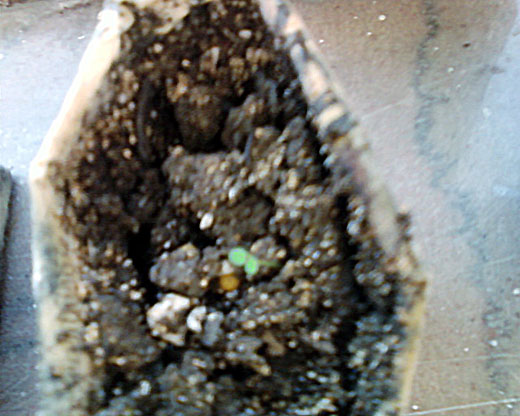
planter-good

A plant! In the planter! That’s what they’re there for! Hooray, plants! Hooray, exclamation points! Sorry about the blurry cameraphone picture! You’ll be grateful for that in a minute, however! Since the real action over the weekend wasn’t so much in the planters as… ehr… on them.
planter-bad

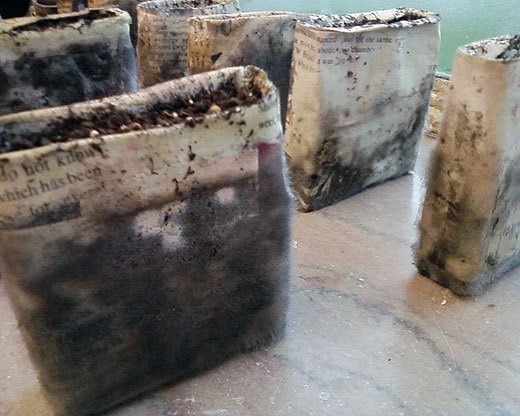
Now, plants are not really my forté, but I’m fairly certain that this is… not the desired effect.

Everything was fine when I checked in on things, Saturday. Nothing had dried out terribly, and I hardly added any new water. That nothing had dried out, with hindsight, should have been troubling in and of itself. I didn’t make it in yesterday, but this is what I encountered, today.

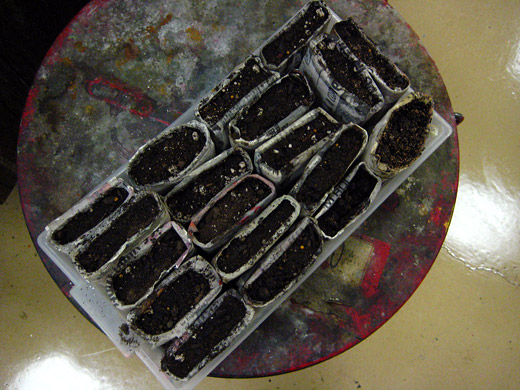
Mold isn’t really my forté, either (despite this apparent photographic evidence to the contrary), but I would guess the factors contributing to its… particular success, in this instance would have been these: (1) the planters were packed into a plastic tray quite tightly—this was clearly not the way to do things; (2) my studio has been a veritable sauna for some time, this weekend in particular; (3?) I wasn’t there for this round of planter construction, so I’m not sure if wheat-paste was involved, as it seemed to be in some iterations, but, if it was, I can see how that might have been a virtual signed invitation for any errant spores (and LeBel is teeming with them) to take up residence.

So there’s that. I’ve left them standing apart to dry out, but I’m not sure if that’s going to help much. I’m thinking perhaps it won’t?
Seeds in the Planters, Waiting to Grow

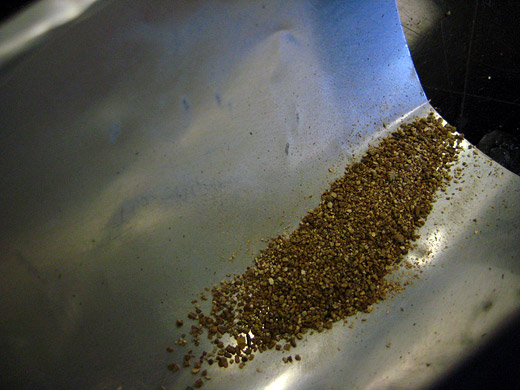
We finished putting soil and seeds into the magnetic planters and set them on a sunny window ledge to start germinating. We figured the planters would stand a better chance at surviving (and staying in place longer than just overnight) if there were some wildflowers starting to grow.

We also went to the downtown space and started brainstorming, but I’ll make another post on that later.

Continue reading “Seeds in the Planters, Waiting to Grow”

Pay to Rest

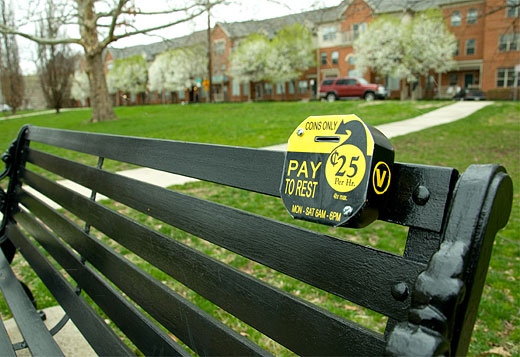
Pay To Rest

Pay to Rest by Vinchen is a simple-enough intervention, adding a suggestive coin-operated mechanism to a city bench.

It may be a one-liner, but it caught my eye a couple days ago, the photo sat on my desktop, and now this morning upon reading Amherstburg’s idea to introduce pay-per-use fees to soccer fields, baseball diamonds, etc., it made me curious about the priorities of a city when such significant money can go into certain forms of maintenance, but then shift other services to another kind of access model.

I’ll admit I’m making a bit of a leap here, but if benches were indeed pay-per-use, would it result in better kept parks? If an entire city shifted to a pay-per-use model, would things get any better? What would be the first bit of infrastructure to collapse? If the entire city operated on a subscription service model, would there be any positive change?

[via Wooster Collective]

Window Farms: New Urban Agriculture

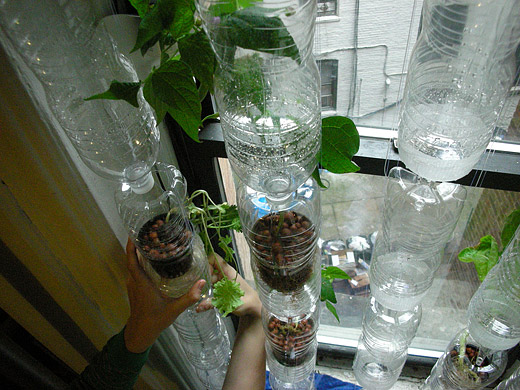
window farm

As part of the Eyebeam OpenLab residency program, Rebecca Bray and Britta Riley have been working on a project called, Window Farms. Fashioned out of recycled and/or low-cost materials, the project calls for vertical gardens that use hydroponics to grow beans, tomatoes, and lettuce.

Designed with crowdsourcing and R&DIY (Research & Do-It-Yourself) in mind, the project is not meant to create a one-size fits all product, but rather a framework to further develop and refine the process. If urban agriculture is one the many necessary steps we’ll have to take to create sustainable cities, this is one way in which food production can be managed at a household or neighbourhood scale.

[via Scaledown & Eyebeam]

Office Hours

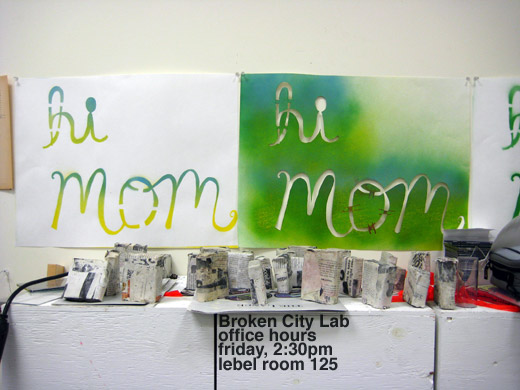
Broken City Lab Office Hours

Broken City Lab office hours on Friday, June 5th at 2:30pm, LeBel, room 125. We’ll be going on a brief field trip to the downtown space and continuing work on the planters.

Parking Lot Put Put

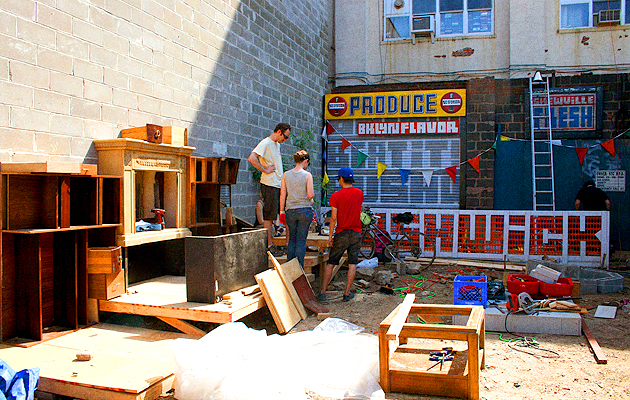
Day 2 of the Putting Lot construction

For New Yorkers (and Windsorites—unless there is a mini golf course I am unaware of that isn’t on the outskirts, punctuated with a pink elephant) who don’t usually get to experience the glory that is miniature golf, this project provides them (and potentially us) with the oppurtunity.

In Bushwick Brooklyn artists are taking over empty parking lots and transforming them into 9 hole mini golf games, each hole designed by a different artist.

The Putting Lot seeks to transform vacant space into community spaces. The group’s intention is to inspire imagination and provoke conversations about community sustainability.

This project makes me think of the median astroturf along Dougall and how BCL et al. can “redistrubute” the turf to make a Windsor version of the putting lot.

Braiding Grass in Windsor

Leesa Bringas (along with some fellow Windsor artists) spent the weekend braiding the long grass at Great Western Park. The process leaves spirals of braided grass around shoots of flowers. It’s quite beautiful and seems meditative (though admittedly, I didn’t venture out to try myself).

Political issues of the strike aside, I quite like seeing the riverfront in a naturalized state, and it’s great that Leesa found such a quiet way to work with the space. Given the other activity in city parks over the weekend, this project is a welcomed intervention to the strike now going into its seventh week.

You can see more photos on Steven’s site, or more video on Darren’s site, or read more about the project on the Windsor Star.