Hi, 5 with Dave Murray

About the Hi, 5 Interview Series

Sara Howie and I are excited to begin a new web-only interview project called Hi, 5 (5 Questions). The project will act as an educational device which will allow us to gain insight into the narratives that define successful individuals. We are interested in the motivations behind ambitious ideas and how change has been affected by those with the passion for progress. I decided to interview Dave because, once I heard about him, I was interested in how he worked the imagery and culture of Toronto, Ontario into his work.

About Dave Murray

Dave Murray is an illustrator and designer, currently based in Toronto, Canada.

Graduating in 2009 with a BAA Illustration from Sheridan College, Dave has continued to push himself to explore new visual frontiers to express both his own and client’s visions. Dave’s work has evolved to reflect his myriad interests; be it the strict design of his Toronto neighbourhood mapping series, or his futuristic cubist takes on portraits and pop culture.

Clients include Stella Artois, Streetcar Developments and Dandyhorse Magazine.

Dave’s work has been featured in The Toronto Star, The Globe and Mail, The National Post, Canadian House and Home, Benjamin Moore, and 3 x 3 Magazine, as well as countless blogs.
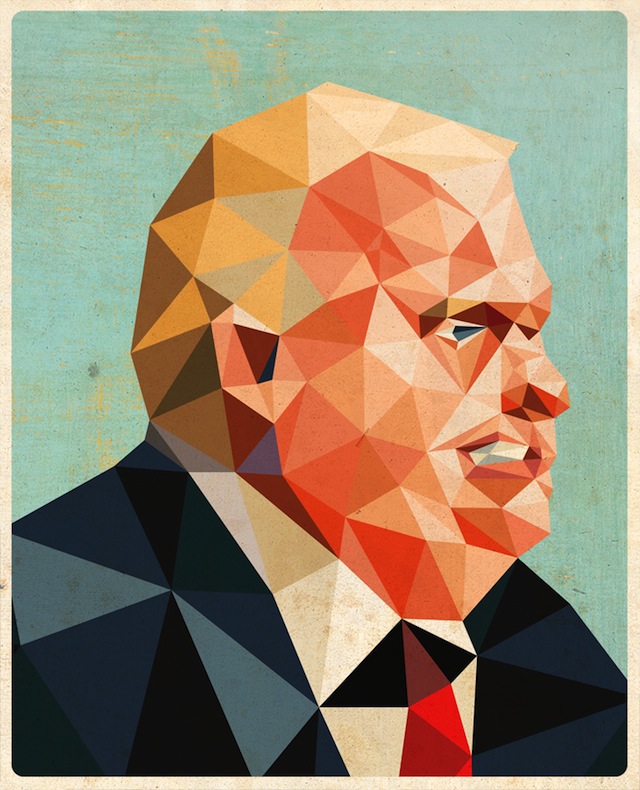
Dave Murray - Polygon Series (Rob Ford)

Dave Murray

January 13th, 2012

If you had to describe your current self to a 16-year-old you, what would you say?

Ha ha, the first thing would probably be that I no longer have shoulder length hair.  I’d probably describe myself as a pretty logical evolution of where I was – everything is mostly the same, just more refined.

Could you describe an evolution in your work or way of thinking?

My work is constantly evolving – but I think the biggest step in the past few years has been the result of really exploring new ways of working that I otherwise wouldn’t usually do.  I’ve really re-kindled my love of drawing, and am more into the history of art and image making.  All of this expansion not only provides me with ways to creatively blow off some steam, but it also informs my more focused pieces.

Are there any people who have been instrumental in the development of your way of thinking and viewing the world?

This one’s actually tricky for me to answer.  I like to think of myself as a passive observer – I don’t always immediately act on things, nor do I always respond to advice or new ways of thinking.  Maybe I’m missing out on a lot, I don’t know.

How do your political beliefs inform or fuel your work as an artist?

Again, this is one of those things that I try not to let creep into my art.  My politics are probably best defined by the some of the projects I take on – Dandyhorse Magazine is a great example.  I’ve done a few pieces for them, and I love that I’ve had the chance to work with them because I love bicycles, and I love cycling in Toronto.  This isn’t my favourite thing to admit, but trying to live as a freelance illustrator means that I’ll be more likely to take jobs from places that I might not necessarily support because it’ll pay the bills – the best part of those jobs, though, is making them fun for myself.

What do you feel a city should be or do for its inhabitants?

I feel like a city should, more than anything else, be an accessible home for everyone who wants to live there.  Mass transit, good infrastructure, reliable services and culture are all things that a city should prioritize and constantly strive to improve.  Toronto, right now, is an example of how not to prioritize these things, and it’s sad.  Our mayor and his cronies are doing a sub-par job (putting it lightly).  What I fear most though, is not that something bad will happen – but that NOTHING will happen.  I’m pretty sure that at the end of Ford’s run, we’re going to be exactly where we were 4 years previous.
www.davemurrayillustration.com

Nicole Dextras’ Ice Typography

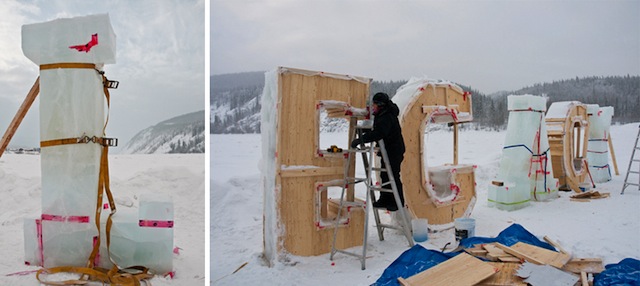
Since we’re on the cusp of real winter here in Windsor, I thought I’d share this project by fellow Canadian artist Nicole Dextras. Besides admiring her gorgeous series of photographs, we might be able to learn from her method of construction. She seems to make molds into which water is poured and frozen. Imagine if we used the 3D ‘R’ prototype we made for CAFKA for this!

via: Designboom

Here is an image showing her process of creating such large ice letters.

Martha Street Studio Residency Day 2: Another Day in Manisnowba

After a full night’s rest and a wholesome breakfast at The Tallest Poppy, we headed back to Martha Street Studio to formulate a game plan for our second work session and workshop later that evening. Knowing that we had an inordinate amount of work to do before our opening, we decided to spend the bulk of the day getting the visual material (posters) completed and ready to hang.

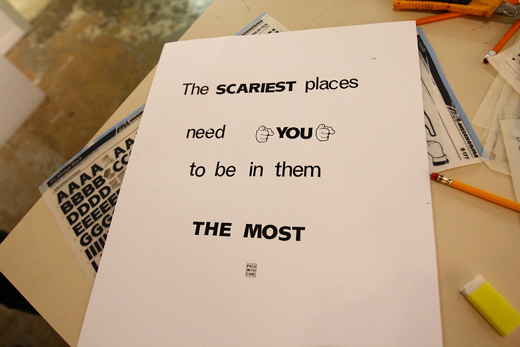
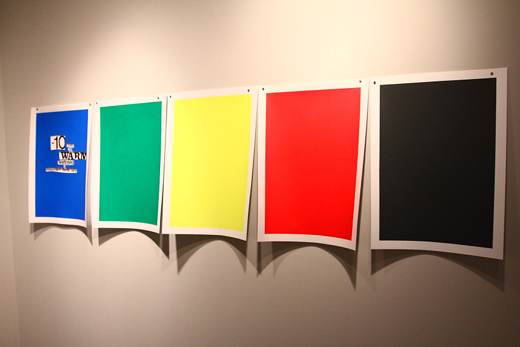
Our workshop participants from Monday night left us with a very good chronological story and a number of great Letraset statements on paper. Our intention is to combine the posters and text from both sessions into a body of work. We also had pockets of time to consider our exhibition layout and what we should include.

Pictured above is a rough layout of the workshop poster series colour options, each of which may or may not denote an emotion or theme.

Continue reading “Martha Street Studio Residency Day 2: Another Day in Manisnowba”

Marcos Zotes’ CCTV / Creative Control

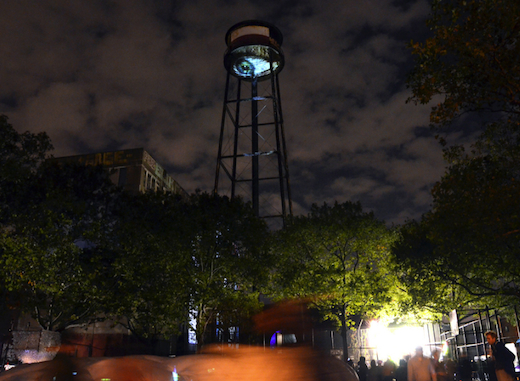
Marcos Zotes, an architect and artist living in New York, recently completed CCTV/Creative Control, an intervention consisting of the projection of “an over-sized eye onto the lower surface of the 10-storey-hight Milton Street water tower in Brooklyn, New York.” This particular tower is a very ideal fit for an oval-shaped projection and since it does not display any external lighting fixtures, allows the projection to take center stage.

About the water tower: “Still the highest point in the area, until it is dwarfed by new gentrification plans, the water tower exists as a relic of the neighbourhood’s industrial past. The intervention temporarily transforms this iconic landmark into a discernible CCTV tower, raising questions of private control over public space in the urban context. By intervening in the everyday order of contemporary urban life, CCTV/Creative Control aims at both producing moments of antagonism –however transitory, fragmentary or ephemeral– and finding new ways to practice the city, not simply as consumers but as creators.”

On a conceptual level, “CCTV/Creative Control seeks to question the oppressive mechanisms and discourses implemented in the city through the temporary appropriation of public space.” I find this project interesting in principal, but also because it was executed by an architect who probably looked at the water tower with a special kind of criticism.

Moveable Type: Cross-Country Adventures in Printing

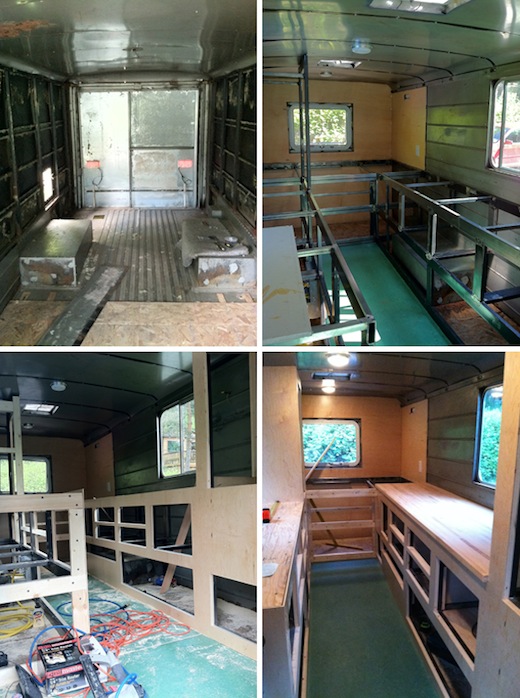
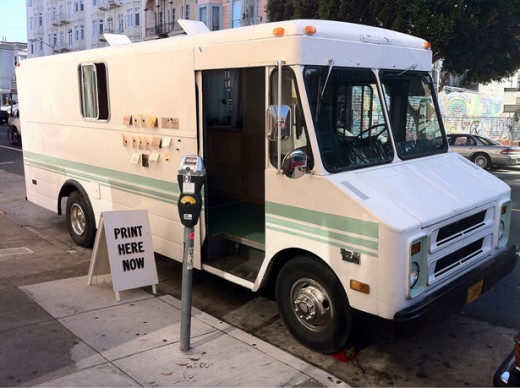
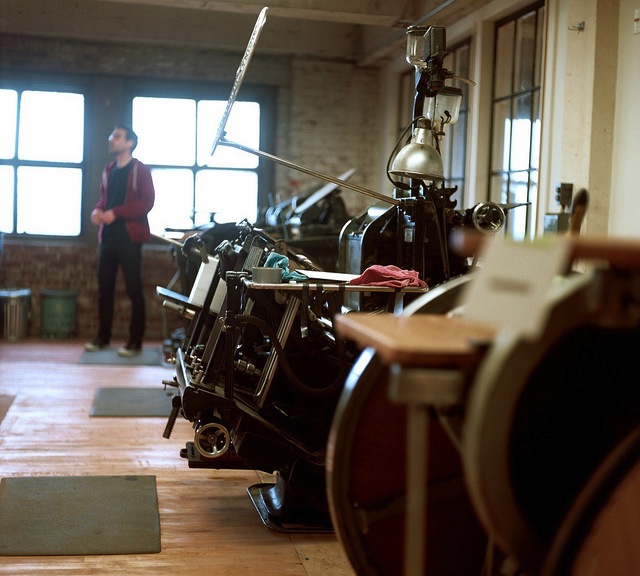
This mobile letterpress service-in-a-truck looks similar to the camper we occupied this summer at Truck Gallery in Calgary. The truck pictured is part of a touring project called Moveable Type. It is as it sounds: a truck with printing equipment installed where camping amenities used to reside. “It was originally a fleet truck for American Linens, and their logo is still faintly visible beneath the white body paint.” The truck conversion itself is a feat of ingenuity, but its touring schedule is also pretty ambitious. I counted nearly 100 stops from June to December of 2011. I hope to catch it during one of its future Canadian appearances.

Via: Eyeteeth: A Journal of Incisive Ideas

Continue reading “Moveable Type: Cross-Country Adventures in Printing”

MIT’s Place Pulse

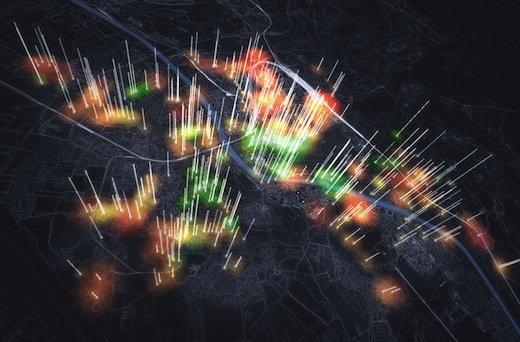
Place Pulse, a sort of rating system for locations within a city, enables pedestrians to form a database of their opinions and findings. More importantly, this project allows participants to share information with those who might have a part in future urban development. Five cities are currently available to rate through Place Pulse: Vienna, Linz, Salzburg, Boston, and New York.

Place Pulse, by the Macro Connections group, is a website that puts the full force of science behind fuzzy things like how safe or rich or unusual a city seems, and it does it in the least likely way: by crowdsourcing people’s ratings of streets, using geotagged images, and turning those answers into hard, eminently crunchable numbers.”

This project should be a helpful tool in determining “aesthetic capital”, but the question of superficiality appears. Place Pulse could garner usable information for the remodelling of urban commercial spaces, parks, roadways, and structural facades, but can not hope to solve the pressing problems of crime and poverty. I’m aware that the purpose of the project is not to tackle these social problems, but it’s possible that Place Pulse could plug in to other social efforts for urban improvement.

Via: Fast Co. Design

Olaf Mooij – Braincar

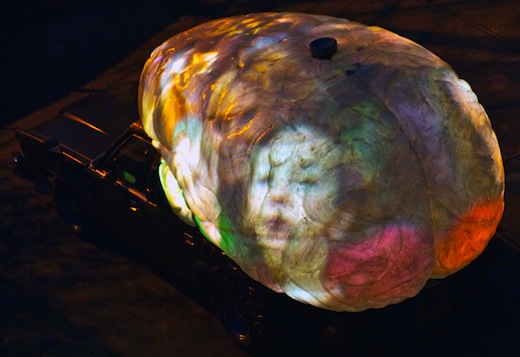
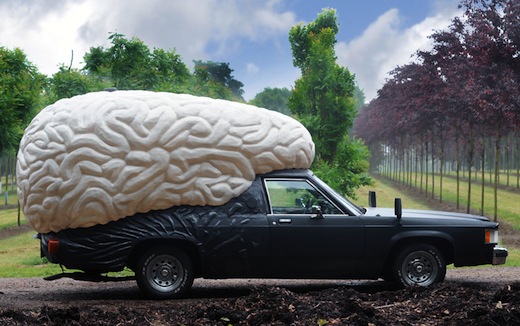
The Braincar is a new mobile sculpture/multimedia project by artist Olaf Mooij. His general idea, inspired by his interest in our connection to automobiles, was to create an car that could capture images throughout its day travels and “dream” about them at night. By “dream”, he means modify or “remix” the images in some kind of random way. These images are then projected onto the underside of the brain sculpture.

In an attempt to understand the connection between our daily experience and that of our vehicles, Mooij questioned “what it would be like if instead the car itself could experience with a kind of consciousness its own passage through space and time.”

Via: Designboom

Continue reading “Olaf Mooij – Braincar”

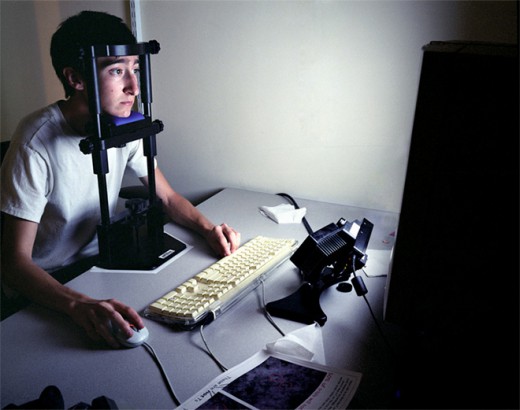
Josh Dickinson’s Medical Trials

While not every art school graduate has a hard time finding a way to pay the bills, some graduates find financial refuge far outside the realm of art.

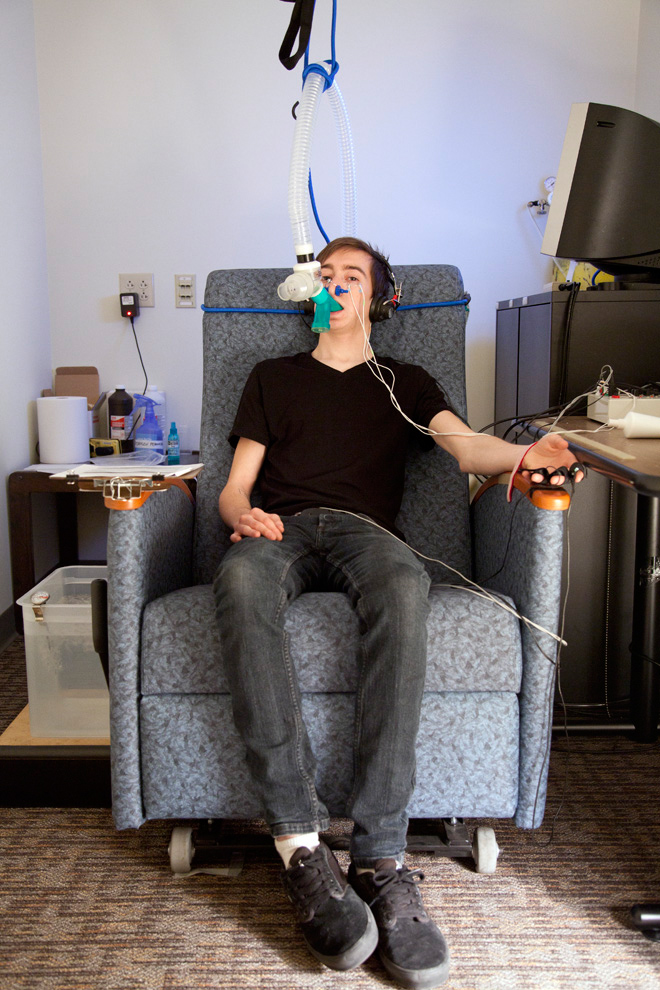
Josh Dickinson is one such person. He “has participated in almost 100 medical experiments in order to pay his rent. He’s been wired up with electrodes, stuck with needles, interrogated, subjected to pain and intentionally suffocated. In any other context, some of it might be considered torture. For him, it’s turned into an art project.”

He initially had no intention of documenting his experiences, but after about a year of strange tests and odd scenarios, he decided to capture what made up a large part of his life.

“Finding answers is entertaining to me,” says Dickinson. “I like the process. And if an audience can learn a little something while being entertained, it’s worth it.”

Via: WIRED

Continue reading “Josh Dickinson’s Medical Trials”