
Hello. We're artists working through collaborative social practice and creative research to understand the ways in which locality is shaped and enacted in the city.

AMPHIBIOUS ARCHITECTURE

amphibious2 AMPHIBIOUS ARCHITECTURE

A project by xClinic Environmental Health Clinic at NYU and the Living Architecture Lab at Columbia Graduate School of Architecture, Planning and Preservation, AMPHIBIOUS ARCHITECTURE attempts to generate a new dialogue between the environment and us.

The description, quoted from the site, since it’s more clear than my attempt at synthesizing the information would be:

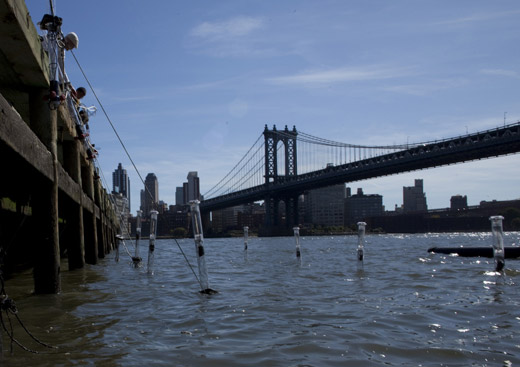
“Installed at two sites along the East and the Bronx Rivers in New York, the project is a network of floating interactive buoys housing a range of sensors below water and an array of LEDs above water. The sensors monitor water quality, the presence of fish, and human interest in the river’s ecosystem, while the lights respond to the sensors, creating feedback loops between humans, fish in their shared environment.

Additionally an SMS interface allows homo-citizens to text-message the fish and receive real-time information about the river, contributing towards the collective display of human interest in the aquatic environment. The aim of which is to simultaneously spark a larger public interest and dialogue about our local waterways.”

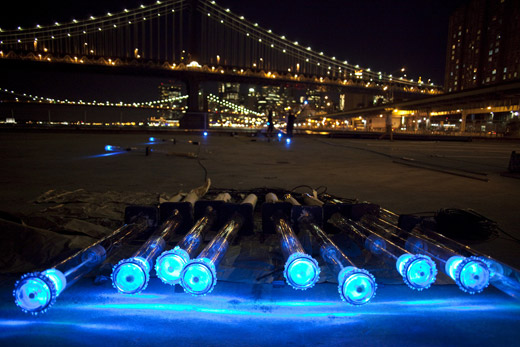
amphibious1 AMPHIBIOUS ARCHITECTURE

These are the sensors lit up before being installed in the river. To see some video of the sensors actually installed and floating, you’ll have to check out the site’s landing page.

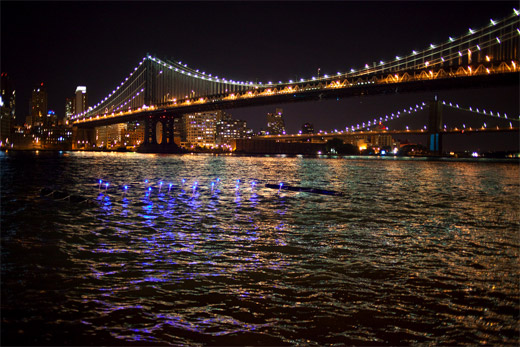
eastriver AMPHIBIOUS ARCHITECTURE

This is an image of some of the sensors lit up, being activated by passing fish, water conditions, and text messages. It’s an amazing cool project, especially given our proximity and recent interest in imagining some kind of Detroit River based project.

  • Facebook
  • Twitter
  • del.icio.us

Tagged:

↑ up


GROUNDWORK

GROUNDWORK from Render

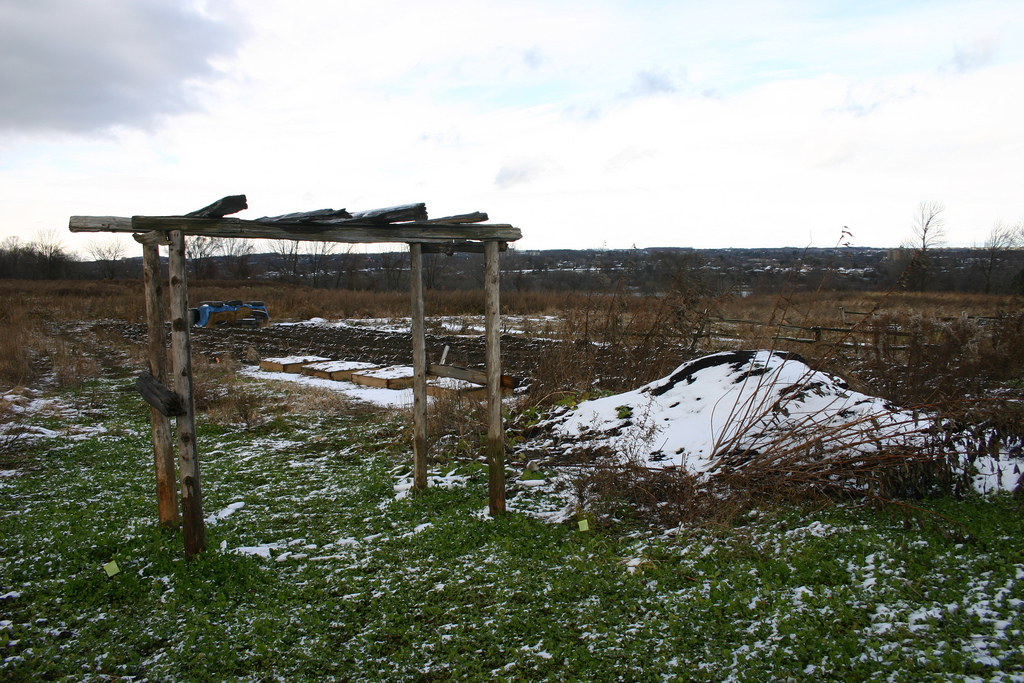
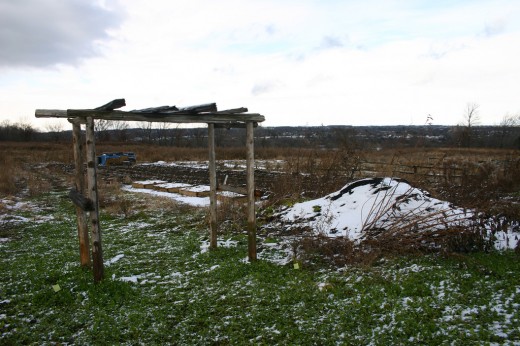
I saw this on Render’s blog, and considering our work towards an artist-led community garden, I had to repost it. Not much to look at lightly dusted in snow, but the idea is incredibly great.

Running from April 2009 to the following winter, GROUNDWORK will function as a community garden and creative research site. The project will take place on the grounds of Rare, a 913-acre nature preservation and agriculture education site located on the Grand River between Galt and Blair. GROUNDWORK will bring together a core creative group of a dozen youth from the Gaweni:io School (Six Nations) and Waterloo Collegiate Institute’s Collision group to develop and cultivate a community garden/site of creative research and knowledge-sharing.

The community-outreach on this project is considerable, and it’s projects like these that involve such deep integration and collaboration with different parts of a community (and it seems Render is taking on more and more of them) that really interests me as an artist and parallels some of the bigger things I think we’d like to do in BCL.

  • Facebook
  • Twitter
  • del.icio.us

Tagged:

↑ up


Living Wall

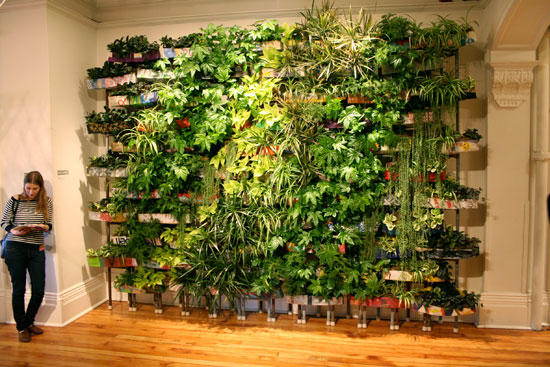
Living Wall by Adam Harris & Parimal Gosai

Made from reused / fused plastic bags, 600 plants, and used TV aerial towers for the support structure, this living wall made by Adam Harris and Parimal Gosai is currently on display at Toronto’s Gladstone Hotel. The show, Come Up To My Room, is showcasing a bunch of fun and engaging design and some bad art.

[via designboom]

  • Facebook
  • Twitter
  • del.icio.us

Tagged:

↑ up


Trees Prevent Forest Fires

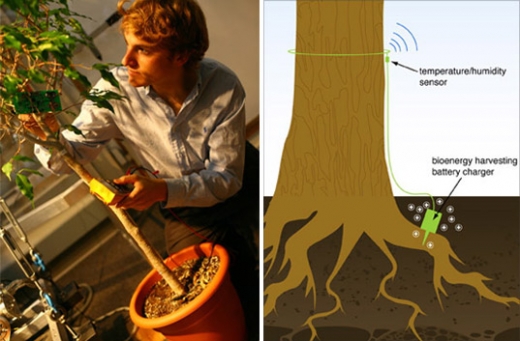
Fighting Forest Fires with Electricity from Trees

The idea is to use bioenergy from trees to power temperature and humidity sensors from which information will be used to alert US Forest Service of potential forest fires and conditions. I loveMIT.

[via]

  • Facebook
  • Twitter
  • del.icio.us

Tagged:

↑ up


Botanicalls at Conflux 2008

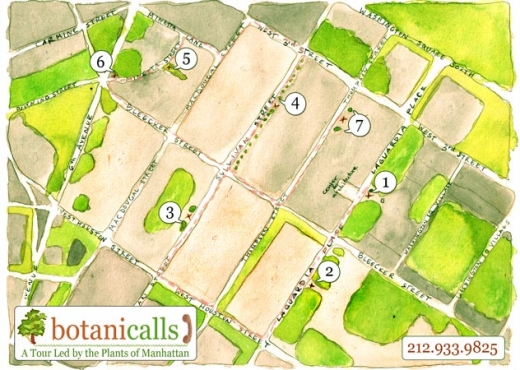
Botanicalls as part of Conflux 2008

Botanicalls is this incredible project I came across sometime last year. Essentially, it uses a microcontroller and sensor along with PHP and an open-source telephone system to allows plants to make phone calls and ask for water when they’re getting dried out. The project, as part ofConflux 2008, has become a walking tour in New York during which, “Participants call the Botanicalls main phoneline and navigate to the location-specific plant. Each tree or plant, speaks in their own ‘Botanicalls’ voice – which is based on their botanical habits and characteristics.” Not only do I think the project is a really great use of simple hardware and technology to create a novel experience, but the way in which they document and visually describe their project is really, really good.

  • Facebook
  • Twitter
  • del.icio.us

Tagged:

↑ up


We Have Germination!

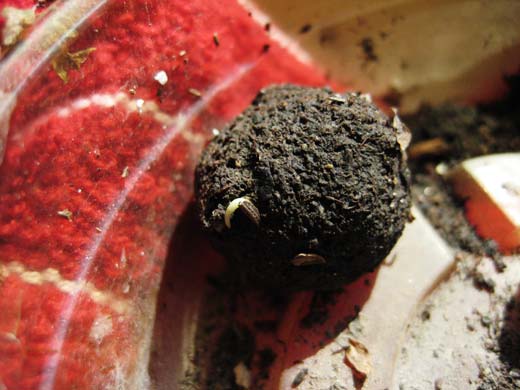
 seed bombs are successful!

After taking a few seedbombs home with me yesterday, I’m happy to report that with some considerable watering, our second recipe seedbombs have started to germinate. Also, and maybe even more exciting, the test seedbombs in Michelle’s yard have also began to sprout! Michelle also suggested we should make some photocopy handouts with the recipe on it to give out to people at the demo… hoping Josh has that recipe?… or was it in Michelle’s sketchbook…?

  • Facebook
  • Twitter
  • del.icio.us

Tagged:

↑ up


In Progress

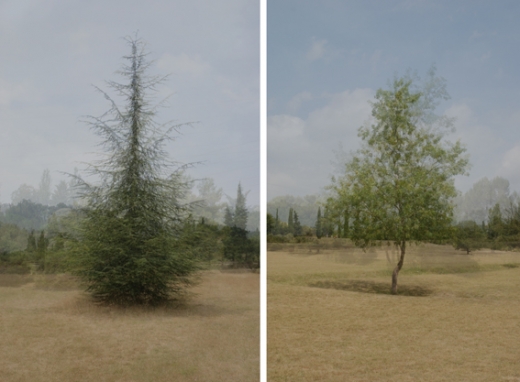
Kim Boske, In Progress

In Progress by Kim Boske. From her statement, “I experience the “now” as a complex collection of all sorts of connected influences from the present and the past; a web of similarities and minute differences caused through the slight moving of time.”

[via]

  • Facebook
  • Twitter
  • del.icio.us

Tagged:

↑ up


Closed (Eco) Systems

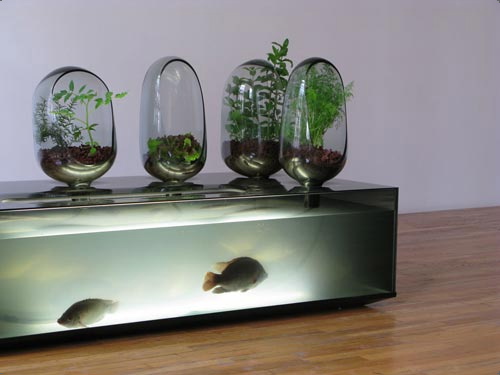
Mathieu Lehanneur - Local River

Saw these two installations, made me wonder about the potentials for filtering water hydroponically, in place of using something like a Brita filter. The first project is Local Riverby Mathieu Lehanneur. The installation consists of a refrigerated aquarium that include live fish and vegetables working together to clean the water and provide nutrients for one another. 

DrinkPeeDrinkPeeDrinkPee by Britta Riley and Rebecca Bray

The second installation, DrinkPeeDrinkPeeDrinkPee, by Britta Riley and Rebecca Bray creates a demonstration of a closed-loop system where viewers are encouraged to sit on the toilet facing the water fountain, thereby closing the loop of tubes that form the installation. The tubes carry urine from the toilet, filtering it through two aquariums and a “biomechanical  reaction mechanism” and a plant that is fertilized by the reaction’s byproduct. There is also a DIY kit to carry out the process at home that was available at the Eyebeam Feedback show back in March.

I think these two projects are interesting in that they tackle a roughly similar idea with two very different types of execution. Lehanneur’s design is very clean and less science-diagram-ish than Riley and Bray’s installation, but I wonder if something like DrinkPeeDrinkPeeDrinkPee is more along the lines of what we might like to show (the aesthetic of naturally filtering water as a science-type project), rather than a demonstration of our collective design skills.

  • Facebook
  • Twitter
  • del.icio.us

Tagged:

↑ up


Tree Drawing

Tim Knowles Tree Drawing

Attaching pens to branches of trees, Tim Knowler produces tree drawings, or rather, sets up the situation in which a tree can produce drawings. I was pleasantly reminded of his work, having come across it sometime last summer, through an email and Inhabitant.

From his artist statement,

“The exploration of Chance and Process is core to my artistic practice. Akin to scientific experimentation and investigation, the results of my projects [although operating within carefully developed controls and parameters] are unpredictable and outside my control. It is the wind, postmen, the motion of a vehicle, or players of a game that unwittingly determine the outcome.” 

I will be forever interested in the idea of chance within artwork, especially when the elements of chance are coming from nature.

[via]

  • Facebook
  • Twitter
  • del.icio.us

Tagged:

↑ up


Moss Graffiti

moss street art by Edina Tokodi

Edina Tokodi transplants moss and transforms it into animals and various shapes, sometimes covering small wall areas, or entire structures in Brooklyn.

It’s also possible to paint with moss.

[via]

  • Facebook
  • Twitter
  • del.icio.us

Tagged:

↑ up


Mailing List


  • Facebook
  • Twitter
  • del.icio.us

Recent Comments

  • Luciana: Justin, that would would be great!!! On the same subject, I always thought the Peace Project from Detroit could be an...
  • Justin Langlois: I agree with you, Luciana … it doesn’t have to be a bad thing at all, I suppose I was thinking about the...
  • Luciana: It doesn’t have to be a bad thing though :) It reminded me of Haas&Hahn and their Favela painting project from 2006...
  • Cristina Naccarato: Such an epic post, Justin! The map turned out very nicely!
  • darren: It’s was back when the star was still printing the paper down there. I miss those days. Was metal letters. I don’t...
  • MESM: excellent lab thesis keep the experiment going
  • Justin Langlois: Ah! Good call on the Windsor Star sign. I should have realized since I knew it was attached to the Star building. So...
  • Justin Langlois: Thanks for the note. I think the audio player should work now… Had the filename entered incorrectly. Enjoy!

Archives

Tags