By Justin Langlois on August 2nd, 2010, 12:04 pm 2 Comments

We’ve updated our imaginary campaign post to reflect some recent (positive) changes:
Our projects try to work around the realities that we encounter in Windsor on a daily basis. We address these realities creatively, and so the ways in which we address them don’t always translate to solutions. We usually try to suggest the change we’d like to see, albeit on a small scale. So, in continuing with this work, we offer the following:
We’re little less than 3 months away from the 2010 municipal elections here in Windsor. We’re not sure what to make of all the candidates entirely at this point, though it’s encouraging to see so many people entering the process.
It’s essentially a given that we’ll have the same mayor for a third term (or maybe not?), but we’ll likely see a number of new councillors. This is, in large part, due to the new 10 Ward system along with promises from councillors to not run again.
In hopes of imaging a greater city, we’d like to propose the following platform. It has gaps, it’s biased, it’s potentially unfundable, but it’s a list of ideas that we think could make Windsor a better place to live:
- Have at least two open-air city council meetings at Charles Clark Square, encourage a large audience, showcase democracy in action.
- Find a private partner and retrofit the Armouries tomorrow: get the WSO their permanent venue, renovate smaller spaces for artist studios, and keep larger rooms for small theatre performances.
- Sort out the Capitol Theatre appropriately. Clear the way to make it easier for WIFF to do more screenings, for Artcite to stay put (if they want to), for community theatre groups to do more performances, and to give Media City a consistent and reliable venue.
- Partner with the University to put a large multi-department Faculty of Arts and Social Sciences building in that parking lot across from the AGW and the downtown bus depot.
- Raise the cost of keeping buildings vacant. Do this immediately.
Encourage small businesses to locate downtown by offering free-rent for the first 6 months they’re in business. It didn’t take long — some folks picked up on that idea. Offer rent at 50% for the following 6 months if the business hires to 2 of more employees in the first 6 months.
- Connect Transit Windsor with Tecumseh and the county with express buses, and do a better job at integrating with Detroit, get aggressive with promoting the use of public transit for everyday commutes.
- Commit to planting more trees on those barren stretches of sidewalks. Who wants to walk next to 4 lanes of traffic in the baking sun?
- Get bikes lanes in that make sense, ask the everyday riders where they go and how they like to get there, cross-reference that information with new public transit plans to make it easy to bike short commutes and dead simple to connect to the transit system for longer ones.
- Initiate an aggressive campaign to retain talent that graduates from the University and St. Clair. It’s unacceptable to sit idly by as our best and brightest move to bigger cities. Short-term subsidies to start a business fresh out of school, 6 months of free studio / rehearsal space for artists, musicians, and performers. Tell the world that we are doing this.
- Empower and fund people at the city like Jim Yanchula to act on their ideas.
- Give the Cultural Affairs Office the resources to do good things and help that office to understand the needs of the arts and cultural community.
- Commit to acting on Community Improvement Plans with an actionable to-do list over the 4-year term.
- Create an international competition to design gateways for our city (at the border and from the 401 at the least), then make sure there’s money to actually build these gateways. Advertisements should not be allowed.
- Start an innovation prize by partnering with Essex County and appropriate Economic Development entities to solve large problems and reward real innovation happening here.
- Convert 30% of riverfront and other key city-owned spaces to naturalized areas.
- Make the deep and rich histories of this region a part of everyday life — provide artists, community leaders, local historians, and elders resources to demarcate small and large historical occurrences.
- Own and embrace that we are an international city with an unbelievable wealth of multi-cultural communities.
If you’re running for council, please steal these ideas.
Tagged: city elections imagination list municipal plans platform research Windsor
By Justin Langlois on July 16th, 2010, 10:53 pm 2 Comments

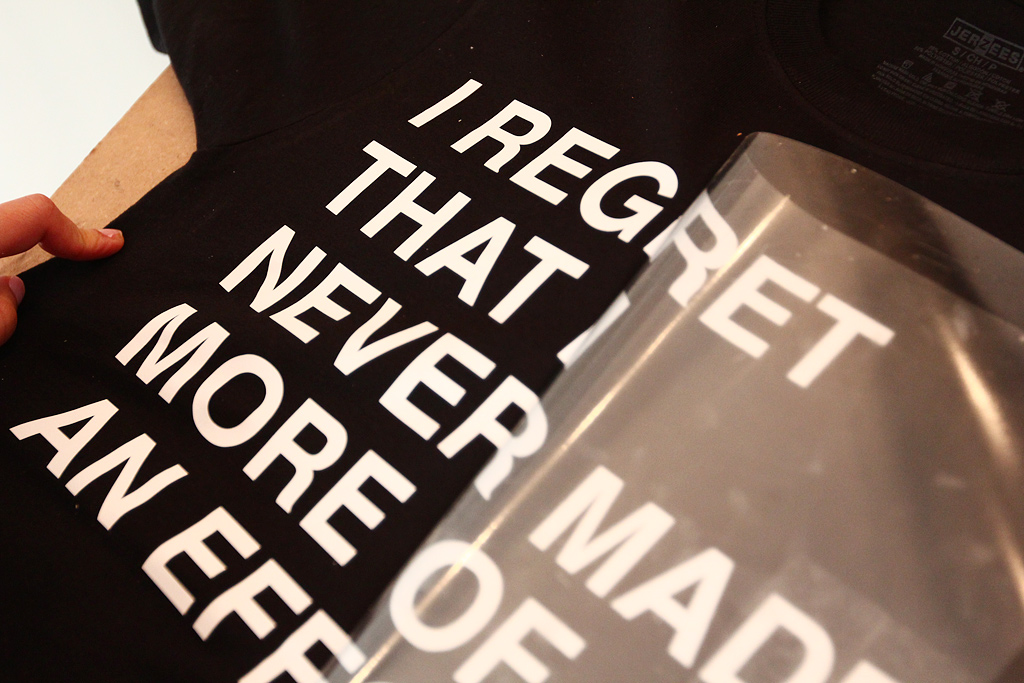
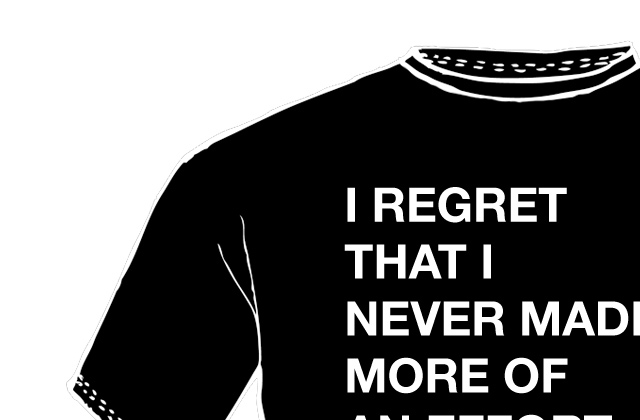
A little while ago, we were trying to think through how to wrap up Save the City with a pair of billboards. We spent an evening really working through some ideas and came up with two statements that we felt articulated the end of a certain way of thinking about Windsor.
Something about those statements really struck me. While we had come up with a number of other instances of “…and then the city” lines, we could only get two of them up on the billboards and it seemed like these statements were actually the beginning of a larger idea.
So, I put together a book of 100 statements. You can see some of the pages after the break.
If you’d like a copy, you can order it from Blurb.
Read the rest of this entry »
Tagged: BCL book city font future helvetica ideas prose research text
By Michelle Soulliere on May 16th, 2010, 10:40 pm 3 Comments
…For the Save The City Micro Tool Kit! It will be distributed at our last event for Save The City, this Friday May 21st @ 7pm @ the Art Gallery of Windsor. A downloadable and printable version will also be available here, soon!
The kit will include recipes to cook up some BCL-like civic engagement in your city!
Remember:

Tagged: BCL city Micro Tool Kit projects Save the City
By Justin Langlois on January 29th, 2010, 9:35 am 0 Comments

kanarinka is a new media artist whose research interests include the politics of digital information, feminist performance art, participatory culture and the emotional landscape of Homeland Insecurity. She is Co-Founder of the non-profit collective iKatun, a founding member of the Institute for Infinitely Small Things, and teaches at RISD’s Digital+Media Graduate Program and the School of the Museum of Fine Arts in Boston.
In Spring 2007, kanarinka ran the entire evacuation route system in Boston and measured its distance in breaths. The project is an attempt to measure our post-9/11 collective fear in the individual breaths that it takes to traverse these new geographies of insecurity.
The $827,500 Boston emergency evacuation system was installed in 2006 to demonstrate the city’s preparedness for evacuating people in snowstorms, hurricanes, infrastructure failures, fires and/or terrorist attacks.
It takes 154,000 breaths to evacuate Boston consists of a series of running performances in public space (2007), a web podcast of breaths (2007), and a gallery installation of the archive of breaths (2008). There’s also an online collection of podcasts, with audio recordings made during each running performance.
The work is being shown as a part of Experimental Geography, an exhibition that explores the distinctions between geographical study and artistic experience of the earth. I picked up the book from this traveling exhibition a while ago and it’s an interesting read. There’s some inspiring work, but as is often the case with these kind of collection books, the introduction is far more enlightening than many of the preceding chapters.
What I like about this project is the physical translation of a kind of bureaucracy along with the gesture of exploration through so much of the city under the restrictions of urgency and evacuation. It makes me want to imagine ways for exploring bureaucracies of Windsor.
Tagged: art Boston city context evacuation performance reblog running
By Justin Langlois on January 3rd, 2010, 12:55 pm 0 Comments

Josh, Cristina, and I spent a part of the afternoon yesterday speaking with Josh Mehler, formerly of the Windsor/Detroit area, now studying at Florida State, working on a PhD in Rhetoric and Composition.
It was a great conversation, and as always, these kind of casual interviews help us to articulate what we’re trying to do in an expanded manner. We talked a lot about why we use text, how the idea of composition can move into a physical space, and what the potentials are in connecting artists and writers more often and in alternative spaces. My favourite interviews are the ones where I learn something too, which in this case, I definitely did.
I think Josh will be posting excerpts from the interview on his blog, so be sure to tune in there.
Tagged: BCL city conversation interview text Windsor writing
By Justin Langlois on December 10th, 2009, 6:09 pm 3 Comments

This is a postcard of Windsor’s downtown from 1959. In the last 50 years, one might imagine that much has changed, though I never would have guesses this much.
Everything in red has been demolished.
It seems like a lot of change, though I’m not sure how much better off we are for it.
[via International Metropolis]
Tagged: annotation city demolition downtown Windsor
By Justin Langlois on November 28th, 2009, 12:37 am 0 Comments

Beautiful City is a new campaign based out of Toronto that is trying to persuade the city to create a tax for billboards that would do the following:
- A historical 53% increase to the annual municipal funding available to all artists, festivals and arts institutions,
- Close to $100 000.00 dollars for public realm improvement for each Toronto ward, every year – for projects such as greening,
- Almost a 1/3 of a million dollars for each of the 13 priority neighbourhoods to fund accessible youth arts programming, and
- Hiring 17 dedicated officers to enforce the new billboard bylaw.
The premise of the campaign is that billboard advertising, unlike all other forms of advertising, provides no content to the public in exchange for taking up public space (editorial to advertising ratios for TV is 75/25, for print is usually 50/50 but for billboards is 0 to 100).
Sounds like a fairly genius idea. What other ways could we think of generating new revenue for arts organizations in the city, given the likely continuing or eventual decline of funding for the arts in the city?
[via View on Canadian Art / image of Three Billboards About Love by Peter Fuss]
Tagged: billboard city context funding Toronto
By Justin Langlois on November 11th, 2009, 9:51 am 0 Comments

In Philadelphia, an artist named Steve Powers is working alongside the Philadelphia Mural Arts Program to create this large-scale mural project that paints huge sentiments of love letters onto the sides of 50 buildings on one street.
The project is called A Love Letter For You and totally made me think that there might just be potential in murals after all.
Take a look at the project blog and read it from first post to the most recent, it really gives some great context to the project.
[via an email from Nathan]
Tagged: city context graffiti mural Philadelphia text
By Justin Langlois on October 29th, 2009, 12:31 pm 0 Comments

Carol Goodden and Gordon Matta-Clark opened up Food in New York in the early 1970s on the corner of Prince and Wooster. The restaurant, essentially the first in SoHo, was run by artists and served mostly artists, with the cooking itself becoming a performance of sorts. This transition of the space from a failed Puerto Rican restaurant to Food’s occupation to an alternative space that functioned as and questioned art and the potential in economic models based on something other than profit growth.
Established as a kind of “perpetual dinner party”, the restaurant as an idea was the art, alongside the actual dishes served up, the design, and the performance of cooking. Conceptually that’s important, but what’s really becomes interesting is the idea to open a place that wasn’t founded on profit, and indeed collapsed in some ways because of that. However, certainly that’s not the point.
Creating an idea with a sunset date, or with an acceptance of failure from the start, allows for a focus on the things beyond regular concerns. In the case of Food, artists stood in as guest chefs, inedible food was served, a hub of activity was created, and whether or not it succeeded, and indeed eve the tools with which one could measure the success or lack thereof, became irrelevant.
So, what if the next idea you have came along with a self-imposed sunset date? How would you work differently? What would become a priority and what would fade into the background? Tom’s recent post on the not-for-profit restaurant in Windsor, Namaste, invites similar questions and provides some encouraging answers.
I would be remiss if I didn’t also quickly mention Matta-Clark’s significant architectural interventions, again something deserving of its own post, eventually. His “building cuts” works in some ways paralleled the thinking behind an initiative like Food, in the case of these large-scale architectural works though, the question became, what if walls didn’t matter?
Tagged: artist city context food new york city performance restaurant social practice
By Justin Langlois on October 27th, 2009, 11:59 am 2 Comments

This is important. If you care at all about what culture in Windsor will look like for the foreseeable future, you need to show up on Thursday night to what likely is going to be one of the last opportunities to voice some input for the City of Windsor’s Cultural Master Plan. It’s this plan that’s going to determine what can and cannot happen at many, many levels across the cultural sector in Windsor for years to come.
The City of Windsor and TCI Management Consultants are hosting an open house for the community on Thursday, October 29, 2009 between 5-9 pm at Mackenzie Hall Cultural Centre located at 3277 Sandwich Street. A short presentation about the master plan will be made at 7 pm. The City is gathering public input to help set a direction for the future of the community’s cultural resources. Everyone is invited to attend this free event.
For slightly more information, you can check out the City of Windsor’s Newsroom.
And the details one more time: (this) Thursday, October 29, 2009 – Mackenzie Hall, 5-9pm.
P.S. That’s the interior of one of Windsor’s “cultural assets,” the Capitol Theatre.
Tagged: city culture master plan planning show up Windsor