Research Update (some things I’ve been working on the last couple of days)

It’s been a while since I’ve done one of these posts — a kind of summary of some of the things I’ve been working on. It seemed about time. I like posting as a sort of summary for myself, but maybe it’s interesting for my dearest BCL colleagues to see what I’ve been up to as well.

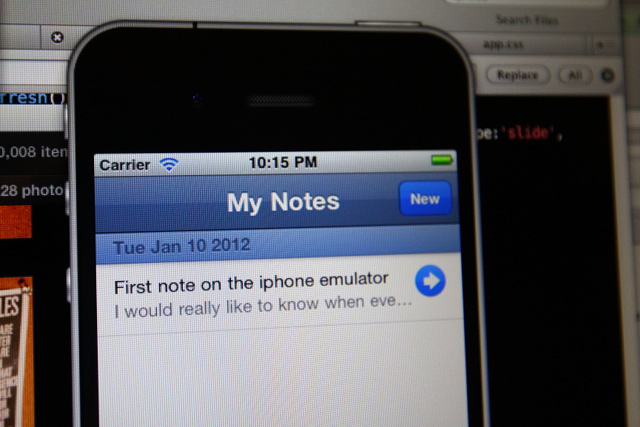
One of the things that has been taking up a lot of brain space has been a project I began over a year ago developing some Windsor / city-exploration specific iPhone apps. After wrestling with Objective C for way too long, I’ve moved over to HTML5 and in particular using Sencha Touch as a base. My progress has increased a lot.
I’m comfortable with HTML, CSS, PHP, but I’ve somehow avoided picking up a firm grasp of javascript. Sencha Touch is a set of js libraries, or more specifically, from their website, “Sencha Touch is a mobile JavaScript framework for developing HTML5 web apps that look and feel native.” I’m just following tutorials right now, but things are sinking in.
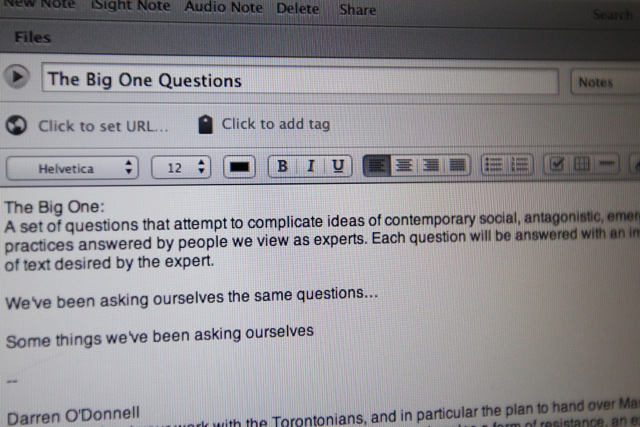
A project building off of something Josh started a little while back. Basically a set of questions for a list of people. I’m hoping to post the responses on here — I’ve asked for a photo and text as answers to the questions — and maybe turn it into some kind of short run publication.
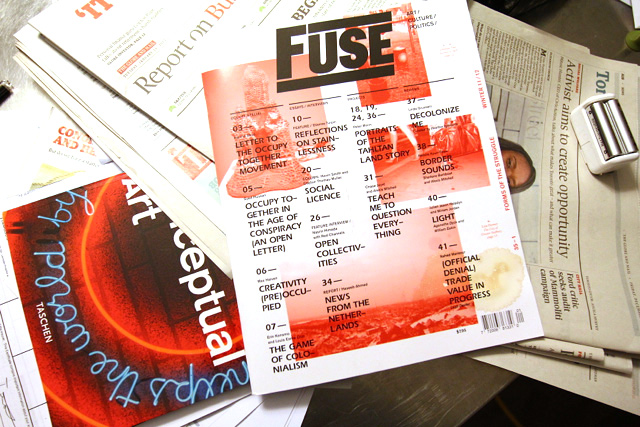
Awaiting my perusal, the latest copy of Fuse!!!
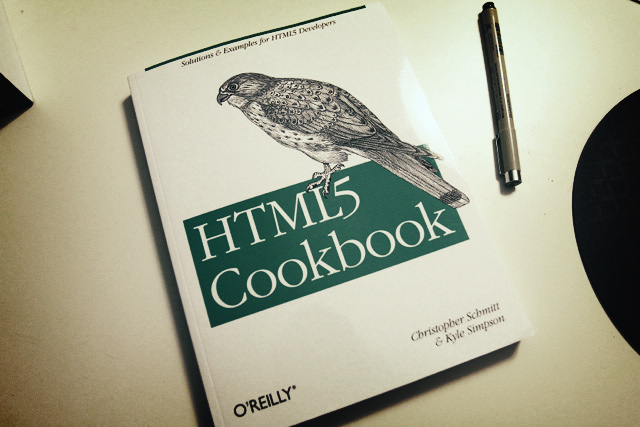
And, a trusty guide already, the HTML5 cookbook.
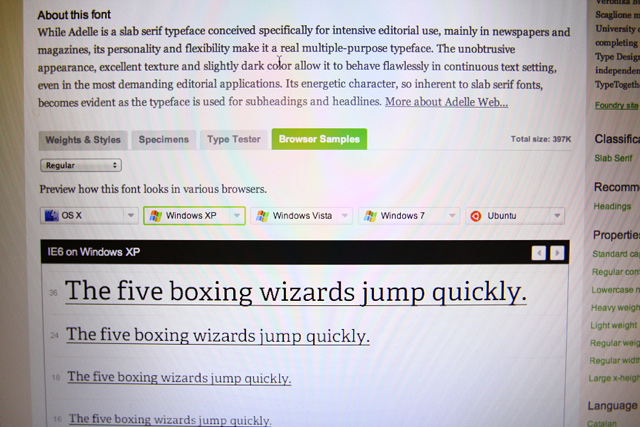
Also, as you may have noticed, I’ve been playing around with other webfonts. We’re currently deploying Adobe Typekit, using Adelle and Museo-Slab.
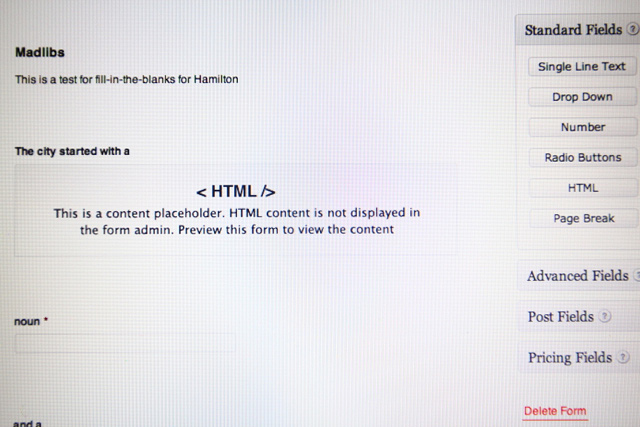
And, in preparation for some work we’ll be doing for a project in Hamilton, I’m working with Gravity Forms and a tutorial for creating mad-lib style forms. Gravity Forms seems flexible, but there’s some basic stuff that I haven’t been able to get an answer for on the forums, specifically, an issue with the Reply To part of a contact form.
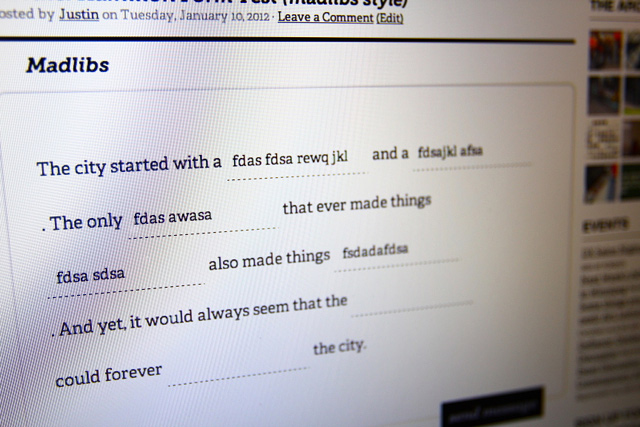
Basically, I’m try to get this effect. I’m thinking there’s too many blanks above, but you get the idea.
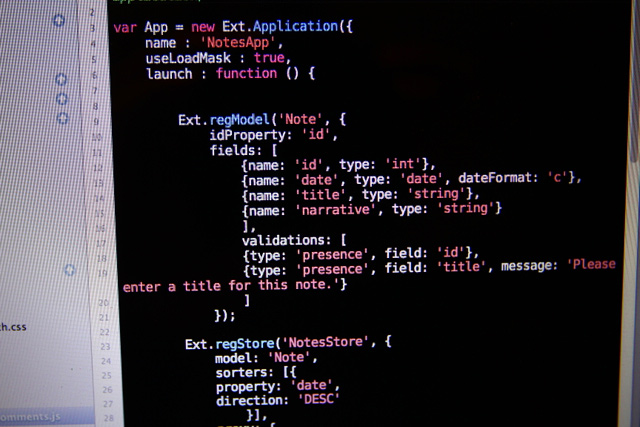
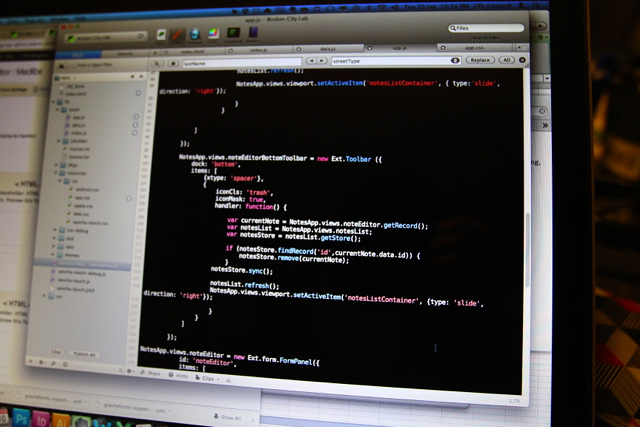
A final shot of some mad code. I type things out from tutorials by hand then try to catch my own mistakes. It’s kind of like a game, but then it’s not actually fun when you can’t find your own error.

Tomorrow, mid-week BCL work time! We’ve been meeting Fridays, taking minutes, prepping for a potentially incredibly busy year, etc., just in case there was any thought that we’d been taking it easy.
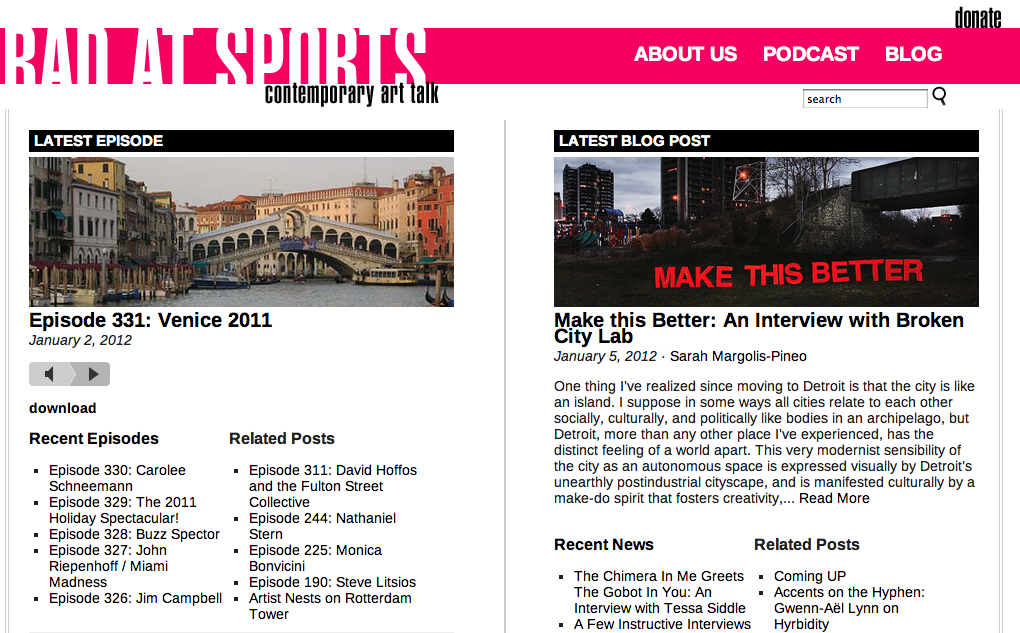
BCL Interview on Bad at Sports!

Danielle and Justin were recently interviewed by Sarah Margolis-Pineo, a curator and collections fellow at Cranbrook Art Museum, Homework conference participant, and writer for Bad at Sports (an incredible contemporary art blog, podcast, and interview series). Founded in 2005 by Duncan MacKenzie, Richard Holland, and Amanda Browder, Bad at Sports (B@S) now features over 20 principle collaborators and is a weekly podcast, a series of objects, events, and a daily blog produced in Chicago, San Francisco, Detroit and New York City that features artists and “art worlders” talking about art and the community that makes, reviews and participates in it.

B@S can be tricky to describe: it acts as a curious investigator, an archivist, oral historian, and occasionally as a provocateur. We produce content that lies somewhere on the venn diagram of art, journalism, media, intellectualism, and “the naughty bits.”  We represent artists and their art world through an archive that is text, audio, physical, ephemeral, historical, and constantly evolving through ongoing and unique projects.

Sarah did a great job at framing the context of Windsor and Detroit and the interview covers a lot of ground, charting a bit of history for us, collectively, and the way we work together alongside some thoughts on moving in and out of a gallery and spatially-based public practice. The interview was a lot of fun and we’re flattered to be covered alongside so many incredible artists, curators, thinkers, and doers.

Check out the interview and be sure to dig deep into the Bad at Sports archives here:
http://badatsports.com/2012/an-interview-with-broken-city-lab/

And, you should check out the show Sarah recently co-curated over at Cranbrook, No Object Is an Island: New Dialogues with the Cranbrook Collection Through March 25, 2012!

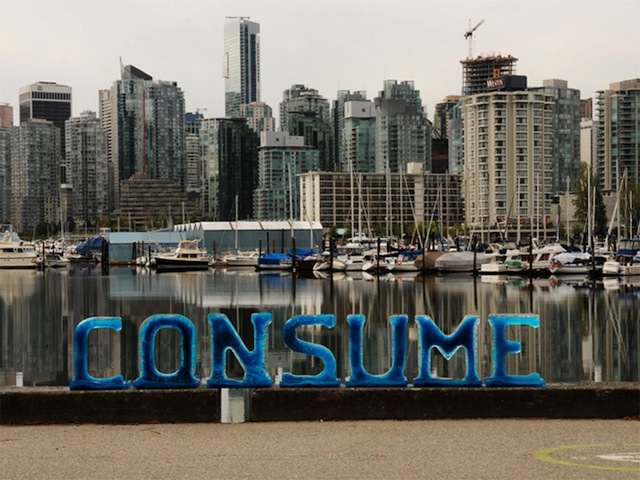
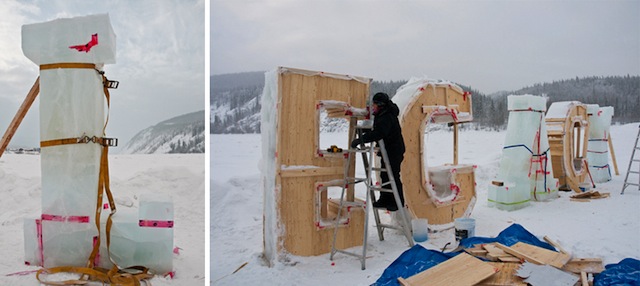
Nicole Dextras’ Ice Typography

Since we’re on the cusp of real winter here in Windsor, I thought I’d share this project by fellow Canadian artist Nicole Dextras. Besides admiring her gorgeous series of photographs, we might be able to learn from her method of construction. She seems to make molds into which water is poured and frozen. Imagine if we used the 3D ‘R’ prototype we made for CAFKA for this!

via: Designboom

Here is an image showing her process of creating such large ice letters.

Two Tales of a City: Hamilton Industry notes and articles

I ventured to the CAW centre today to take advantage of the free WIFI and do a bit of research on the history of industry in Hamilton. I found some interesting articles about a abandonned knitting mill that was bought by Toronto Developpers and is being transformed into condos.

From day-trips.ca:

The Hamilton Textile District located on Ottawa Street is the largest fabric and textile district in Canada and also Hamilton’s top tourist destination.

From urbantoronto.ca

This 1920’s commercial district in East Hamilton grew out of the local textile and fabric industry
which manufactured everything from sewing machines to clothing. Today the Textile District is
a thriving shopping area that has found its niche in fabrics, sewing and home decor. It is also
the site of the very first Tim Horton’s location.

From Wikipedia article on the Economic History of Hamilton:

Canadian patent laws and the underemployed workers skilled in machinist trades lured an important new industrial enterprise from the U.S.A.- the manufacture of sewing machines by Richard Wanzer. From this development there evolved the ready-made clothing industry, which William Eli Sanford introduced locally.

City of Hamilton Document Re: Cannon Street Knitting Mills

A few links to articles:

Knitting Mills

More on Knitting Mills

Even more on Knitting Mills

and more

Potential interviewees:

writer of this article on sustainable steel industry in Hamilton

 McMaster University Steel Research

Also, this is my aunt who works at DOFASCO (steel company in Hamilton)