Scratch Markup Language (.sml)


From FAT (Free Art & Technology):

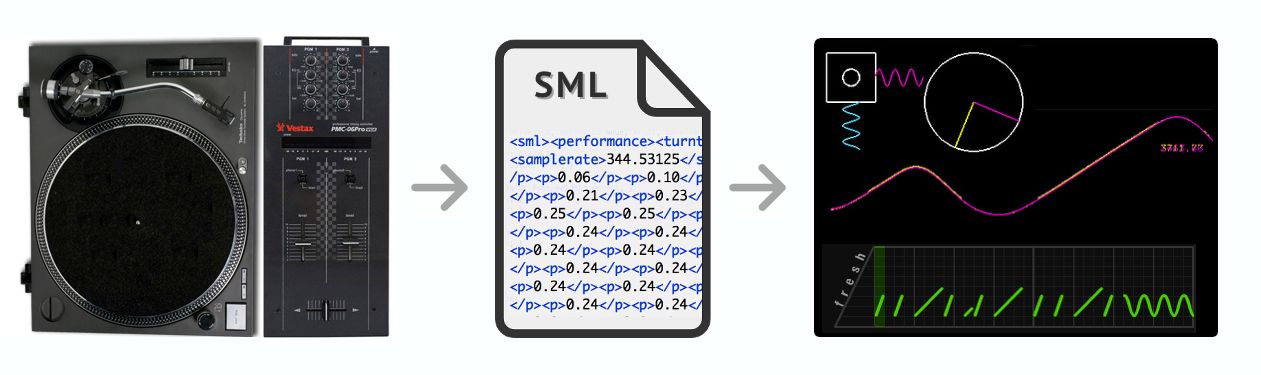
SML (Scratch Markup Language) is a new file format for recording and replaying turntablism. We’ve developed open-source tools for accurately capturing the record and crossfader movements of a scratch DJ, allowing us to analyze, transcribe, and recreate scratch performances.

We want to do for turntablism what Graffiti Markup Language has done for tagging — especially teaching giant robot arms how to scratch.

At Art Hack Day we collaborated with other artists and programmers to develop the first prototypes of ScratchML. We used timecode vinyl to capture record movements ($10) and a hacked VCA fader + Arduino to record the crossfader ($30).

Scratch data was saved to disk as .sml and broadcast as OSC, which allowed other Art Hack Day participants to build visualizations based on what the DJ was scratching during the exhibition. The apps ranged from spinning-vinyl animations and TTM transcriptions to insane exploding 3D pizzas and a side-scrolling videogame shooter controlled by scratches.

Our goal is to make capturing, replaying, and sharing a scratch performance accurate and easy. SML files can be freely uploaded and downloaded from the ScratchML.com database. We’re particularly looking forward to improving the experience of learning how to scratch — e.g. by building apps that show you just how accurate your autobahn scratches actually are.

Throughout the week here on FAT we’ll be publishing ScratchML projects created during Art Hack Day, data specs, source code, hardware modification details and more.

Want to get involved? Join the ScratchML mailing list, follow us on GitHub, or email mewith any questions. More info to come at scratchML.com

Not sure what else to add.

I’m pretty sure that this is where all digital culture schools, programs, and practices will be heading — thinking about how to encapsulate data that we might normally take for granted, creating solutions very quickly and inexpensively, making it insanely fun, opening it all up for the world to use, and fostering big imaginations.
Circulation: an algorithmic walk in downtown Windsor with students from the University of Windsor

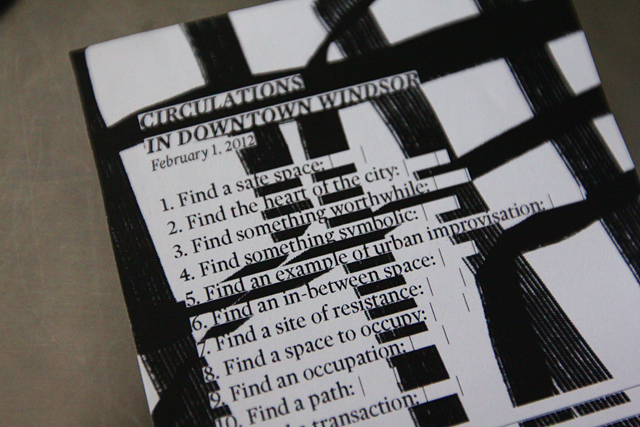
On Wednesday, February 1st, I’ll be guiding an algorithmic walk for Dr. Mike Darroch and Dr. Rob Nelson’s history / communication studies grad seminar. I spent part of the afternoon playing around with some ideas to have the instructions, or algorithms, distributed to the class.

We’ve done walks before, they’ve often been quite ambitious and sprawling. Given the two-hour time slot for the class, I’ve tried to keep this one short enough to finish it within an hour. The class did a range of readings on circulation in the city, so I’m hoping that these instructions will help frame some interesting ways to activate some of the larger ideas in the texts.

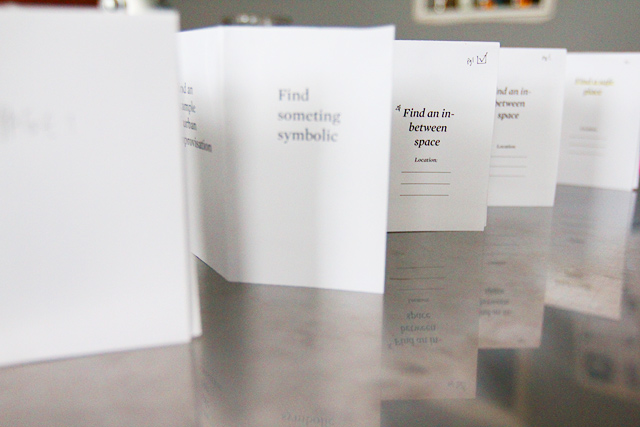
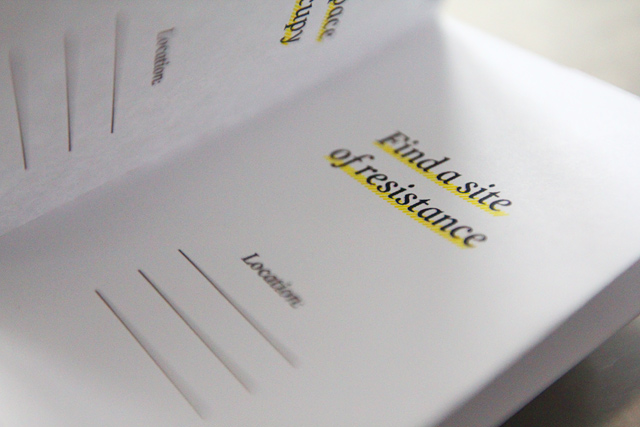
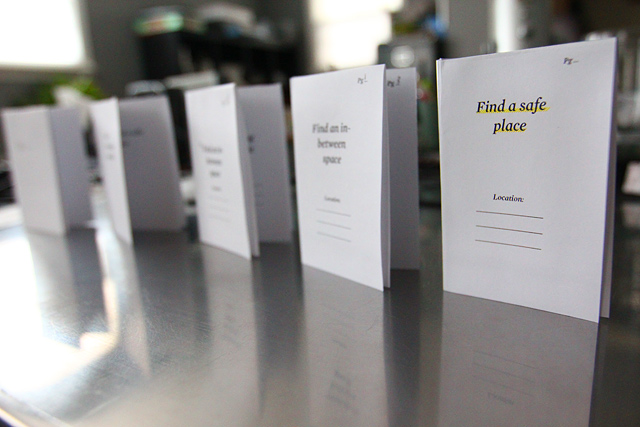
I started out with something I figured would be just a 1/4 sheet of 8.5″x11″ paper. Each group of students would start at a different number. I want the students to do the same things, just not all at the same time.

So, then I started thinking about those easy to make foldable books.  I can print off one template and just set the fold different ways to offset the starting instruction. I also decided to put a little fill-in-the-page-number-blank  and a few lines to note the location.

Each group will be instructed to take a photo once they find each of these places / things / situations. At the end, maybe we’ll be able to assemble them into a quick slideshow, or map or something to compare notes, so to speak.

We’ve been talking about doing some fairly regular drifts — maybe this is a good model to work from?

Sue Bell Yank on Art and Social Practice

from suebellyank.com/

This is part of an ongoing set of one-question emails sent to people we know, or would like to get to know, about things that interest us and inform our collective practice. They’ll be featured on the site weekly, usually on Fridays. These questions are more about unfolding ideas than about the people we’re asking, but we do ask those kinds of questions too.

We’re ecstatic to launch this project with a question for Sue Bell Yank.


Is social practice, as a term or label, more valuable in extending the reach and possibility of visual artists, or more valuable as an articulation of an entirely different space and mode of production?

Social practice falls under the rubric of art, but it doesn’t really extend the reach and possibility of artists, because its realm has always been the artists’ realm – or perhaps art in an expanded form as it has existed since the 1960s. But if one draws an arbitrary line at the 60s, which saw the birth of land art, performance art, conceptualism, one can then extend to the precursors of those works, to Dada, to surrealism, to then the precursors of those movements…to Impressionism…

So how can it be anything but art, historically and practically? Social practice is a convenient (if perhaps indelicate) name for current practices that have grown from important artistic concepts that have been around for decades. The best artists of any time challenge hegemony, attempt to break through the complacency of their audiences to awaken them to alternate possibilities (the very raison d’etre of the avant-garde), investigate societal problems and (sometimes) create new ones, break apart systems and ways of being and re-envision them poetically.

That being said, the space and mode of production of social practice is indeed broader than what we traditionally think of as studio practice, object-making, but grows from and infects those realms as well. It is hybrid, it is vigorous, it reaches into many other systems and aspects of being beyond the art context. It manifests programmatically as conferences, participatory activities, workshops, dinners, shops, performances, community centers, even housing tracts – reaching beyond the cube to the board room and proscenium and public park and neighborhood.

Is the term itself valuable? Why are such labels valuable in the first place? Primarily, for access. Yet for many of these projects, it seems unimportant precisely how participants access them, as long as they do. They don’t necessarily need to understand them as Art. In fact, sometimes labeling a project as Art, to a general public, allows them to dismiss it as something wackadoo and not worth much thought or attention. But the term “social practice” is also unintelligible to a general public, so not very useful in that effort either. People tend to take these projects on their own terms.

Another value to a label is categorization within the industry itself, that industry being Art. In that case, the label social practice indeed allows for an extension of the artists’ reach in a more mainstream fashion. Artists who work in this way are gaining traction at more and more institutions, increasingly in demand for participatory, engagement-based, or community-based projects that are extremely attractive to cities and cultural institutions. Social practice becomes a useful umbrella term, though its vagueness also leads to powerful misconceptions and mismanaged expectations. This is the dark underbelly of labeling – putting these artists and their projects into a convenient box as “audience development tools,” able to do the hard work of reaching underserved demographics, of creating inclusive and festival-like environments where everyone can participate in making art and feeling good about themselves. We then begin to forget that social practice is really about challenge, and problems, and that hard work of practicing new systems of the social, of reworking dysfunctional aspects of society.

Like it or not, we are stuck with the term for the time being, and it is important for artists, arts organizers, and writers to diligently re-examine our understanding of it again and again, in all its complexity.


Sue Bell Yank is a writer and arts organizer. She is currently the Assistant Director of Academic Programs at the Hammer Museum, and adjunct faculty in the Roski School of Fine Arts at the University of Southern California. She graduated from the Masters of Public Art Studies program at USC, and completed her thesis on the role of contemporary art in rebuilding efforts after a crisis, focusing on post-Katrina New Orleans. She has worked with artist Edgar Arceneaux as a co-founder and Assistant Director for the Watts House Project, and has a deep-seated investment in non-profit organizations and arts-based urban planning practices. She was part of the curatorial team for the 2008 California Biennial, and most recently served as a curatorial advisor for the Creative Time Living as Form exhibition. Her writing has been featured in the 2008 California Biennial exhibition catalogue, Journal of Aesthetics and Protest, the Huffington Post, Mammut magazine, and various arts blogs including her ongoing essay blog entitled Social Practice: writings about the social in contemporary art (www.suebellyank.com).

Hi, 5 with Dave Murray

About the Hi, 5 Interview Series

Sara Howie and I are excited to begin a new web-only interview project called Hi, 5 (5 Questions). The project will act as an educational device which will allow us to gain insight into the narratives that define successful individuals. We are interested in the motivations behind ambitious ideas and how change has been affected by those with the passion for progress. I decided to interview Dave because, once I heard about him, I was interested in how he worked the imagery and culture of Toronto, Ontario into his work.

About Dave Murray

Dave Murray is an illustrator and designer, currently based in Toronto, Canada.

Graduating in 2009 with a BAA Illustration from Sheridan College, Dave has continued to push himself to explore new visual frontiers to express both his own and client’s visions. Dave’s work has evolved to reflect his myriad interests; be it the strict design of his Toronto neighbourhood mapping series, or his futuristic cubist takes on portraits and pop culture.

Clients include Stella Artois, Streetcar Developments and Dandyhorse Magazine.

Dave’s work has been featured in The Toronto Star, The Globe and Mail, The National Post, Canadian House and Home, Benjamin Moore, and 3 x 3 Magazine, as well as countless blogs.

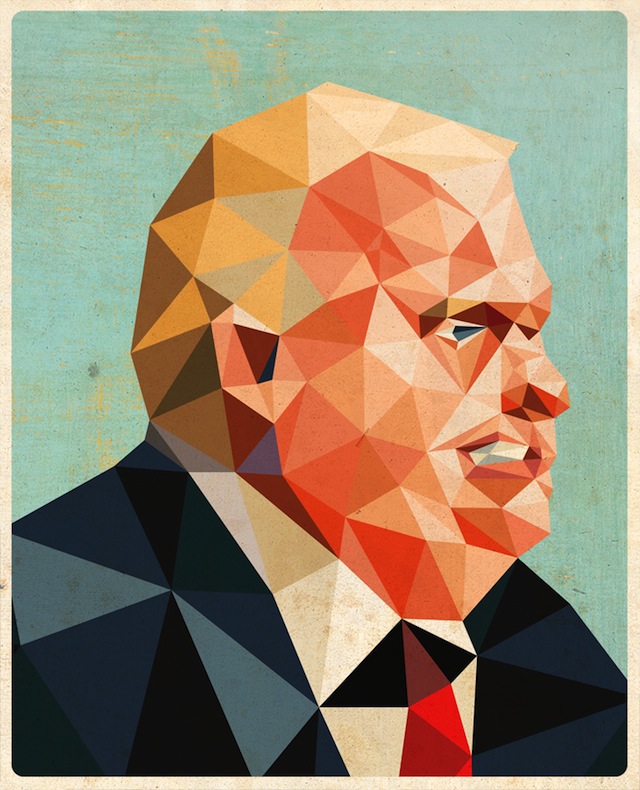
Dave Murray - Polygon Series (Rob Ford)

Dave Murray

January 13th, 2012

If you had to describe your current self to a 16-year-old you, what would you say?

Ha ha, the first thing would probably be that I no longer have shoulder length hair.  I’d probably describe myself as a pretty logical evolution of where I was – everything is mostly the same, just more refined.

Could you describe an evolution in your work or way of thinking?

My work is constantly evolving – but I think the biggest step in the past few years has been the result of really exploring new ways of working that I otherwise wouldn’t usually do.  I’ve really re-kindled my love of drawing, and am more into the history of art and image making.  All of this expansion not only provides me with ways to creatively blow off some steam, but it also informs my more focused pieces.

Are there any people who have been instrumental in the development of your way of thinking and viewing the world?

This one’s actually tricky for me to answer.  I like to think of myself as a passive observer – I don’t always immediately act on things, nor do I always respond to advice or new ways of thinking.  Maybe I’m missing out on a lot, I don’t know.

How do your political beliefs inform or fuel your work as an artist?

Again, this is one of those things that I try not to let creep into my art.  My politics are probably best defined by the some of the projects I take on – Dandyhorse Magazine is a great example.  I’ve done a few pieces for them, and I love that I’ve had the chance to work with them because I love bicycles, and I love cycling in Toronto.  This isn’t my favourite thing to admit, but trying to live as a freelance illustrator means that I’ll be more likely to take jobs from places that I might not necessarily support because it’ll pay the bills – the best part of those jobs, though, is making them fun for myself.

What do you feel a city should be or do for its inhabitants?

I feel like a city should, more than anything else, be an accessible home for everyone who wants to live there.  Mass transit, good infrastructure, reliable services and culture are all things that a city should prioritize and constantly strive to improve.  Toronto, right now, is an example of how not to prioritize these things, and it’s sad.  Our mayor and his cronies are doing a sub-par job (putting it lightly).  What I fear most though, is not that something bad will happen – but that NOTHING will happen.  I’m pretty sure that at the end of Ford’s run, we’re going to be exactly where we were 4 years previous.

www.davemurrayillustration.com

Creative Mornings

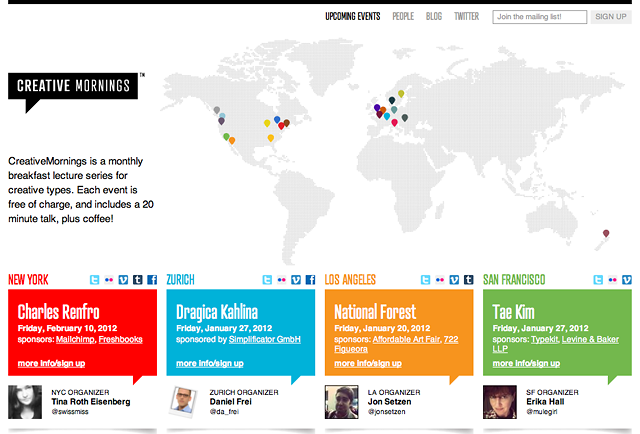
Creative Mornings is a monthly morning gathering of creative people and brainchild of my girl crush the ever fantastic Tina Roth Eisenburg (of Swisssiss and TeuxDeux fame). Each event has a 10 minute lecture, a 20 minute discussion, and is done before 10am. They’re also all free of charge and include coffee. The video above is of Michael Bierut of Pentagram and is quite interesting if you can take the time to listen to it.

The event started in New York but is now hosted internationally in over 15 different cities. This is a fantastic way to invite the participation of creative people who don’t have the time to attend a big conference and probably the best way ever to start a Friday morning.

Wellington Ave, Windsor, Ontario

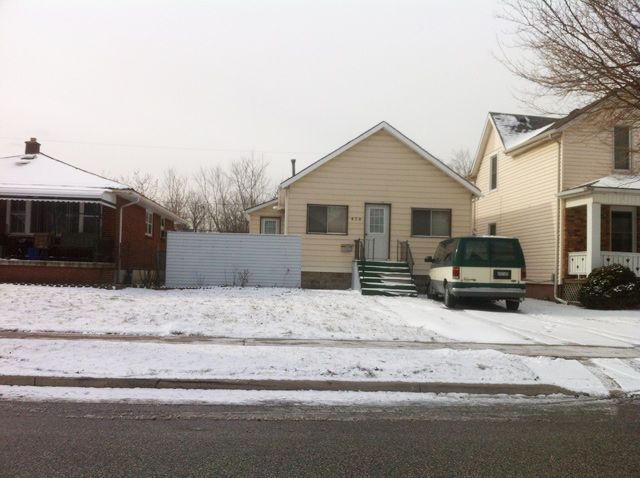
Above, a wall between two houses covered in vinyl siding.

Danielle and I were on our way downtown the other day and we took Wellington after I forgot to turn where I normally do at Partington. There were architectural and infrastructural weirdness that actually had us stop, turn around, and then pull over to take these shots. It also made me anxious to start on the drifts we’ve discussed doing.  More time to explore neighbourhoods slowly would be a lot of fun.

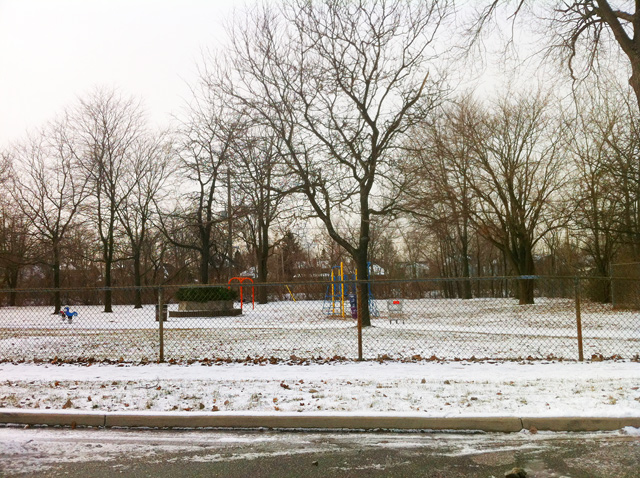
Above, a park that has a bizarrely designed planter (as far as Windsor’s standards go).

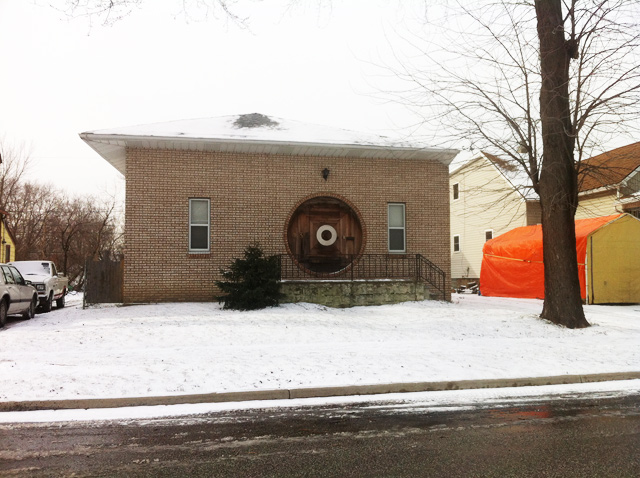
And, finally, a house that has this modernist addition on the front of it to feature a large circular wooden accent that actually frames a normal wooden door.

WordPress Plugin (notifying users tagged in comments)

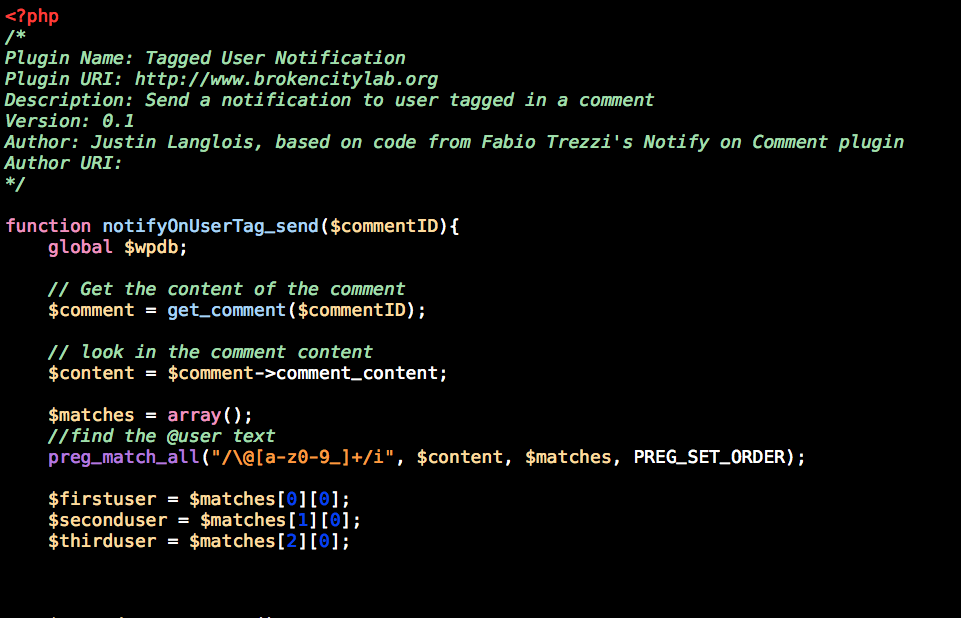
I wrote a plugin by hacking together some ideas based on the Notify on Comment plugin.

Essentially, I was looking for a plugin whereby someone mentioned or tagged in a comment (using the familiar @username syntax from Twitter) would be notified. They wouldn’t have had to have made the post being commented on, nor would they have had to made a comment on that post yet in order to be notified. It can notify multiple tagged users in one comment (eg. Hi there, @user1 and @user2) — it will notify both user1 and user2 via the emails they have registered as users on your WordPress install.

Now, because this plugin only queries the user database in WordPress, it’s not going to be useful for a wide range of blogs. But, if you’re a multi-author blog looking to shift more of the conversation away from emails or private posts and into the main stage of your blog and its comments, this might work for you.

Included in the zip file is all you need to upload it to your plugins directory on your WordPress install. It has a very basic email template, which you can adjust using some of the markup from the plugin file itself.

Download the awkwardly named plugin, Tag User Notification.

Grades for Public Spaces (design phase)

Sara's sketcbook

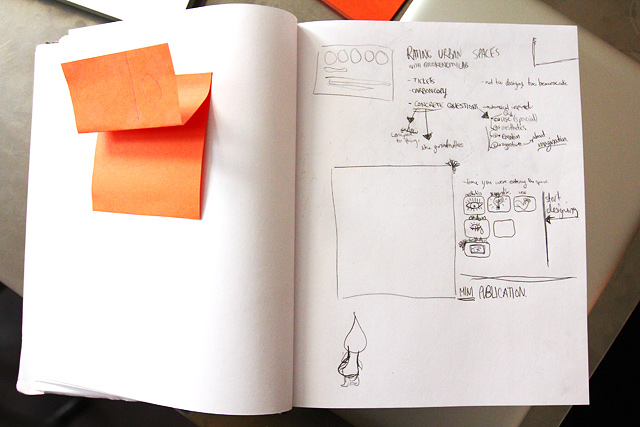
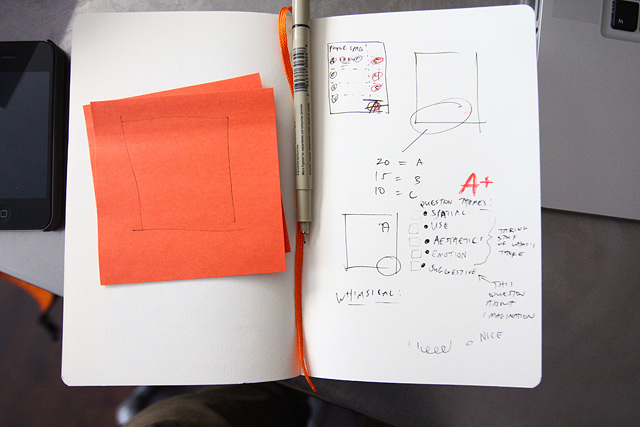
Sara and I spent some time planning out some very preliminary designs for our Grades for Public Spaces project. The gist of the project is to have a series of rubrics to annotate / grade public space — or rather, use those rubrics as a tool to generate conversation and engagement in the use and rethinking the use of public spaces. This project will probably accompany some upcoming drifts we’re planning.

Justin's sketchbook

We’re planning carbon-copy style prints, anyone ever print anything like that before?

The stickies — trying to map out the carbon copy part of the pages.

Can’t wait to get some rough designs up! Soon.