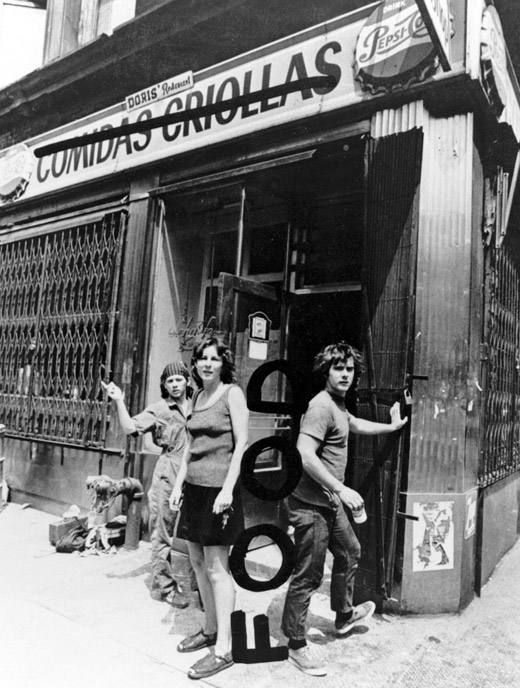
Carol Goodden and Gordon Matta-Clark opened up Food in New York in the early 1970s on the corner of Prince and Wooster. The restaurant, essentially the first in SoHo, was run by artists and served mostly artists, with the cooking itself becoming a performance of sorts. This transition of the space from a failed Puerto Rican restaurant to Food’s occupation to an alternative space that functioned as and questioned art and the potential in economic models based on something other than profit growth.
Established as a kind of “perpetual dinner party”, the restaurant as an idea was the art, alongside the actual dishes served up, the design, and the performance of cooking. Conceptually that’s important, but what’s really becomes interesting is the idea to open a place that wasn’t founded on profit, and indeed collapsed in some ways because of that. However, certainly that’s not the point.
Creating an idea with a sunset date, or with an acceptance of failure from the start, allows for a focus on the things beyond regular concerns. In the case of Food, artists stood in as guest chefs, inedible food was served, a hub of activity was created, and whether or not it succeeded, and indeed eve the tools with which one could measure the success or lack thereof, became irrelevant.
So, what if the next idea you have came along with a self-imposed sunset date? How would you work differently? What would become a priority and what would fade into the background? Tom’s recent post on the not-for-profit restaurant in Windsor, Namaste, invites similar questions and provides some encouraging answers.
I would be remiss if I didn’t also quickly mention Matta-Clark’s significant architectural interventions, again something deserving of its own post, eventually. His “building cuts” works in some ways paralleled the thinking behind an initiative like Food, in the case of these large-scale architectural works though, the question became, what if walls didn’t matter?
where can I purchase/view the film FOOD?? can not find any place to purchase or borrow a copy.
any help appreciated!!
Mary
FOOD can be watched here:
http://www.ubu.com/film/gmc_food.html
you can see it in full length on Artist Videos – ubuweb.com , best greetings !
I loved FOOD. It was one of the great places to eat. Budget friendly – with good food, one of the very few great places to eat in Soho. I was very sad when it closed. I think they just got tired of doing it. The place was always busy. Soho was a major gallery area back then, and artists still lived there