Designing Promo for “Save The City”

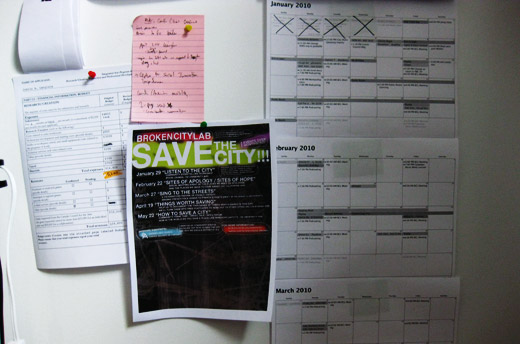
I’ve been mulling over some potential designs (the 8.5×11 pictured above is just one sketch of an idea) for the promo for our upcoming Broken City Lab: Save The City project, which will start at the very end of January, 2010.

There’s still much to finalize, in terms of dates and locations, and we’ll need to really start moving on this as soon as the break is over, but I just figured the best thing to post on the last day of the year is some of the work towards all the exciting things we’ll be doing in the new year.

Also (and always) considering ways to make our site more engaging … any suggestions?

Happy New Year.

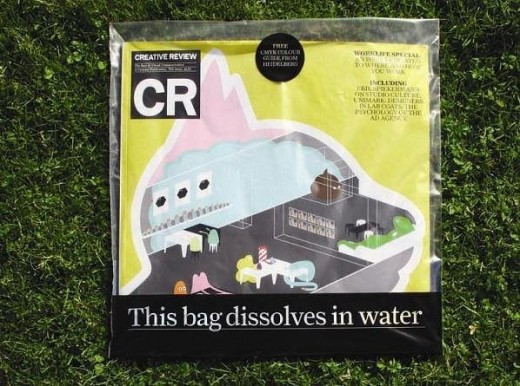
Cyberpac’s Dissolving Bags

While browsing on Environmental Graffiti blog, I stumbled across a new product developed by Cyberpac. The new product line is aimed at drastically reducing consumer waste while providing basic products that most of us use on a nearly daily basis. This particular product, ‘Harmless-Dissolve‘, is a “readily biodegradable, water soluble polymer which completely biodegrades in a composting environment, in a dishwasher or in a washing machine. It has no harmful residues and will biodegrade into naturally occurring substances […] In the end the bag becomes carbon dioxide, water and biomass.”

There are a few more images after the jump…

Continue reading “Cyberpac’s Dissolving Bags”

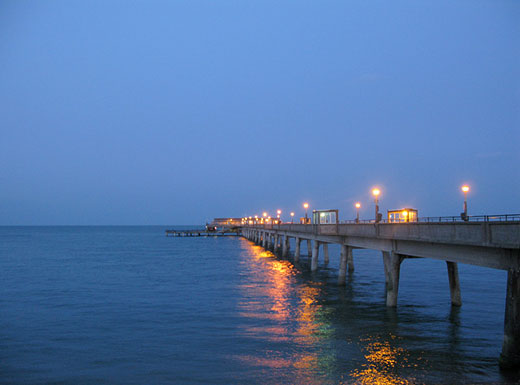
Streetlight Storm by Katie Paterson

At any one time there are around 6000 lightning storms happening across the world, amounting to some 16 million storms each year. Such dizzying statistics are useful to hold in mind while experiencing Streetlight Storm, a new artwork by Katie Paterson.

Paterson’s work often deals with the translation of experiences of nature to representations of nature. I quite enjoy projects like this that visualize the complexities of data from the natural world in quiet, simple ways, as previously noted.

httpv://www.youtube.com/watch?v=MfsqlBrqlSs

Be warned, the music kind of destroys this video. At any rate, for one month on Deal Pier in Kent, during the hours of darkness, the pier lamps will flicker in time with lightning strikes happening live in different parts of the world.

[via PSFK]

ROA’s Giant Animal Lanticular

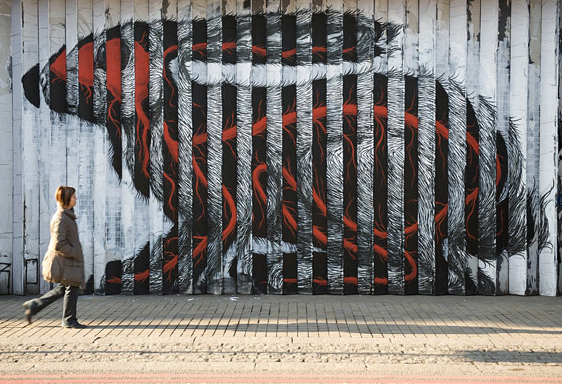
I recently stumbled upon a really neat post by Wooster Collective that featured work by Roa. This piece was found in London, England on a warehouse building with very interesting dimensions.  The picture changes when it is viewed from a different angle.     I haven’t heard of his work prior, so when I dug  a little deeper, I found out that he’s been painting all sorts of animals on buildings and walls around Europe. I think it’s a very cute concept, especially because his paintings of wildlife are specifically found in urban settings.  Something as noticeable as this would be really fun to see on some of the bland buildings around the city, don’t you think?

There are more photos of Roa’s work under the cut.

Continue reading “ROA’s Giant Animal Lanticular”

Last Meeting for 2009!

IMG_7289

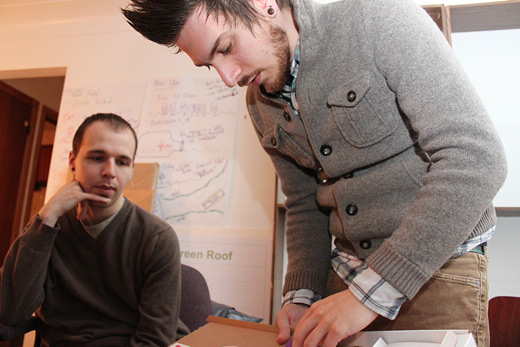
Monday night marked the last Broken City Lab meeting of the year!!! We’ll be taking a brief break over the holidays and then gearing up for a series of events starting at the end of January.

For anyone who has been wondering how to get involved or if we’d ever hold open office hours again, stay tuned, there’s going to be a lot of things to do in the new year!

As per usual, we spent some time just trying to sort out our upcoming schedules, planning for a performance at Propeller Gallery in January, and talking about the many details we need to get started on for the Broken City Lab: Save the City project.

Continue reading “Last Meeting for 2009!”

David Rokeby’s long wave

David Rokeby's Long Wave

David Rokeby is a Canadian artist who worked for years in new media, creating interactive installations, and exhibiting them around the world (including here in Windsor most recently at the 2008 Media City -curated AGW exhibition). I had the opportunity to work with him on that 2008 show, Plotting Against Time, and he is one of the nicest and most brilliant people I’ve ever met.

More recently, his work has turned to large-scale installations.  2007’s Cloud played with perception through small sculptural elements rotating under a computer’s control.

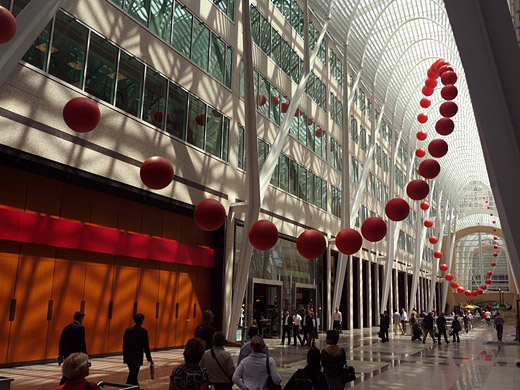
This year’s long wave is a site specific installation that was commissioned by Luminato, Toronto Festival of Arts + Creativity and was on view at the Allen Lambert Galleria, Brookfield Place, Toronto, June 5 – 20, 2009. It is a 380 foot long, 60 foot high sculpture tracing a helix through the entire length of the galleria.

“long wave” is a materialization of a radio wave, a normally invisible, but constantly present feature of environment. It represents the length of a radio wave in the short-wave radio band, in between the sizes of AM and FM radio waves. In our contemporary wireless environment, populated by tiny centimeter long wifi transmissions, these radio waves are really the dinosaurs of our communications era.

I’m getting more and more interested in larger-scale installations like this that at least in part respond to the architecture in which they are situated. With so many vacant building across this city, why worry about a sculpture garden when we could have an “installations in abandoned factories” tour?

3D Renderings of Buildings from Windsor + Detroit on Google Earth

detroitwindsor-2

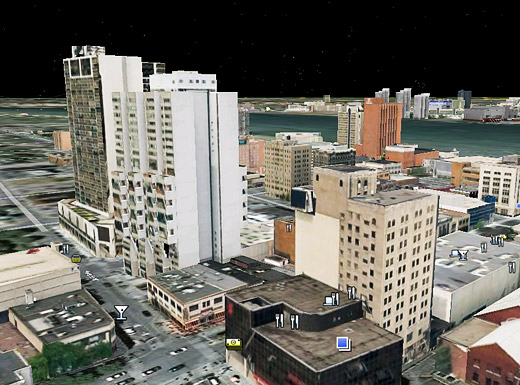
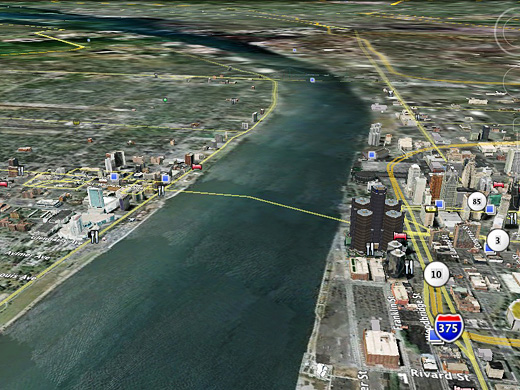
As previously noted on Windsor Visuals and Tom Lucier’s Twitter (via Planetizen), a number of buildings in Windsor and Detroit are now on Google Earth in all of their SketchUp-rendered glory.

It’s quite interesting to fly around and see what buildings have been modeled, not all of which have been done by the SketchUp team, but by local folks with the talent and skill to do it.

I think this is going to help us with a number of projects, since we love to do Photoshop renderings to imagine projects … having the ability to see those renderings on 3D objects can only make things that much easier. I just wish one of us knew how to use SketchUp.

Continue reading “3D Renderings of Buildings from Windsor + Detroit on Google Earth”

Vanessa Harden: the Subversive Gardening

3666630332_f4ed4995ba_o

Canadian-born / UK-based designer, Vanessa Harden has invented a number of camouflaged devices meant to ease the process of guerrilla gardening.

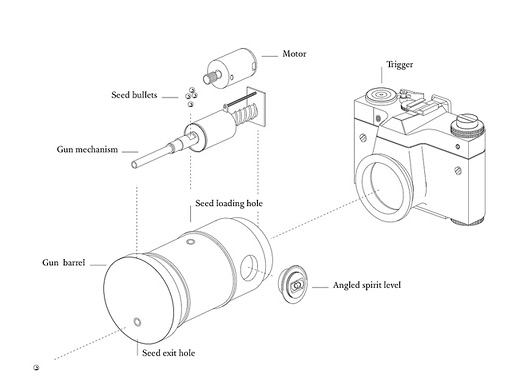
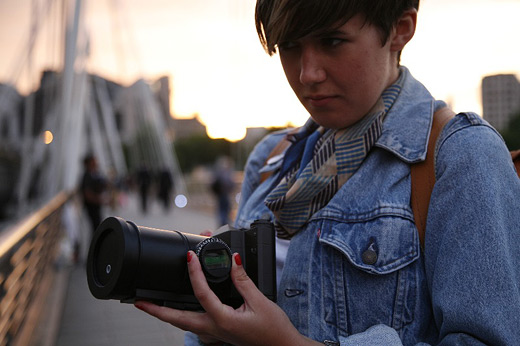
Among things like ankle-attached mechanical seed distribution, briefcases that dig holes, and purses designed to easily carry plants to the site of installation, Harden hacked a Pentax camera to create what she calls, the Precision Bombing Device 1, pictured above.

Continue reading “Vanessa Harden: the Subversive Gardening”

Plasticiens Volants’ “O Estrangeiro”

Parade

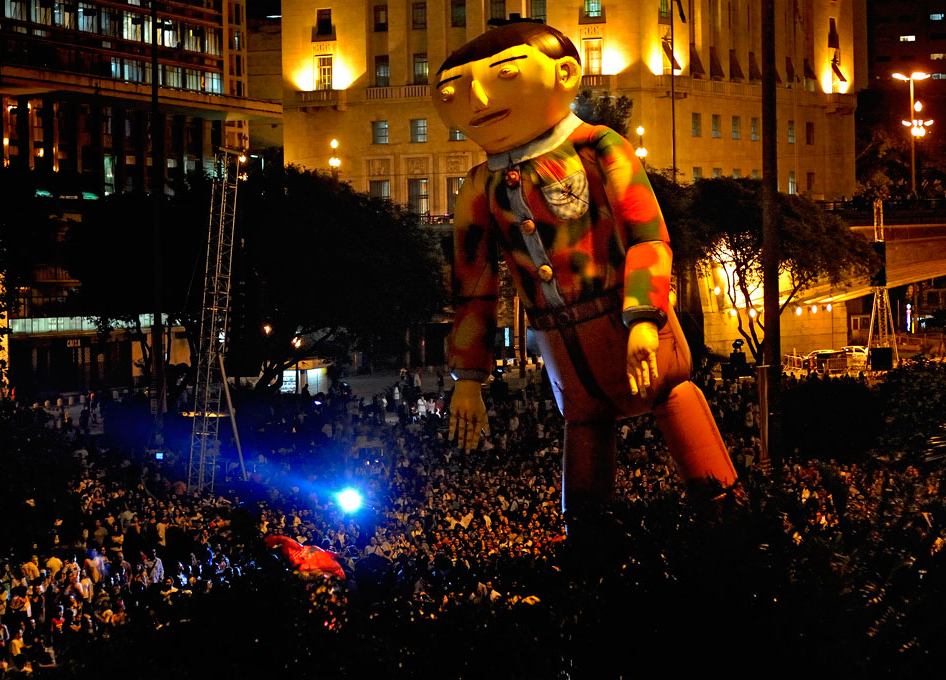
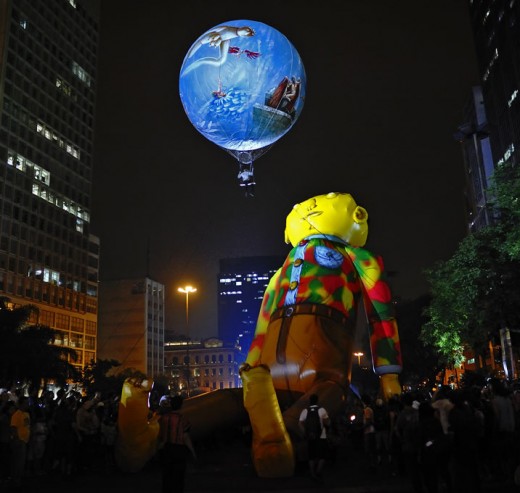
In keeping with our ongoing research about creating a Windsor parade, I thought I’d share some photos of Plasticiens Volants‘ “O Estrangeiro” parade in Sao Paulo. This parade, presented by Lost Art, gloriously displayed public art in the form of inflatable plastic floats and gathered thousands of people into the city streets. Besides funding, there aren’t many reasons why we couldn’t pull something like this off (possibly on a smaller scale). There are a few more excellent photos of the parade after the jump.

Continue reading “Plasticiens Volants’ “O Estrangeiro””

Apartment Gallery / Alternative Spaces

apartmentgallery

Photo: Robert Wright for The New York Times

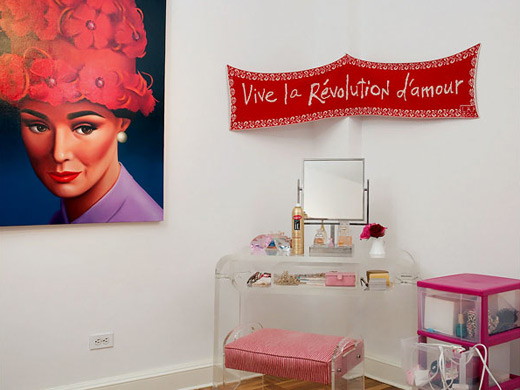
It seems as though this discussion crops up every now and again on our site here. We’ve written about alternative spaces before and we’re currently working out of a house on the edge of the University campus. I think that these spaces that can be multi-use, imagined to facilitate multiple activities, and multiple people provide the opportunity to do things that would be exciting and challenging in new ways.

It seems to me from this article in the NY Times, that these apartment galleries (one of them featuring work by Lisa Ann Auerbach is featured above) are possible because of the density of people willing to attend in a place like New York. So, how would this translate to a place like Windsor, with a painfully obvious lesser density? Well, thinking back to Steven’s post back in June, it makes me believe that indeed, spaces/venues like this would be exciting and workable, even with the somewhat limited density we face in the city.

The excitement around these spaces would surely be due to the way in which they could act differently than a normal gallery space does. It also helps to imagine ways of presenting artwork and creative research that isn’t faced with the same kinds of burdens that showing in a gallery space requires. And in some ways, I’m not even sure that it’s really a matter of space, but a matter of personnel, someone willing to commit a limited amount of time to organizing things.

Why aren’t there art crawls down the student rental-filled streets surrounding the University? Even curating work on a series of porches or front lawns? What if the idea of the Open Corridor festival was translated to a much smaller scale, focused on a single block at a time? Would it work?

[via Art Review & NY Times]